What Is Heat Affected Zone (HAZ) in Welding Explained
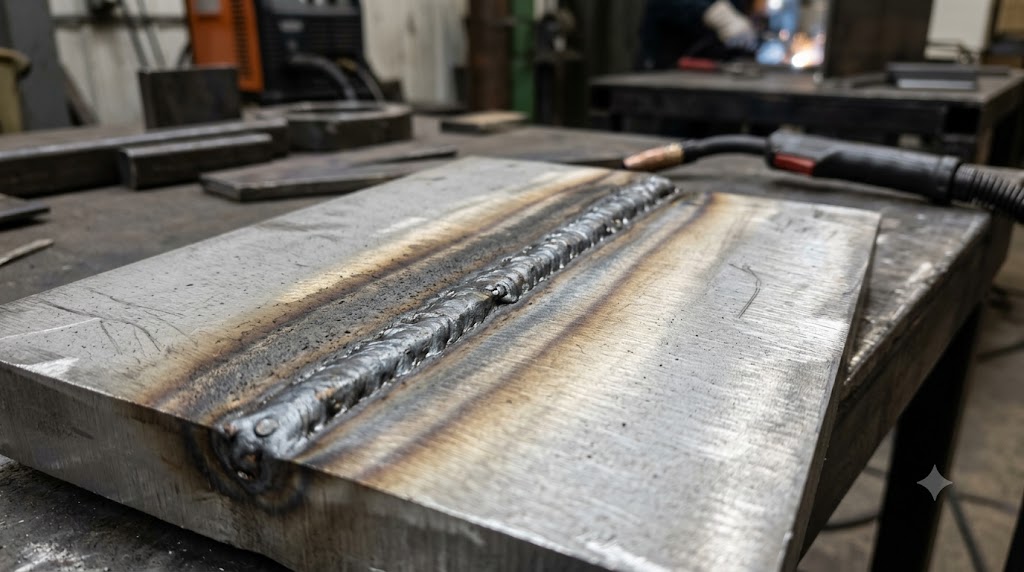
A weld is not just the shiny bead you can see. Right next to it, in the metal that never melted, is a hidden band that welding quietly changed forever. That band is the heat-affected zone, or HAZ, and it is often the weakest, trickiest part of the whole joint. Understanding the HAZ is a big step up from just laying pretty beads, because failures often start there rather than in the weld itself. This explainer covers what the heat-affected zone is, why it forms, whether it is more brittle, and how to control it.
The heat-affected zone (HAZ) is the area of base metal next to a weld that did not melt but was changed by the heat of welding. The heat alters the metal’s grain structure and properties without melting it. Here is what that means in practice.
The three zones of a weld
Every fusion weld really has three regions:
- The weld metal, the part that fully melted and solidified.
- The heat-affected zone, metal that stayed solid but was changed by heat.
- The unaffected base metal, far enough away that heat did not alter it.
The HAZ sits in between, and it is where many weld problems quietly begin.
Direct answer: what the HAZ is and why it matters
Here are the essentials:
- The HAZ is base metal near the weld that was heated but not melted.
- The heat changes its grain structure, and therefore its properties.
- It can become harder, more brittle, or weaker than the original metal.
- Its size depends on heat input, more heat makes a wider HAZ.
- Many weld failures start in the HAZ, not in the weld bead.
Because the HAZ is changed but invisible, it deserves as much attention as the weld itself.
Why the HAZ forms
The heat-affected zone forms because of a simple fact: the intense heat of welding does not stop at the edge of the molten pool. Heat flows outward into the surrounding metal, and while that metal never gets hot enough to melt, it does get hot enough to change. Metals have an internal grain structure, and heating and then cooling can alter those grains, growing them, shrinking them, or changing their arrangement. Those structural changes alter the metal’s properties, such as its hardness, toughness, and strength, even though the metal kept its shape. The region where this happens is the HAZ. How much it changes depends heavily on how much heat went in and how fast the metal cooled, which is why welders talk so much about heat input and cooling rates.
Is the HAZ more brittle?
A common and important question is whether the heat-affected zone is more brittle than the base metal, and often the answer is yes. In many steels, the rapid heating and cooling of welding can harden the HAZ, and harder metal tends to be more brittle, meaning it is more prone to cracking under stress. This is especially a concern where hydrogen and stress combine, which can lead to cracking in a hardened HAZ. That is why the HAZ is frequently the weakest link and why so many weld failures and cracks originate there rather than in the weld bead. Not every HAZ ends up brittle, and different metals behave differently, but the general lesson holds: the HAZ is a changed region whose properties may be worse than the surrounding metal, so it needs to be managed, not ignored.
How to control the HAZ
The good news is that welders can influence the heat-affected zone, mainly by controlling how much heat goes in and how fast it leaves. Lower heat input generally produces a smaller HAZ, so techniques and settings that avoid dumping excess heat help keep the affected zone narrow. Faster travel speed similarly limits how much heat soaks into the surrounding metal. Managing the cooling rate is the other big lever: cooling too fast can harden and embrittle the HAZ in many steels, so controlled preheat and interpass temperature slow the cooling and reduce cracking risk, which is a standard practice on thicker or crack-prone material. Different metals need different approaches. Aluminum, for instance, conducts heat very well and tends to lose strength in a wide zone rather than harden, so the strategies differ by material. The common thread is thinking about heat input and cooling, not just the visible bead.
The bottom line
The heat-affected zone is the band of base metal beside a weld that never melted but was changed by welding heat, altering its grain structure and its properties like hardness, toughness, and strength. It matters because it is often the weakest, most crack-prone part of the joint, and in many steels it can end up harder and more brittle than the surrounding metal, which is why so many failures start there. Welders control the HAZ by managing heat input and cooling rate, using lower heat, appropriate travel speed, and preheat or interpass temperature where needed, with the exact approach depending on the metal. Pay attention to the HAZ and you are thinking like a welder who builds joints that last, not just beads that look good.
FAQ
Is the heat affected zone more brittle than the base metal? Often yes, especially in steels. The rapid heating and cooling of welding can harden the HAZ, and harder metal tends to be more brittle and prone to cracking under stress. This is why the HAZ is frequently the weakest part of a joint and where many weld cracks and failures begin, though the exact behavior depends on the metal.
How can you reduce the size of the heat affected zone? Mainly by controlling heat. Lower heat input and appropriate travel speed limit how much heat soaks into the surrounding metal, keeping the HAZ narrower. Managing cooling with preheat and interpass temperature helps prevent hardening and cracking in crack-prone steels. The right combination depends on the metal and thickness, but less excess heat generally means a smaller HAZ.
Does aluminum have a bigger HAZ than steel? Aluminum conducts heat much better than steel, so heat spreads farther and can create a wide affected zone. Rather than hardening like many steels, aluminum tends to lose strength in that zone (softening near the weld). So the HAZ behaves differently: with aluminum the concern is often reduced strength across a wide area rather than the hardening and brittleness seen in steel.
Where is the heat affected zone located? The HAZ is located in the base metal immediately next to the weld, between the melted weld metal and the unaffected base metal farther away. It is the ring or band of metal that got hot enough to change but not hot enough to melt. It is not visible as a separate part of the bead, but it is a distinct region with altered properties.
Why do weld failures often start in the HAZ? Because the HAZ is changed metal whose properties can be worse than the surrounding base metal, particularly if it hardened and became brittle during welding. That makes it more vulnerable to cracking under stress, especially where hydrogen is present. Since it is changed but invisible, it is easy to overlook, which is why inspectors and welders watch the HAZ closely.
What is heat input in welding? Heat input is a measure of how much heat the welding process puts into the metal, influenced by current, voltage, and travel speed. Higher heat input means more heat soaks into the surrounding metal, producing a wider heat-affected zone, while lower heat input keeps the HAZ narrower. Controlling heat input is a key way welders manage the size and properties of the HAZ.
References
- The Fabricator references on the heat-affected zone, preheat, and HAZ behavior (industry), thefabricator.com.
- Hobart Brothers aluminum welding guidance on shrinkage, cracking, and HAZ (manufacturer), hobartbrothers.com.
- American Welding Society references on heat input, preheat, and weld metallurgy (industry), aws.org.