What Is Lack of Fusion in Welding? Causes Explained
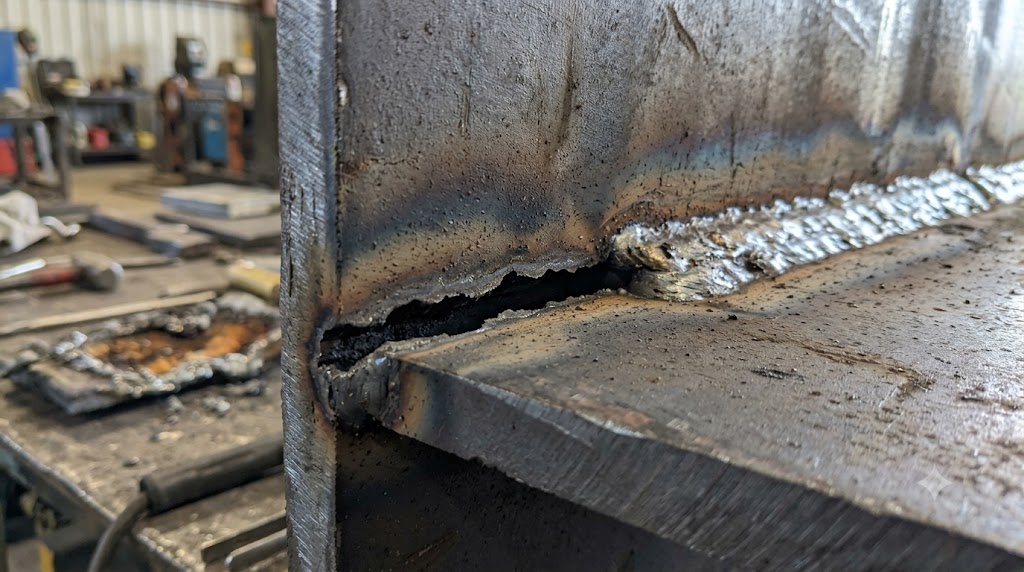
Lack of fusion is the defect that fools people. The weld looks full, the bead looks good, but the weld metal never actually bonded to the base metal or the pass beside it. It is just sitting there, like glue that never stuck. Because it hides inside the joint, lack of fusion is one of the most dangerous weld defects, and it usually traces back to one thing: not enough heat in the right place. This explainer covers what lack of fusion is, what causes it, how it relates to cold lap, and how it is found.
Lack of fusion is a weld defect where the weld metal fails to fuse completely with the base metal or with a previous weld pass. The metals touch but do not truly bond. Here is why it happens and how it is detected.
What lack of fusion is
Lack of fusion is a bonding failure inside the joint:
- Weld metal does not fuse with the base metal or a prior pass.
- The surfaces touch but are not metallurgically joined.
- It can occur at the sidewall, between the weld and the joint face.
- It can occur between passes, where a new bead does not fuse to the last.
Because the metals are in contact, the weld can look complete while the bond is missing, which is what makes it so risky.
Direct answer: what causes lack of fusion?
Lack of fusion almost always means not enough heat reached the surfaces to melt and bond them. The main causes are:
- Insufficient heat input, from amperage set too low for the metal.
- Travel speed too fast, so the arc does not melt the surfaces enough.
- Improper technique or angle, aiming the arc away from the joint faces.
- Dirty surfaces, with contamination blocking fusion.
- Poor joint design, too narrow to let the arc reach the sidewalls.
The common thread is that the base metal or previous pass never got hot enough to melt and truly join with the weld metal.
Why lack of fusion happens
Fusion requires both surfaces to melt and mix together, and lack of fusion happens when that melting does not occur where it should. If the amperage is too low or the travel speed too fast, the arc does not deliver enough heat to melt the base metal or the previous pass, so the molten weld metal flows over a solid, unmelted surface and cools without bonding to it. A bad torch angle can point the arc’s heat away from the sidewall, so the pool fills the joint without fusing the edges. Dirty surfaces, with oil, scale, or slag left between passes, can also block fusion. In multipass welds, failing to clean slag off before the next pass is a classic cause. The result is the same: weld metal that is present but not fused, a joint that looks whole but is not.
Lack of fusion and cold lap
A common question is whether lack of fusion is the same as cold lap, and they are closely related. Cold lap, also called incomplete fusion or overlap in some contexts, is essentially a form of lack of fusion that occurs at the surface, where the molten weld metal rolls over the base metal without fusing to it, often because the base metal was too cold or the heat too low. So cold lap is one visible expression of the broader defect of lack of fusion. The general category, lack of fusion, covers any failure of the weld metal to bond, whether at the sidewall, between passes, or at the surface as cold lap. The underlying cause is the same across all of them, which is insufficient melting of the surfaces that were supposed to join, usually from too little heat.
How lack of fusion is detected
Because lack of fusion is often hidden inside the joint, finding it usually requires more than visual inspection. When it reaches the surface, such as a cold lap at the toe, it can sometimes be seen as a line or notch, and magnification helps. But sidewall and inter-pass lack of fusion is typically buried in the weld, so nondestructive testing is used. Ultrasonic testing (UT) is well suited to these flat, planar defects, sending sound waves into the weld to locate unfused areas by their reflections. Radiography (RT) can also reveal lack of fusion as sharp, linear indications, though its effectiveness depends on the flaw’s orientation to the beam. For qualifying work, sectioning and etching a sample shows unfused areas directly. Because it hides and it seriously weakens the joint, lack of fusion is exactly the kind of defect that inspection with UT or RT is meant to catch.
The bottom line
Lack of fusion is weld metal that fails to truly bond with the base metal or a previous pass, surfaces that touch but never fused, which makes it one of the most dangerous defects because the weld can look complete while the bond is missing. It is caused by not enough heat reaching the surfaces, from low amperage, fast travel, a poor angle, dirty surfaces, or a joint too narrow for the arc to reach the sidewalls. Cold lap is a surface form of the same defect. Since it usually hides inside the joint, it is found with nondestructive testing like ultrasonic or radiographic inspection. Deliver enough heat to melt the joint faces, keep surfaces and interpasses clean, and use the right angle, and you give the weld metal what it needs to actually fuse.
FAQ
What causes lack of fusion in a weld? Lack of fusion is caused by not enough heat reaching the surfaces that should melt and bond. That comes from amperage set too low, travel speed too fast, an improper torch angle that aims heat away from the joint faces, dirty surfaces or slag left between passes, and joints too narrow for the arc to reach the sidewalls. The metal never melts enough to truly join.
Is lack of fusion the same as cold lap? They are closely related. Cold lap is a form of lack of fusion that happens at the surface, where molten weld metal rolls over the base metal without fusing, often because the metal was too cold or the heat too low. Lack of fusion is the broader category covering any failure to bond, including at the sidewall, between passes, or at the surface as cold lap.
How is lack of fusion detected? When it reaches the surface as a cold lap it can sometimes be seen as a line or notch, but sidewall and inter-pass lack of fusion is usually hidden, so nondestructive testing is used. Ultrasonic testing (UT) is well suited to these planar defects, radiography (RT) can reveal them as linear indications, and sectioning and etching a sample shows them directly for qualification.
Why is lack of fusion so dangerous? Because the weld metal is present and the bead can look complete, so the joint appears sound while the actual bond is missing. That unfused area carries no load and acts as a built-in crack, seriously weakening the joint and making it prone to failure. Since it hides inside the weld, it can go unnoticed without proper inspection, which is why it is considered a critical defect.
What is the difference between lack of fusion and lack of penetration? Lack of fusion is weld metal failing to bond with the base metal or a previous pass anywhere in the joint. Lack of penetration is the weld not extending deep enough through the joint thickness, typically at the root. Both come from insufficient heat, but fusion is about bonding of the surfaces that meet, while penetration is about how far the weld reaches into the joint.
How do you prevent lack of fusion? Deliver enough heat to melt the joint faces: use adequate amperage for the thickness and do not travel too fast. Hold the correct angle so the arc reaches the sidewalls, clean the metal and remove slag between passes, and prepare the joint wide enough for the arc to access the faces. Getting proper heat to clean surfaces is the key to full fusion.
References
- TWI, weld defects and lack of sidewall and inter-run fusion (industry), twi-global.com.
- Xiris and Materials Welding references on incomplete fusion, cold lap, and detection (industry), materialswelding.com.
- ESAB welding defects guide on lack of fusion (manufacturer), esab.com.