What Is Plasma Cutting and How Does It Work
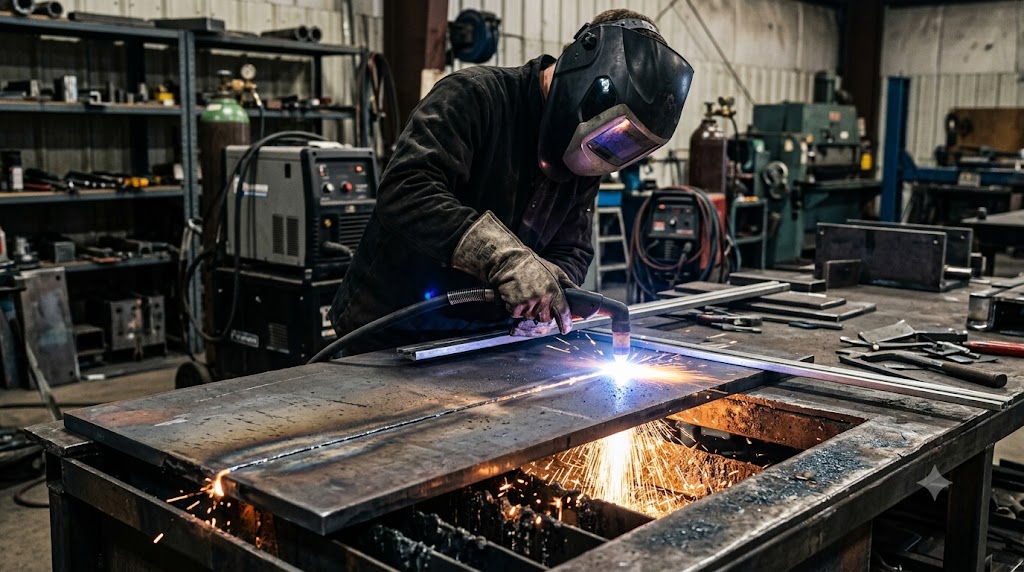
Watch a plasma cutter slice through a steel plate and it almost looks like cheating: a thin, screaming jet of light parts the metal like a hot knife through butter, leaving a clean edge behind. There is no saw blade, no grinding, just a stream of superheated gas. Plasma cutting is one of the fastest, most versatile ways to cut metal, used everywhere from hobby shops to giant CNC tables. This explainer covers what plasma cutting is, how it works, what gas it uses, and how it stacks up against other cutting methods.
Plasma cutting is a process that cuts electrically conductive metal using a fast, superheated jet of ionized gas called plasma. An electric arc turns gas into plasma, which melts the metal while the gas flow blows the molten metal away. Here is how it works.
The main parts
A plasma cutting system relies on a few key elements:
- A power source that supplies the electrical energy.
- A gas supply, most commonly compressed air.
- A torch with an electrode and a narrow nozzle.
- A ground connection to the conductive workpiece.
- Consumables, the electrode and nozzle that wear over time.
Electricity, gas, and a constricting nozzle are the whole recipe: combine them and you get a plasma arc.
Direct answer: how plasma cutting works
Here is the basic sequence:
- Gas flows through the torch, usually compressed air.
- The power source creates an electric arc in the torch.
- The arc heats the gas so intensely that it ionizes into plasma.
- The narrow nozzle constricts the plasma into a fast, focused jet.
- The plasma jet melts the metal where it touches.
- The gas flow blows the molten metal out of the cut, forming the kerf.
Because plasma conducts electricity, the arc passes through it into the conductive workpiece, concentrating heat exactly where the cut is happening.
What plasma actually is
The key to understanding the process is the plasma itself. Plasma is often called the fourth state of matter, after solid, liquid, and gas. When a gas is heated to an extreme temperature, its atoms ionize, meaning they gain enough energy that the gas becomes electrically conductive. That is exactly what a plasma torch does: it forces a gas past an electric arc, heating it until it ionizes into plasma. This plasma is astonishingly hot, reaching temperatures in the tens of thousands of degrees Fahrenheit, and because it conducts electricity, the cutting arc travels through it and into the metal. The torch’s small nozzle squeezes the plasma into a narrow, high-speed jet, which concentrates all that heat and force into a thin line. That constricted, superheated, conductive jet is what makes plasma cutting so fast and precise.
The gas and the cut
A common question is what gas a plasma cutter uses, and for most systems the answer is simple: compressed air. Ordinary shop air is the most common plasma gas, especially in handheld and hobby machines, because it is readily available and works well on common metals. Some industrial or precision systems use other gases such as nitrogen or oxygen for specific materials and finer results, but air plasma covers the bulk of everyday cutting. The gas plays two roles at once: it becomes the plasma that carries the heat, and its flow physically blows the molten metal out of the cut. That gap left behind, the slot the plasma carves through the metal, is called the kerf. One important limit follows from the physics: because the process relies on an electrically conductive path, plasma cutting only works on conductive metals like steel, stainless, and aluminum, not on wood, glass, or plastic.
Plasma versus other cutting methods
It helps to see where plasma fits among cutting options. Compared with a mechanical saw or grinder, plasma is faster, cleaner, and does not depend on a blade, and it can follow curves easily, which is why it pairs so well with CNC cutting tables for automated shapes. Compared with oxyfuel (torch) cutting, plasma works on a wider range of metals, including stainless and aluminum that oxyfuel cannot cut well, and it produces a smaller heat-affected zone, meaning less of the surrounding metal is changed by heat. Compared with laser cutting, plasma is generally simpler to run and handles thicker conductive material well, while laser offers finer precision and cleaner edges on thinner stock and can cut some non-conductive materials plasma cannot. Because plasma cutting can get bright, it also calls for eye protection with a shaded lens suited to the cutting amperage, along with the usual gloves and protection from sparks.
The bottom line
Plasma cutting works by forcing a gas, usually compressed air, past an electric arc until it ionizes into plasma, a superheated, electrically conductive jet, then constricting that jet through a narrow nozzle so it melts the metal while the gas flow blows the molten material away. Because it relies on a conductive path, it cuts only conductive metals like steel, stainless, and aluminum, but on those it is fast, clean, and easy to guide, which is why it thrives from hobby benches to big CNC tables. Set against saws, oxyfuel, and laser, plasma stakes out a sweet spot of speed, versatility, and a small heat-affected zone, making it one of the most useful metal-cutting tools around.
FAQ
What gas does a plasma cutter use? Most plasma cutters use compressed air, especially handheld and hobby systems, because it is readily available and works well on common metals. Some industrial or precision machines use other gases such as nitrogen or oxygen for specific materials and finer cut quality, but ordinary shop air covers the majority of everyday plasma cutting.
What shade lens is needed for plasma cutting? Plasma cutting produces bright light, so eye protection with a shaded lens is required, and the correct shade number depends on the cutting amperage; higher amperage needs a darker shade. Follow the shade guidance for your machine and current level, and pair eye protection with gloves and protection from sparks and molten metal.
How is plasma cutting different from laser cutting? Plasma cutting uses a superheated jet of ionized gas and cuts only electrically conductive metals, and it is generally simpler to run and strong on thicker conductive material. Laser cutting uses a focused light beam, offers finer precision and cleaner edges on thinner stock, and can cut some non-conductive materials that plasma cannot. Each suits different jobs.
Can a plasma cutter cut any material? No. Plasma cutting only works on electrically conductive materials, such as steel, stainless steel, aluminum, brass, and copper, because the process depends on an electrical path through the metal. It cannot cut non-conductive materials like wood, glass, plastic, or stone, which need other cutting methods entirely.
What is the kerf in plasma cutting? The kerf is the slot or gap that the plasma jet carves out of the metal as it cuts, the width of material removed by the cut. The gas flow blows the molten metal out of this gap. Kerf width matters for accuracy, especially in CNC cutting, where it is accounted for so parts come out the right size.
Why does plasma cutting have a small heat-affected zone? Because the plasma jet is narrow and extremely fast, it melts and clears a thin line of metal quickly, so less heat spreads into the surrounding material than with slower methods like oxyfuel. A smaller heat-affected zone means less of the metal around the cut is changed by heat, helping preserve the metal’s properties near the edge.
References
- Lincoln Electric, How a Plasma Cutter Works (manufacturer), lincolnelectric.com.
- Miller Electric guide to selecting and operating a hand-held plasma cutter (manufacturer), millerwelds.com.
- Hypertherm and ESAB references on plasma cutting fundamentals (manufacturers), hypertherm.com, esab.com.