What Is Porosity in Welding? Causes Explained
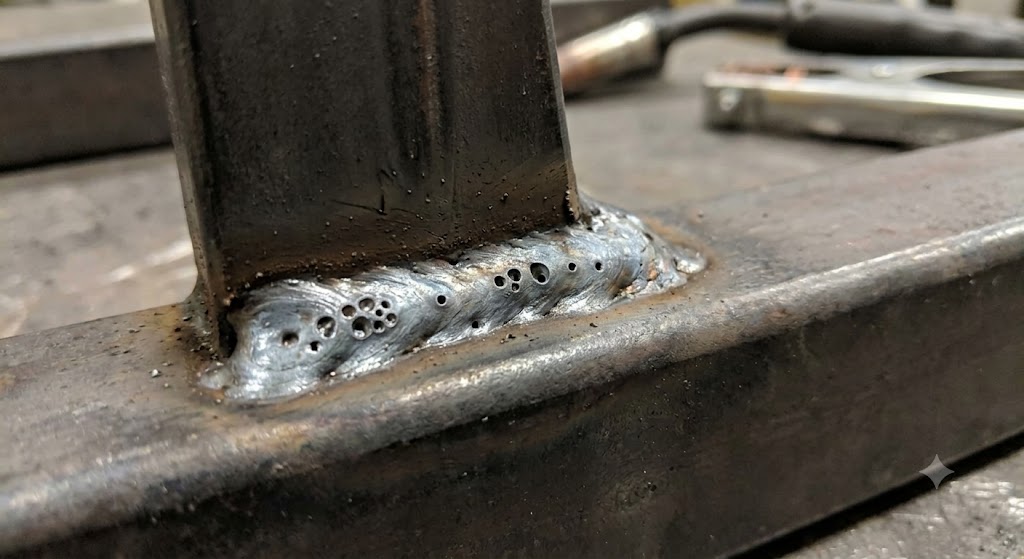
You finish a bead, knock off the slag, and there they are: tiny holes speckling the surface like the top of a sponge. That is porosity, one of the most common weld defects there is, and one of the most frustrating because it can turn a good-looking weld into a weak one. The good news is that porosity almost always has a traceable cause, which means it is almost always preventable. This explainer covers what porosity is, what causes it, and how to keep it out of your welds.
Porosity in welding is the presence of small cavities or holes in the weld metal, formed by gas that gets trapped as the molten weld pool solidifies. Those gas pockets weaken the weld. Here is why it happens and how to stop it.
What porosity looks like
Porosity shows up as gas pockets in or on the weld:
- Surface porosity, visible holes on the face of the weld.
- Subsurface porosity, pockets hidden inside the weld metal.
- Scattered pores, spread randomly along the bead.
- Clustered pores, grouped in one spot where shielding was lost.
Whether you can see them or not, those voids reduce the weld’s strength and can invite corrosion.
Direct answer: what causes porosity?
Porosity comes down to gas getting trapped in the weld. The main causes are:
- Lost shielding gas coverage, from wind, too long a stickout, or a blocked nozzle.
- Contaminated base metal, such as oil, rust, paint, or moisture.
- Contaminated or damp wire or electrodes.
- Moisture anywhere in the joint, gas line, or consumables.
- Incorrect gas flow, too low to protect or too high and turbulent.
Every one of these lets gas into the molten pool, where it gets trapped as the metal freezes.
Why gas gets trapped
Understanding the mechanism makes prevention obvious. Gases like hydrogen, oxygen, and nitrogen dissolve far more easily in molten metal than in solid metal. So while the weld pool is liquid, it can absorb these gases, whether from the air, from moisture, or from contaminants burning off the surface. As the weld cools and solidifies, the metal can no longer hold all that dissolved gas, so the gas is pushed out of solution and tries to escape. If the metal solidifies before the gas bubbles reach the surface and get out, they are trapped inside as pores. That is porosity. This is also why anything that adds gas to the pool, lost shielding, contamination, or moisture, leads to the same defect: more gas in, more gas trapped.
How to prevent porosity
Since porosity is a gas problem, prevention is about keeping unwanted gas out of the pool. Start with clean metal: grind or wipe away rust, oil, paint, and moisture before welding, because those contaminants turn into gas in the arc. Protect your shielding gas: weld out of the wind (or switch to a self-shielded process outdoors), keep the stickout in the right range so the gas covers the pool, and make sure the nozzle is not clogged with spatter. Check your gas flow so it is high enough to shield but not so high it becomes turbulent and sucks in air. Keep consumables dry, since damp wire, flux, or low-hydrogen electrodes add moisture. And confirm there are no leaks in the gas line. Get the gas coverage right and keep the joint clean, and porosity usually disappears.
Is porosity always a problem?
A fair question is whether porosity always means the weld must be rejected, and the answer is no, not always. Whether porosity is acceptable depends on the application and the code or specification the work is being done to. A critical structural or pressure weld may allow very little or none, while a non-critical weld may tolerate small, scattered porosity within defined limits. The point is that acceptance is decided by the governing standard, not by guesswork, and a welder should know the criteria for the job. That said, porosity is a signal that something in the process is wrong, so even when it is within limits it is worth fixing the cause. A weld free of porosity is stronger and more reliable, so the goal is always to minimize it.
The bottom line
Porosity is trapped gas: small cavities left in the weld when gas dissolved in the molten pool cannot escape before the metal solidifies. It comes from lost shielding gas, contaminated or damp metal and consumables, and moisture, all of which add gas to the pool. Because the cause is always unwanted gas, prevention is straightforward: clean the metal, protect the shielding gas from wind and blockage, use the right stickout and gas flow, and keep consumables dry. Small amounts of porosity may be acceptable depending on the code, but it always signals a process problem worth fixing. Control the gas and keep things clean, and your welds come out solid instead of spongy.
FAQ
What causes porosity in a weld? Porosity is caused by gas getting trapped in the weld as it solidifies. That gas comes from lost shielding coverage (wind, too long a stickout, a clogged nozzle), contaminated base metal (oil, rust, paint, moisture), damp or dirty wire and electrodes, or incorrect gas flow. All of these add gas to the molten pool, which becomes trapped pores when the metal freezes.
How do you prevent porosity in MIG welding? Keep unwanted gas out of the pool. Clean the metal of rust, oil, paint, and moisture; weld out of the wind so the shielding gas is not blown away; keep the stickout in the right range and the nozzle clear of spatter; set the correct gas flow, not too low or so high it gets turbulent; and keep wire dry. Good gas coverage and clean metal prevent most porosity.
Is porosity always a rejectable defect? No. Whether porosity is acceptable depends on the application and the governing code or specification. Critical structural or pressure welds may allow very little or none, while non-critical welds may tolerate small, scattered porosity within defined limits. Acceptance is set by the standard for the job, not by guesswork, though porosity always signals a process issue worth correcting.
Why does moisture cause porosity? Because moisture turns to gas in the heat of the arc, adding hydrogen and oxygen to the molten pool. Molten metal absorbs these gases readily, then cannot hold them as it solidifies, so they get trapped as pores. This is why damp electrodes, wet joints, and humid conditions cause porosity, and why keeping consumables and metal dry is important.
Can you weld over porosity to fix it? Simply welding over porosity usually does not fix it, because the trapped gas and any contamination remain and can cause more porosity. The proper fix is to remove the porous weld metal by grinding or gouging it out, correct the cause (clean the metal, fix the shielding, dry the consumables), and then reweld the area with good technique and coverage.
Does porosity weaken a weld? Yes. Porosity leaves voids in the weld metal that reduce the cross section carrying the load, lowering the weld’s strength, and the pores can also become starting points for cracks or invite corrosion. Even when small amounts are within acceptable limits, less porosity means a stronger, more reliable weld, so minimizing it is always the goal.
References
- Air Products guidance on the cause of porosity from gas absorption in the weld pool (industry), airproducts.co.uk.
- The Fabricator, possible causes for porosity in welding (industry), thefabricator.com.
- ESAB welding defects guide on porosity (manufacturer), esab.com.