Women's Welding Boots Guide
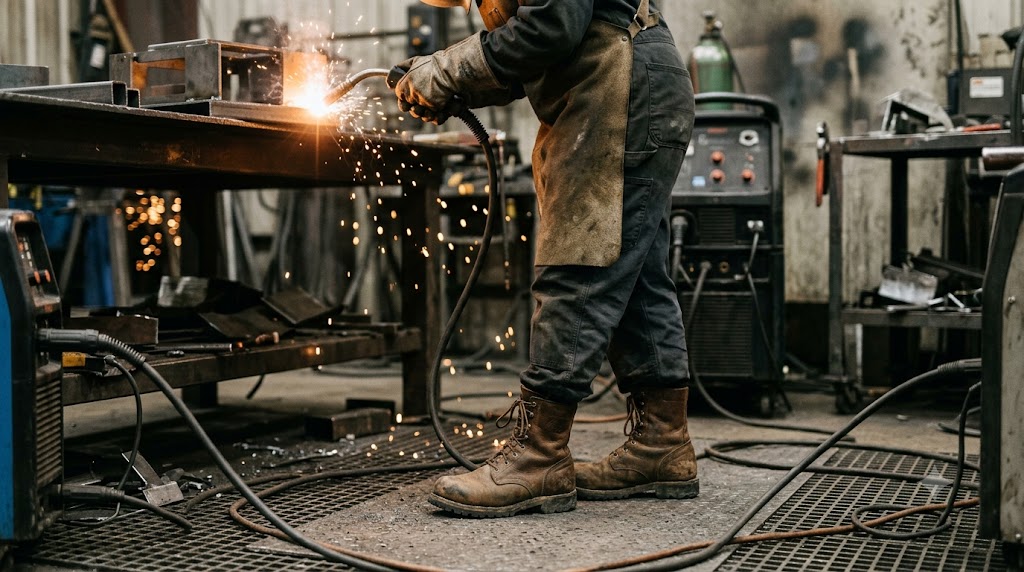
The first pair of welding boots I ever bought were men’s size 7s stuffed with two pairs of wool socks, and by the end of my first week running a MIG gun in a fab shop, my heels were raw and my arches were screaming. If you have ever tried to find women’s welding boots that actually fit, you already know the problem. Most protective footwear made for welding is built on a men’s last, then shrunk down and called “unisex.” That is not the same thing as a boot designed for a woman’s foot, and the difference shows up fast when you are on concrete for ten hours dodging sparks and slag.
This guide is the one I wish someone had handed me back then. I am going to walk you through why fit matters so much for welders specifically, what safety features you cannot skip, how to size honestly when women’s-specific options run thin, and which brands are actually worth your time.
What Counts as a Women’s Welding Boot
A welding boot is not just a tough work boot. It is a piece of personal protective equipment built to survive an environment full of radiant heat, molten metal spatter, sharp offcuts, and the occasional dropped grinder. A true women’s welding boot combines two things that rarely come together: a last shaped for a woman’s foot and construction rated for the hazards of hot work.
Foot anatomy is where the “women’s” part earns its name. On average, women have a narrower heel relative to the forefoot, a higher instep, a more pronounced arch, and a lower ankle bone position than men. A boot cut for a man’s foot leaves the heel swimming, which causes slippage, blisters, and fatigue no matter how many socks you pile on.
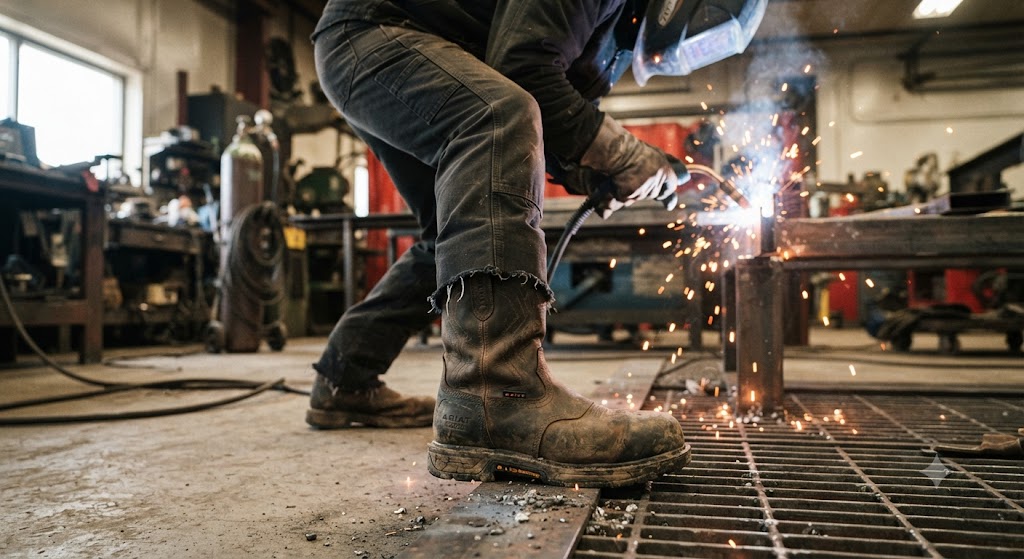
The welding part comes from the build. You want a boot that resists heat, sheds spatter instead of catching it, protects your toes, and keeps its footing on oily shop floors. When a boot nails both the shape and the safety build, you have found the real thing rather than a marketing label.
Do You Really Need Women’s-Specific Welding Boots
Here is the honest, direct answer: you need a boot that fits your foot and meets welding safety standards, and for most women a women’s-specific last delivers that far better than a downsized men’s model. But the market is small, and clean women’s-specific welding boots are genuinely hard to find, so you have to be flexible about how you get there.
If a brand builds on an actual women’s last, like Xena Workwear does, start there. A boot shaped for your heel and arch reduces slippage, which reduces blisters and long-day fatigue, which in turn keeps you steadier and safer around live work. That is not vanity sizing, that is injury prevention.
That said, plenty of skilled women weld every day in men’s or unisex boots and do just fine, because they size carefully and lace smartly. The two features you must never compromise on are a protective toe cap rated to a recognized standard and a heat-resistant, slip-resistant outsole. Fit is the tiebreaker that determines whether you finish the shift comfortable or limping.
So the practical rule is this. First, look for a genuine women’s last. If nothing in your size or budget works, size down a proven men’s model and dial in the fit with lacing and insoles. Never buy purely on looks, and never buy a boot that lacks a real safety toe and a heat-rated sole just because it comes in your size.
Why Men’s and Unisex Boots Fail Women Welders
The failure points are predictable once you know them. The heel is the big one. A too-wide heel pocket lets your foot pistons up and down with every step, and that friction is exactly how blisters form. Over a full shift that slippage also throws off your balance, which is the last thing you want while carrying a hot workpiece.
The arch and instep are next. Women often have a higher arch, and a flat men’s footbed leaves it unsupported, so the plantar fascia takes a beating and your feet ache long after you clock out. A lower ankle also means a men’s collar can sit too high and dig into the ankle bone, which is miserable during the constant squatting and kneeling that welding demands.
Finally there is the toe box. Sizing down a men’s boot to grip your heel often crams your toes into a shorter box, and a cramped toe box near a steel or composite cap gets painful quickly. You end up choosing between a sloppy heel and squished toes, and neither is acceptable when your feet are your foundation.
Safety Features That Actually Matter for Welding
Welding is a heat game, so read your sole and upper carefully. A heat-resistant outsole matters because you will step on hot metal and stand near radiant heat, and a cheap outsole can soften or melt. Look for soles rated for high temperatures and built from compounds that resist heat rather than standard rubber.
A protective toe is non-negotiable. Steel toes give maximum impact protection and are common, while composite toes stay lighter and do not conduct heat or cold as aggressively, which some welders prefer. Either way, look for footwear that meets ASTM F2413, the standard that covers impact and compression resistance for protective toe footwear.
Beyond that, prioritize a smooth or pull-on friendly upper that does not have open laces or gaps where spatter can nest. Many welders favor a metatarsal guard for added top-of-foot protection, plus a slip-resistant outsole for oily floors and heat-resistant, non-melting laces or a lace shield. Leather uppers, ideally full grain, handle sparks far better than synthetics.
How to Size Down a Men’s Boot Without Suffering
Since verified women’s-specific options are limited, knowing how to convert is a real skill. Many women size down men’s models like the Thorogood American Heritage or ROCKROOSTER by roughly one and a half sizes from their US women’s size to find a workable length. It is a starting point, not a guarantee, so treat the first fitting as an experiment.
Try boots on at the end of the day when your feet are at their largest, and wear the exact socks you weld in. Lace from the bottom up and use the top eyelets to lock the heel with a heel-lock or runner’s loop, which cures a lot of slippage. If the heel still floats, add a quality aftermarket insole to take up volume and support your arch at the same time. If your toes hit the cap, the boot is too short and no lacing trick will save it, so move up a half size and re-test the heel.
Comparing Women’s Work and Welding Boot Brands
The table below covers brands worth knowing. Some build on a true women’s last, and some are men’s or unisex models that women commonly size down. None of these are linked here because I could not verify clean women’s-specific purchase listings I trust, so treat this as a shortlist to research and try on rather than a click-to-buy list.
| Brand and Model | Women’s Last | Safety Toe | Best For | Honest Tradeoff |
|---|---|---|---|---|
| Xena Workwear women’s steel toe | Yes, true women’s last | Steel toe | Women wanting a real women’s fit | Style-forward line, verify heat rating for heavy welding |
| KEEN Utility women’s steel toe | Yes, women’s sizing | Steel toe | Wide-forefoot comfort seekers | Roomy toe box may feel loose at the heel for narrow feet |
| Timberland PRO women’s Boondock | Yes, women’s sizing | Composite or steel | All-day cushioning on concrete | Heavier and warmer than minimalist boots |
| Ariat women’s work boots | Yes, women’s sizing | Steel or composite | Pull-on comfort and arch support | Western-leaning fit and heel may not suit everyone |
| Wolverine women’s steel toe | Yes, women’s sizing | Steel toe | Durable general work wear | Verify heat and spatter resistance for hot work |
| Thorogood American Heritage | No, men’s last | Steel or soft toe | Classic build, size-down candidate | Requires careful downsizing and heel lock |
| ROCKROOSTER | No, mostly men’s or unisex | Steel or composite | Budget-minded size-down option | Fit consistency varies, test before committing |
Use this as a map, not a verdict. Xena is the clearest women’s-first choice, KEEN and Timberland PRO are strong women’s-sized generalists, and Thorogood and ROCKROOSTER are the size-down plays when a true women’s last is out of reach.
Where to Shop and What to Watch For
Buy from sources that let you return boots after trying them indoors on a clean floor. Manufacturer sites like xenaworkwear.com and keenfootwear.com list women’s sizing and true specs, which beats guessing from a third-party listing. Check that the product page actually states a heat-resistant outsole and an ASTM F2413 rating before you trust it for welding rather than general work.
Be skeptical of any listing that shows a men’s boot with a women’s size chart bolted on, because that is usually a downsized men’s last wearing a new label. Read reviews from other women welders when you can find them, since they will tell you about heel slip and heat tolerance faster than any spec sheet.
The Bottom Line on Fit and Protection
If you take one thing from all of this, let it be that fit and heat protection are partners, not competitors. A boot that fits your heel and arch keeps you stable and fresh, and a boot with a rated toe and a heat-resistant sole keeps you intact. Chase both, and be willing to size down a proven men’s model when the women’s shelf comes up empty.
For most women, I would start the search with a true women’s last like Xena, fall back to a women’s-sized KEEN or Timberland PRO for all-day comfort, and keep a carefully downsized Thorogood or ROCKROOSTER in mind as the budget route. Whatever you choose, try before you commit, lace with a heel lock, and never trade away your safety toe or your heat rating for a boot that merely comes in your size. Your feet carry you through every bead you lay, so treat them like the equipment they are.
Frequently Asked Questions
Are women’s welding boots really different from men’s? Yes. A genuine women’s boot is built on a women’s last with a narrower heel, higher arch support, and a lower ankle collar. That shape reduces heel slip and fatigue, which matters a lot during long shifts near heat and hot metal.
Can I just wear men’s welding boots if I size down? You can, and many women do. Size down roughly one and a half sizes from your US women’s size as a starting point, lock your heel with a top-eyelet heel-lock lacing, and add a supportive insole. If your toes hit the safety cap, the boot is too short.
Steel toe or composite toe for welding? Both meet ASTM F2413 when properly rated. Steel gives maximum impact protection, while composite is lighter and does not transfer heat or cold as sharply. Choose based on your comfort and the impact hazards in your shop.
What outsole should welding boots have? Look for a heat-resistant, slip-resistant outsole designed to withstand high temperatures and shed spatter. Standard rubber can soften near sustained heat, so confirm the sole is rated for hot work rather than general use.
Are leather or synthetic uppers better for welding? Full grain leather is the safer choice because it resists sparks and spatter far better than synthetic materials, which can melt or burn. Keep the upper smooth and gap-free so hot debris cannot lodge in seams or open lace areas.
Do I need a metatarsal guard? It is not mandatory, but many welders add one for extra top-of-foot protection against dropped tools and falling slag. If you handle heavy stock, a met guard is a smart upgrade.
How should welding boots fit at the end of the day? Try them on in the evening with your welding socks, since feet swell during a shift. You want a snug heel, a supported arch, and enough room to wiggle your toes without them pressing the safety cap.
Where can I find real women’s-specific options? Start with manufacturer sites such as xenaworkwear.com and keenfootwear.com, which list true women’s sizing and specs. Prioritize listings that clearly state both a women’s last and a welding-appropriate heat rating.
References
https://www.osha.gov/foot-protection https://www.osha.gov/laws-regs/regulations/standardnumber/1910/1910.136 https://www.astm.org/f2413-18.html https://www.cdc.gov/niosh/topics/ppe/ https://www.xenaworkwear.com https://www.keenfootwear.com