Women's Welding Jacket Guide: Finding a Fit That Actually Works
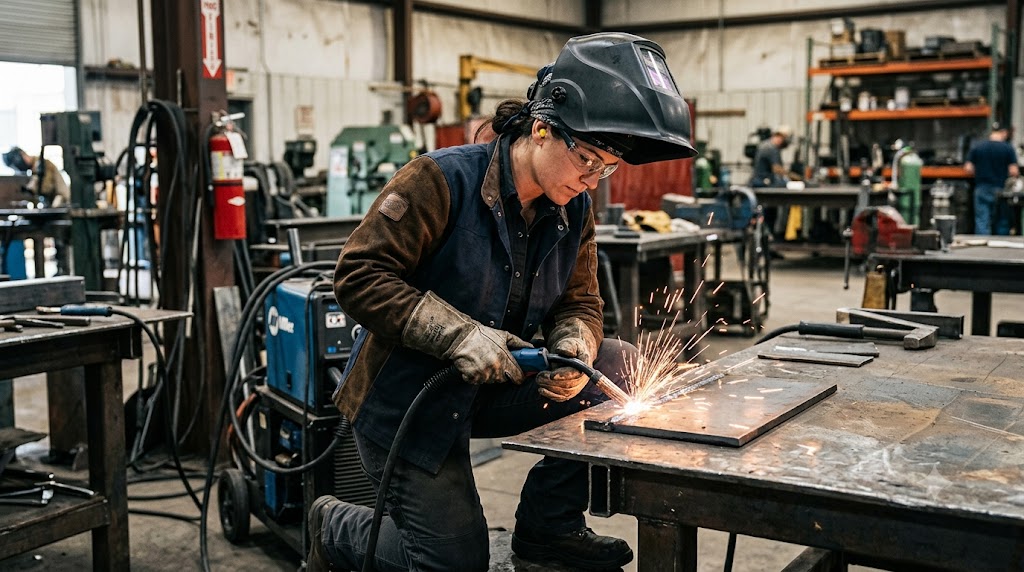
The first time I handed a rookie a “small” unisex welding jacket, she looked like a kid wearing her dad’s coat. The cuffs swallowed her gloves, the shoulders drooped, and a slag ball rolled right down the gaping collar and found bare skin. That is the exact moment most people realize a women’s welding jacket is not a marketing gimmick. It is a safety tool. When your protective gear does not fit your frame, it stops protecting you and starts getting in your way, and in a shop full of sparks and molten metal, “in your way” can mean a burn scar.
I have spent years on the shop floor and testing gear for other welders, and I want to save you the trial and error. This guide walks you through why cut matters, how to choose between FR cotton, leather, and hybrid materials, how to size for a smaller frame, and which jacket I actually reach for.
What a women’s welding jacket really is
A women’s welding jacket is flame-resistant outerwear cut to the proportions of a female frame rather than scaled down from a men’s pattern. The differences sound small until you wear them. A women’s cut typically has a shorter torso length, narrower and more sloped shoulders, a slimmer sleeve, room through the chest without a boxy fit, and cuffs that close tight enough to keep sparks out over your gloves.
That fit is not about looks. Flame-resistant clothing only works when it drapes correctly and seals at the openings. The National Fire Protection Association addresses flash fire protection in NFPA 2112, and ASTM International publishes the arc and material standards that many welding garments are tested against. The American Welding Society and OSHA both stress body coverage and spark control as core parts of personal protective equipment for welding. A jacket that gaps at the neck, bunches at the waist, or hangs past your fingertips undercuts every one of those principles. So when I say fit is a safety feature, I mean it in the technical sense, not the comfort sense.
Do you actually need a women’s-specific cut
Short answer: if a unisex small does not seal at your neck and cuffs, yes, you need a women’s cut, and it is worth every minute you spend finding one.
Here is the longer version. Unisex jackets are built on a men’s block, so the smallest sizes still carry wide shoulders and a long torso. On a narrower frame, that extra fabric pools. Pooled fabric at the waist catches slag. Loose shoulders let the collar fall open. Oversized sleeves ride up your forearms when you raise a torch, exposing the soft skin near your wrist that burns fastest. I have seen more forearm burns come from bad sleeve fit than from any single technique mistake.
A women’s-specific cut fixes the geometry at the source. The shorter torso keeps the hem at your hip instead of your thigh, so you can move and crouch without the jacket ballooning. The narrower shoulder seam sits where your shoulder actually ends, which keeps the collar snug against your throat. Adjustable or snug cuffs close over the gloves so nothing sneaks in. You also get better dexterity, and dexterity is safety too, because a welder fighting her sleeve is a welder not watching her puddle.
Now, not everyone needs the women’s line. If you are taller with broader shoulders and a unisex medium seals well at the neck and wrists, buy the unisex and be happy. Fit beats label every time. But for most smaller-framed welders, the women’s pattern is the difference between gear you trust and gear you tolerate.
FR cotton vs leather vs hybrid
The material you pick shapes how the jacket feels and where it shines.
FR cotton is flame-resistant treated cotton. It is light, breathable, and flexible, which makes it my default for MIG, general fabrication, light TIG, and long shifts where heat exhaustion is a real risk. The tradeoff is that it handles spatter and light sparks well but is not built to shrug off heavy grinding sparks or big slag showers the way leather is.
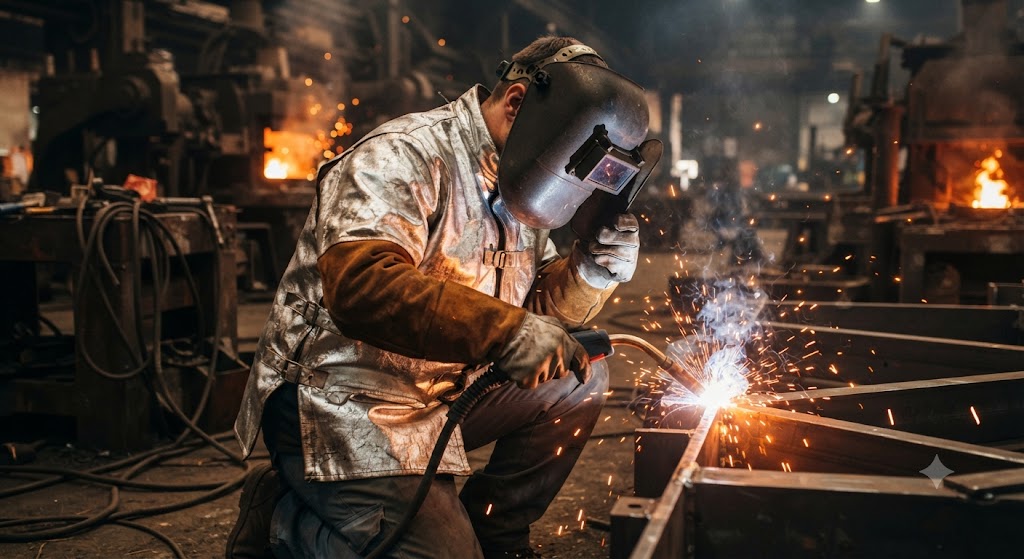
Leather is the heavy hitter. It resists direct sparks, spatter, and radiant heat better than any fabric, which is why stick welders and heavy-plate fabricators lean on it. The cost is weight, stiffness, and heat retention. A full leather jacket in a warm shop in July is punishing, and the stiffness can fatigue your shoulders on a long day.
Hybrid jackets split the difference. They put leather on the high-exposure zones like the shoulders, chest, and sleeves, and FR cotton on the back and underarms for breathability. You get durable protection where the sparks land and airflow where you sweat. The downside is that hybrids still run warmer and pricier than a pure cotton jacket, and the leather panels add weight.
The jackets I recommend
Black Stallion AngelFire Women’s FR Cotton Welding Jacket JF1015-NB
This is the one I hand to most women starting out and plenty of pros who want an everyday cotton jacket. The Black Stallion AngelFire Women’s FR Cotton Welding Jacket JF1015-NB is built on a genuine women’s block, so the torso length, shoulder slope, and sleeve taper actually match a smaller frame. The FR cotton breathes well, the collar sits high and snug, and the cuffs close cleanly over gloves.
My verdict: this is the best default women’s welding jacket for MIG, light TIG, and general shop work, and it is comfortable enough that you will actually keep it on all shift instead of shrugging it off when you get warm.
The honest flaw: it is FR cotton, not leather. Under a heavy grinding shower or serious stick welding with big slag, the cotton will show wear and scorching faster than a leather shell. If your day is mostly aggressive grinding and heavy spatter, this is not the jacket for that station.
Who should skip it: heavy-plate stick welders and anyone spending most of the day at a grinding bench should step up to leather or a hybrid. Everyone else doing general fabrication will be well served here.
AngelFire Women’s Hybrid Leather/Cotton Jacket (mention only)
The AngelFire Women’s Hybrid Leather/Cotton Welding Jacket JH1515-NB is the natural next step if you want more spark resistance without going full leather. It armors the shoulders and sleeves in leather while keeping the back breathable. The tradeoff versus the FR cotton JF1015 is added weight and warmth, plus a higher price tier. Choose it if your work mixes general welding with regular exposure to heavier sparks.
Lincoln Electric Jessi Combs Women’s Shadow Jacket (mention only)
The Lincoln Electric Jessi Combs Women’s Shadow Welding Jacket is another women’s-cut option worth trying on, especially if you already run Lincoln gear and want a matched kit. As with any jacket, confirm the neck and cuff seal on your body before you commit, because brand cut and sizing vary.
Quick comparison
| Jacket | Material | Best for | Main tradeoff | Link |
|---|---|---|---|---|
| Black Stallion AngelFire JF1015-NB | FR cotton | MIG, light TIG, all-day general work | Less spark resistance than leather | Linked above |
| AngelFire Hybrid JH1515-NB | Leather and FR cotton | Mixed work with heavier sparks | Heavier and warmer than cotton | Mention only |
| Lincoln Jessi Combs Shadow | Women’s-cut FR | Lincoln kit users, general welding | Confirm fit on your frame | Mention only |
| Women’s-cut leather jackets | Full leather | Stick, heavy plate, grinding | Hot, stiff, heaviest option | Mention only |
How to size and layer for a smaller frame
Start with your shoulders and neck, not your chest. If the shoulder seam lands past the edge of your shoulder, size down or switch cut, because a dropped seam means a gaping collar. Next, check the cuffs. They should close over your gloves with no gap, since the wrist is one of the most common burn points. Then confirm the hem sits around your hip, not your thigh, so you can crouch and reach without the jacket ballooning and trapping slag at the waist.
Layer smart underneath. Wear natural fibers like cotton or wool against your skin, never synthetics like polyester or nylon, because synthetics can melt and stick to skin under heat. In cold shops, add a thin FR mid-layer rather than a bulky sweatshirt that ruins your range of motion. In hot shops, a light FR cotton jacket over a cotton tee will keep you far more comfortable, and a comfortable welder is a focused one.
The bottom line
If you take one thing from all this, let it be that fit is protection, not preference. For most women doing general fabrication, MIG, and light TIG, the Black Stallion AngelFire FR Cotton JF1015-NB is the jacket I would put in your hands first. It fits a real women’s frame, breathes through long shifts, and seals where it counts. Step up to the AngelFire hybrid when your sparks get heavier, or go full women’s-cut leather if you live at the stick machine or the grinding bench. Try the collar and cuffs on before you trust any of them, and never let a baggy unisex hand-me-down convince you that welding gear is supposed to feel like a costume.
Frequently Asked Questions
Is a women’s welding jacket really safer than a unisex one? It can be, because flame-resistant gear only protects you when it fits and seals. A women’s cut closes the neck and cuff gaps that leave a smaller frame exposed in an oversized unisex jacket. If a unisex small already seals at your neck and wrists, fit is what matters, not the label.
FR cotton or leather for a beginner? For most beginners doing MIG and general work, FR cotton like the AngelFire JF1015-NB is lighter, cooler, and easier to wear all day. Move to leather or a hybrid if you do heavy stick welding or spend long stretches grinding.
What does NFPA 2112 have to do with welding jackets? NFPA 2112 sets requirements for flame-resistant garments that protect against flash fire, and it is one of the standards that informs how protective welding clothing is designed and rated. ASTM International publishes related material and arc test methods.
Can I just wear a regular cotton jacket? No. Untreated cotton can ignite, and synthetics can melt onto skin. Use flame-resistant garments, and keep any base layer to natural fibers like cotton or wool.
How should the cuffs fit? Snug enough to close over your gloves with no gap. The wrist and forearm are among the easiest spots to burn, so a loose sleeve that rides up is a real hazard, not a minor annoyance.
Do I need to size up for layering? Usually no. Buy for a correct shoulder and cuff fit, then use thin FR mid-layers in the cold rather than a bulky base that forces a larger, looser shell.
How do I care for an FR cotton jacket? Follow the manufacturer instructions, avoid fabric softeners and bleach that can compromise flame resistance, and retire any jacket with burn-through, heavy scorching, or failed seams.
Are women’s-cut leather jackets worth it? Yes, if your work is heavy. Full leather offers the best spark and radiant heat protection, at the cost of weight and warmth, so it is best reserved for stick, heavy plate, and grinding stations.
References
https://www.osha.gov https://www.aws.org https://www.nfpa.org https://www.astm.org https://www.revco-bsx.com