3M Speedglas 100 Review: The Entry Point That Still Says Speedglas
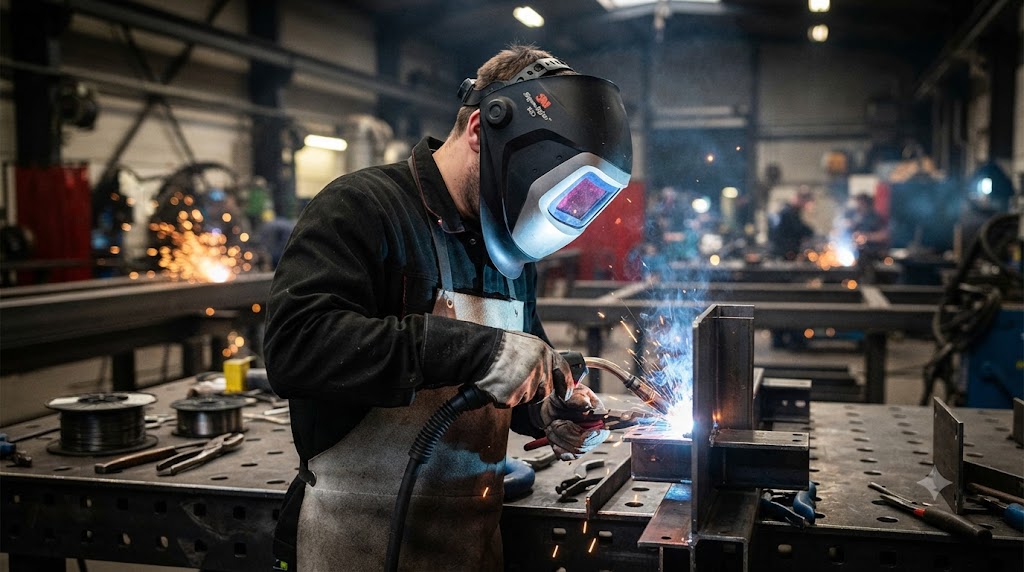
Not everyone needs a flagship. Plenty of welders just want a solid, honest hood that will not let them down on a weekend project or a part-time job, and that is exactly the gap the 3M Speedglas 100 fills. The 3M Speedglas 100 is the entry point to the Speedglas range, and while it lacks the big windows and curved lenses of its pricier siblings, it carries the same core protection and a lot of the same reliability for a fraction of the money.
You can check the current Speedglas 100 listing here.
What the Speedglas 100 is built for
This is a student, hobbyist, and part-time welder’s helmet, and 3M is upfront about that. It runs the Speedglas 100V auto-darkening filter with selectable dark shades 8 through 12, which comfortably covers MIG, stick, and TIG down to around 10 amps. That range is enough for the vast majority of light and general fabrication work, and it is the honest ceiling of what this hood is meant to do. If your work lives mostly in that band, you are not missing anything you would actually use.
Despite the entry price, the 100 does not cut the corner that matters most. Like every Speedglas filter, the 100V provides permanent shade 13 equivalent UV and infrared protection whether the lens is powered, in the light state, or completely dead. That is the safety floor OSHA and the American Welding Society care about, and it is present here just as it is on the flagship hoods.
Features that punch above the price
The 100V has a variable shade control, adjustable sensitivity, and an adjustable delay so you can tune how quickly the lens returns to clear after you stop welding, which is handy for tacking. It also has a fixable light state around shade 3, useful for grinding and prep. The helmet is light, at roughly the lowest weight in the whole Speedglas comparison chart, which makes it easy to wear for long stretches without neck fatigue. A hard-hat adapter is available if you need it for site work.
What you do not get is the large viewing area of the 9100, the Natural Color rendering of the XXi filter, the curved glass of the G5-02, or a flip-up grinding visor. The 100 has a smaller, more traditional window and a simpler feature set. For a beginner, that simplicity is arguably a benefit, because there is less to fiddle with and less to break.
How it compares
Against the 9100, the choice is about how seriously you weld. The 9100 gives you a much larger view, more shade range, and premium headgear, but it costs several times more. The 100 gives you Speedglas safety and reliability at a price a hobbyist can justify. If you are welding most days for a living, buy up to the 9100. If you weld on weekends or you are still learning, the 100 is the sensible pick.
Against budget-brand auto-darkening helmets, the 100 costs more but brings 3M’s optical quality and the confidence of that permanent UV and IR protection. It is the helmet I would point a new welder toward when they want something trustworthy without spending like a professional.
The honest flaws
The first drawback is the shade ceiling. Topping out at shade 12 means very high amperage work, the kind that calls for shade 13 or 14, is outside its comfort zone. Serious high-amp stick and heavy industrial welders will want more range. The second flaw is the smaller viewing area, which feels tight if you have ever used a 9100 or a large budget lens. This is a focused, no-frills hood, and if you want a big panoramic window, this is not it.
Who should skip it? Full-time professionals, high-amperage welders, and anyone who grinds constantly and wants a flip-up. For them the 9100 or 9100 FX is the correct tool, and the 100 will feel limiting.
Who it is for
The Speedglas 100 is for beginners, students, and part-time welders who want a light, reliable, genuinely safe hood without paying professional prices. If you weld occasionally and want a name you can trust over your eyes, the 100 is the smart way into the Speedglas family.
Frequently asked questions
What shades does the Speedglas 100 cover? The 100V filter offers selectable dark shades 8 through 12, which suits MIG, stick, and light TIG work.
Is the Speedglas 100 good for beginners? Yes. It is light, simple, reliable, and carries the same permanent UV and infrared protection as pricier Speedglas hoods, making it an excellent first helmet.
Can the Speedglas 100 handle TIG welding? It can handle TIG down to around 10 amps. For very low-amp TIG, a helmet with a shade 5 setting and higher sensitivity, like the 9100, is a better fit.
Does the Speedglas 100 protect against UV when off? Yes. The 100V filter provides permanent shade 13 equivalent UV and infrared protection even when the lens is not powered.
What is the difference between the Speedglas 100 and 9100? The 9100 has a much larger viewing area, wider shade range, premium adjustable headgear, and filter options up to the 9100XXi. The 100 is smaller, simpler, and far less expensive.
Can I use the Speedglas 100 for grinding? Yes, using its light state around shade 3, though it is not a flip-up. For heavy grinding workflows the 9100 FX is better suited.
References
- 3M Speedglas Welding Helmet 100 product listing and specifications, 3M United States
- 3M Speedglas welding filter comparison chart, 3M multimedia library
- American Welding Society, welding lens shade chart and eye protection guide
- OSHA fact sheet, eye protection during welding