3M Speedglas 9100 Welding Helmet Review: The One Most Pros Should Buy
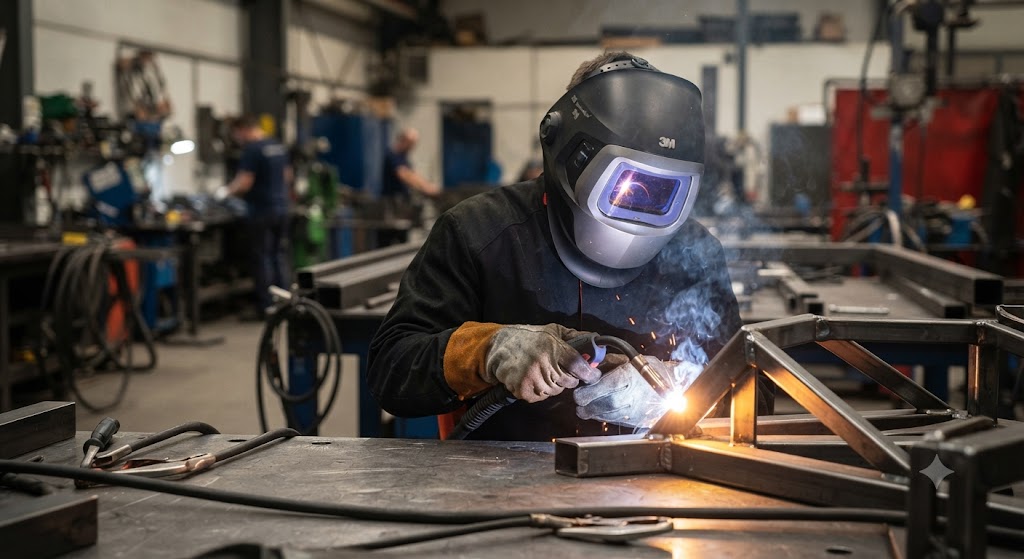
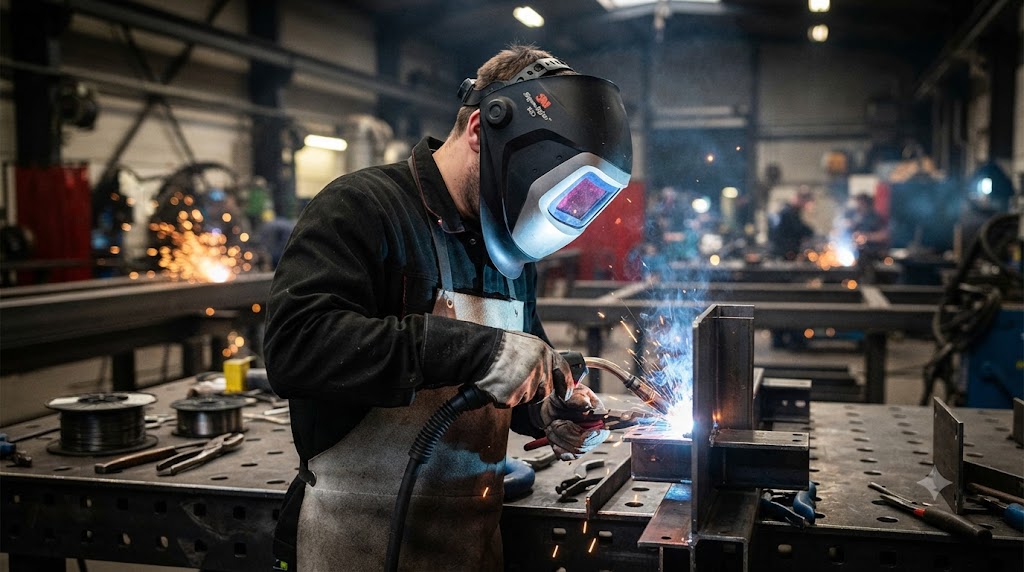
If you asked me to hand a working welder a single 3M Speedglas welding helmet and tell them to stop overthinking it, I would give them the 9100. The 3M Speedglas 9100 is the model that sits right in the middle of the range, and that middle is exactly where most people should be shopping. It is not the cheapest Speedglas and it is not the flagship, but it is the one that gets the balance of view, comfort, and reliability right.
The version I keep recommending is the 9100 fitted with the 9100XXi filter and SideWindows. You can check the current 9100XXi configuration here. There is also a smaller-window build with the 9100X filter if you want to trim the cost, which you can find here.
What the Speedglas 9100 actually is
The 9100 is a passive-air auto-darkening welding helmet, meaning no powered respirator, just a well-built shield and one of the best filter families 3M makes. The shell accepts three filter grades: the 9100V, the 9100X, and the top 9100XX and 9100XXi. All of them share reliable arc detection, a shade 3 light state for clear setup, and permanent shade 13 equivalent UV and infrared protection whether the lens is powered or not.
The filter choice is the whole story here. Step up to the 9100XXi and you get the largest viewing area in the family, roughly 2.8 by 4.2 inches, plus 3M Natural Color technology that makes the puddle look brighter and more true to life. That larger, clearer window is the single biggest reason welders fall in love with this hood.
Living with it day to day
The part that does not show up on a spec sheet is the headgear. The 9100 suspension adjusts for diameter, height, angle, and fore-aft distance, so you can pull the hood close to your face or push it out, and you can nod it into the perfect resting angle. After a full day of MIG and flux-core, that adjustability is the difference between a sore neck and a normal one.
Selectable shades run 5, 8, and 9 through 13, which covers everything from low-amp TIG to heavy stick. Add the optional Shade 5 SideWindows and your peripheral awareness jumps, which is genuinely useful when you are working in a busy shop and want to see movement beside you without breaking your position.
The comparison that matters
Set the 9100XXi next to the ESAB Sentinel A50 and you get the clearest picture of what you are paying for. The Sentinel offers a wide, flat panoramic view, a color touchscreen, and a lower price. The 9100 counters with better long-term optical consistency, easier field-replaceable batteries and lenses, and headgear that many welders simply find more comfortable. The ESAB is the better value on paper. The Speedglas is the one more people are still happy with three years later.
Against its own sibling, the curved G5-02, the 9100 gives up some viewing width and the brighter 2.5 light state, but it costs less and does not need Bluetooth or app fiddling to do its job. For most welders, the 9100 is the practical pick and the G5-02 is the indulgence.
The honest downsides
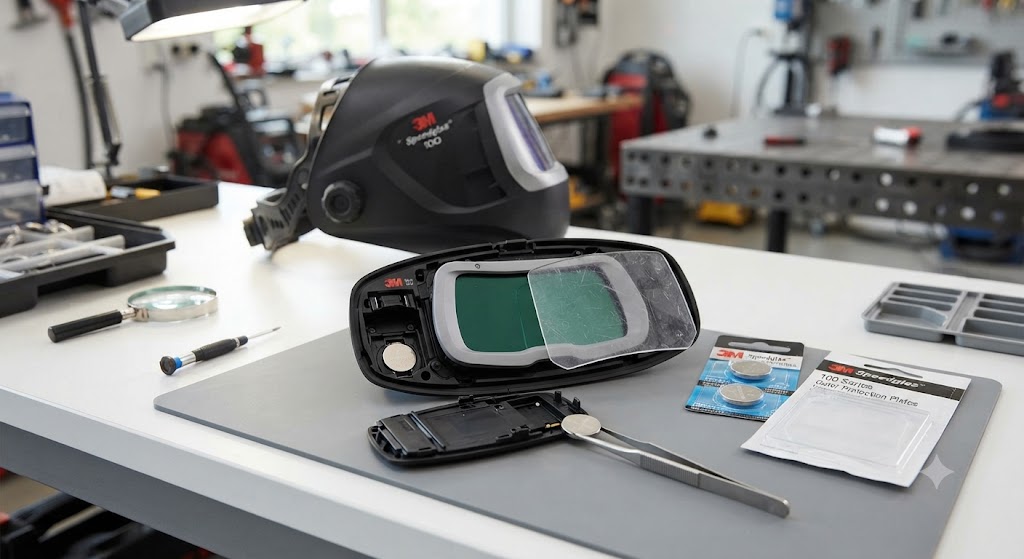
Two real flaws. First, price: even the mid-tier 9100 configurations cost well above the budget field, and the SideWindows and premium filters push it higher. Second, running costs: genuine Speedglas cover lenses and the CR2032 batteries this hood uses are not cheap, and 3M will remind you that off-brand parts void the warranty. If you are a once-a-month hobby welder, this is more helmet than you need, and the Speedglas 100 or a budget brand will serve you better.
Who should skip it? Occasional hobbyists, anyone on a tight budget, and welders who never grind or TIG and just want a basic drop-and-go hood. For them the 9100 is overkill.
Who should buy it
The 9100 is for the welder who is under the hood most days, wants a large clear view, and expects the helmet to still perform after years of abuse. If that is you, the 3M Speedglas 9100 is the model in the range I would spend my own money on, ideally with the 9100XXi filter.
Frequently asked questions
What is the viewing area of the Speedglas 9100XXi? Approximately 2.8 by 4.2 inches, the largest in the 9100 family, and it can be widened further with Shade 5 SideWindows.
What battery does the Speedglas 9100 use? It uses CR2032 lithium coin cells, held in small battery holders behind the filter cassette. The 9100V and 9100X models also have a solar assist panel.
Can the Speedglas 9100 handle TIG welding? Yes. With sensitivity turned up it reliably triggers on low-amp TIG, and the shade range starts at 5 for prep and cutting.
What is the difference between the 9100X and 9100XXi filters? The 9100XXi has a larger viewing area and Natural Color technology for a brighter, more realistic view. The 9100X is smaller and less expensive but shares the same core protection.
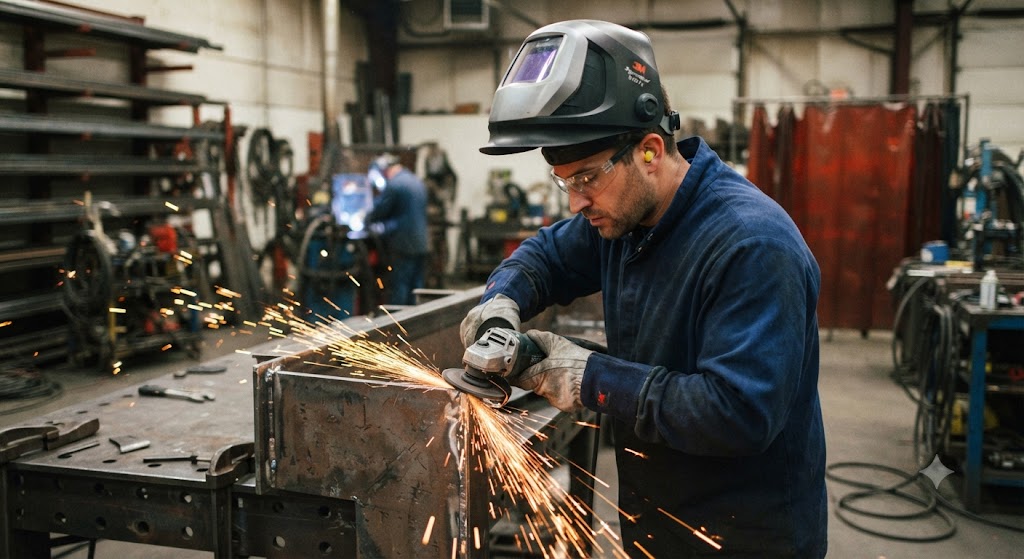
Does the 9100 come with a grinding mode? The standard 9100 is not a flip-up. If you grind constantly, look at the 9100 FX, which adds a flip-up clear visor for grinding and prep.
Is the Speedglas 9100 good for stick welding? Yes. Its shade range up to 13 and reliable sensors make it well suited to stick, MIG, and flux-core work.
References
- 3M Speedglas Welding Filter 9100V, 9100X, 9100XX, and 9100XXi technical specifications, 3M multimedia library
- 3M Speedglas 9100 Series user instructions, 3M multimedia library
- American Welding Society, welding lens shade chart and eye protection guide
- OSHA fact sheet, eye protection during welding