3M Speedglas Parts and Cover Lenses: Keep Your Hood Working Like New
A Speedglas is a long-term helmet, and long-term helmets need feeding. The difference between a hood that still performs after five years and one that gets tossed in a drawer usually comes down to whether the owner kept up with wear parts. Genuine 3M Speedglas parts, especially the cover lenses that take the daily beating, are what keep the optics clear and the protection intact. This guide covers the parts that actually wear out and how to keep the right ones on hand.
Cover lenses: the part you replace most
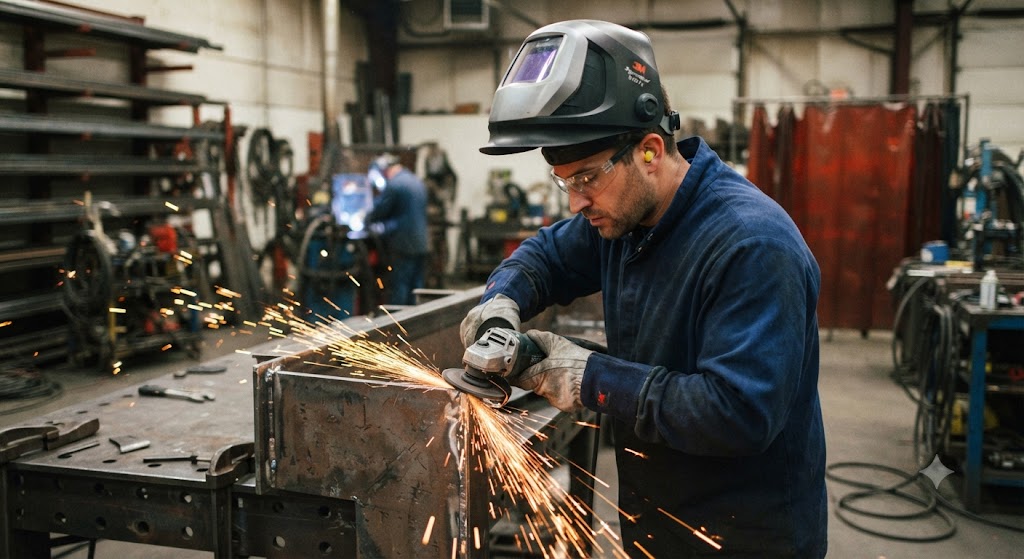
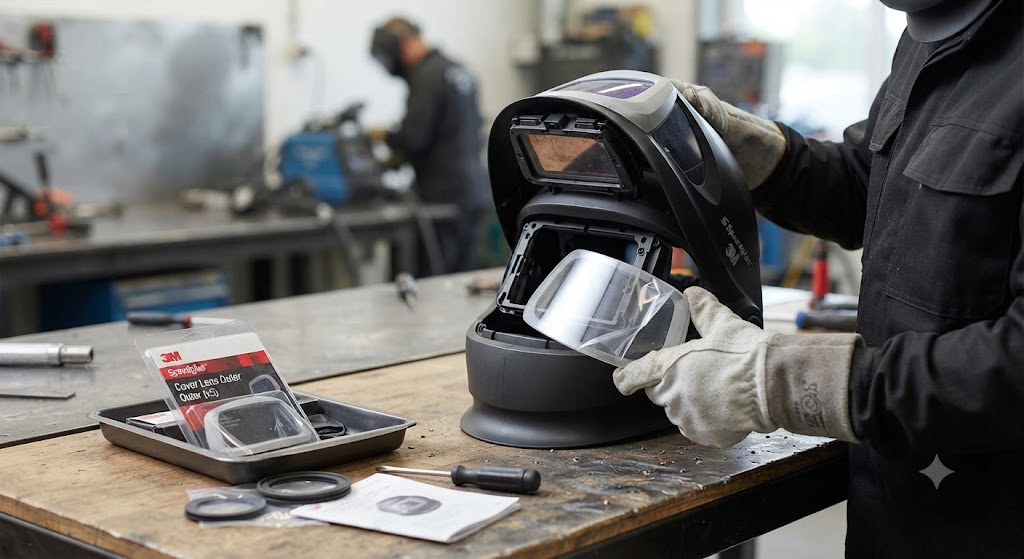
The single most-replaced part on any Speedglas is the outside cover lens, sometimes called the outside protection plate. This is the clear, sacrificial sheet that sits in front of the auto-darkening filter and takes the spatter, scratches, and grinding grit so the expensive filter does not. When your view gets hazy, pitted, or spotted, it is almost never the filter failing, it is a tired cover lens, and swapping it makes the hood feel new again.
Each Speedglas series uses its own cover lens shape, so match to your exact model. The 9100 series uses flat 9100 cover lenses, the 9100 FX uses its own front cover to suit the flip-up shell, and the curved G5-02 uses a curved cover lens specific to that helmet. There is also an inside protection plate that sits behind the filter, closer to your face, which needs occasional replacement too. Buying cover lenses in multi-packs is the smart move, because you will always use them and running out mid-job is a genuine annoyance.
The other wear parts worth stocking
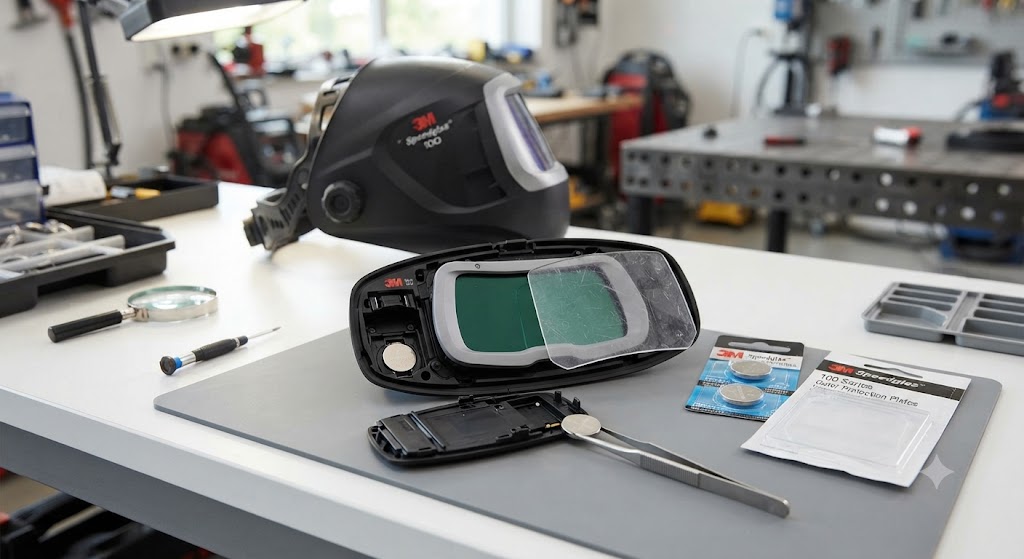
Beyond cover lenses, a few parts wear with use. The sweatband on the headgear soaks up everything and should be swapped for hygiene and comfort; 3M sells them in multi-packs that fit the 9100 and G5-01. The headband or head suspension itself can wear or crack after heavy use and is fully replaceable, which means a well-loved hood never has to be scrapped over a broken strap. On the 9100 FX, the flip-up spring mechanism is a known wear item and is available as a replacement part. And of course the batteries, CR2032 for the 9100 family and CR2450 for the G5 series, are consumables you should always keep spare.
Why genuine parts matter here
This is where I will be direct. 3M explicitly warns that failing to use genuine Speedglas replacement parts can void the warranty and, more importantly, may compromise the protection the helmet is designed to provide. A cover lens is not just about clarity, it is part of the certified impact and radiation protection system. A cheap off-brand plate that does not meet the same standard undermines the whole point of buying a premium hood. For cover lenses and protection plates especially, stick with genuine 3M parts.
A quick comparison on running costs
It is fair to say Speedglas consumables cost more than budget-brand parts, and that is a real factor in the total cost of ownership. A cheap helmet with cheap lenses is less painful to feed. But there is a trade: genuine Speedglas cover lenses are optically clear and hold their clarity, so you are not welding through a slightly foggy panel the way some bargain plates force you to. If you bought a Speedglas for the optics, feeding it bargain lenses defeats the purpose.
The honest caveat
The main drawback of the Speedglas parts ecosystem is exactly that cost, and the fact that each series needs its own specific lenses means you cannot share consumables across a mixed collection of hoods. If you run several different Speedglas models, you will be stocking several different cover lenses, which adds up. Keep your part numbers written down so you reorder the right plate the first time.
Who should skip stocking a full parts kit? Occasional hobby welders who barely wear their hood may only need the odd cover lens and a battery, not a full stock of headbands and sweatbands. Match your spares to how hard you actually use the helmet.
The bottom line
Keep a stack of the correct cover lenses, a spare sweatband, the right batteries, and know where to get a replacement headband, and your Speedglas will outlast several cheaper helmets. Buy genuine, match parts to your exact model, and treat cover lenses as the routine consumable they are.
Frequently asked questions
How often should I replace my Speedglas cover lens? Whenever it becomes scratched, pitted, or hazy enough to affect your view. Heavy daily welders may change them weekly, occasional users far less often.
Are Speedglas cover lenses model-specific? Yes. The 9100, 9100 FX, and curved G5-02 each use their own cover lens shape, so match to your exact helmet.
What is the difference between the outside and inside protection plates? The outside cover lens faces the arc and takes spatter and grinding damage. The inside plate sits behind the filter near your face and is replaced less often.
Can I use non-3M replacement lenses? 3M warns that non-genuine parts may void the warranty and can compromise protection. Genuine cover lenses are part of the certified protection system.
What parts wear out on a Speedglas besides the lens? The sweatband, the headband or head suspension, batteries, and on the 9100 FX the flip-up spring mechanism.
Can I replace a broken Speedglas headband? Yes. The head suspension is a replaceable part, so a broken strap does not mean scrapping the helmet.
References
- 3M Speedglas welding parts and accessories catalog, 3M Canada
- 3M Speedglas 9100 Series user instructions, replacement parts section, 3M multimedia library
- 3M Speedglas care and maintenance resources, 3M United States
- OSHA fact sheet, eye protection during welding