Auto Darkening Weld Helmet: Clarity, Comfort, Fit
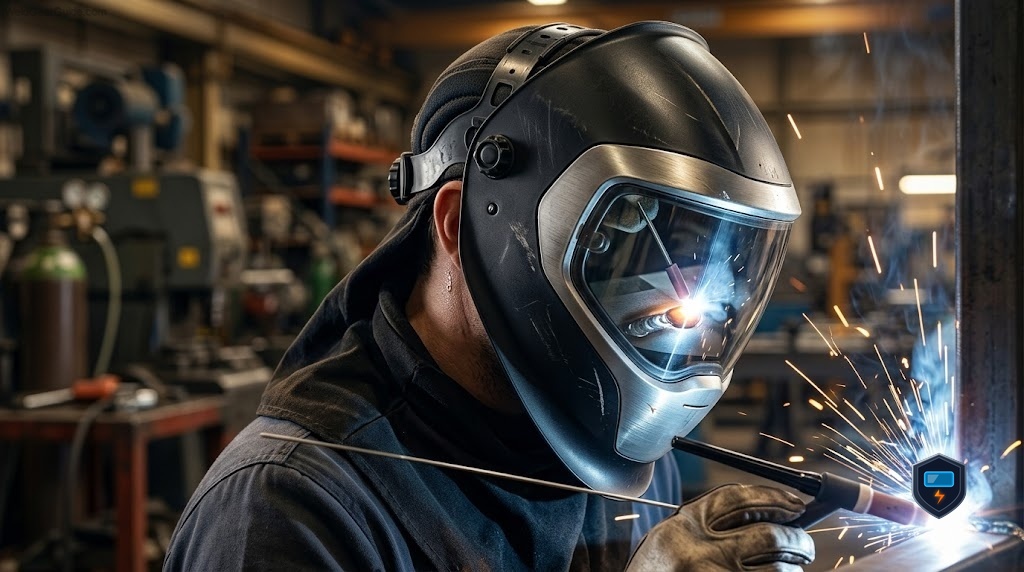
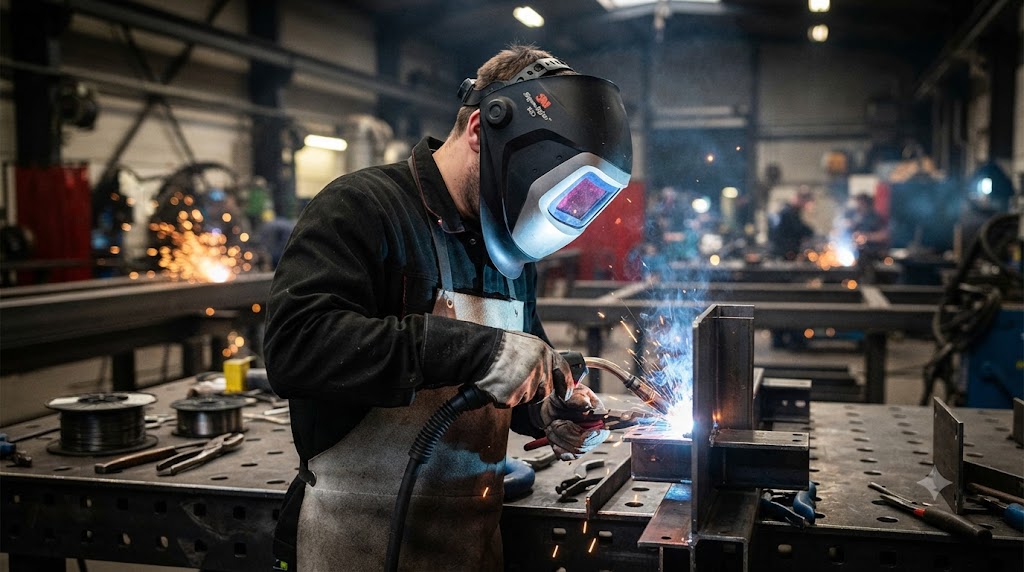
A passive hood teaches you patience. You set the joint, you nod the shell down blind, and you hope the electrode is still where you left it. Anyone who learned that way remembers the first time they used an auto darkening helmet and could see the joint right up to the moment the arc struck. It is the single biggest quality of life improvement in welding gear, and it is why almost nobody goes back.
But auto darkening hoods vary enormously, and the spec sheet hides most of the variation. Two helmets can both claim shade 9 to 13 and switching at 1/25,000 of a second, and one will be a pleasure while the other makes you tired by lunch. The differences live in three places: clarity, sensor behavior, and fit.
Clarity is a four digit number, not a marketing word
Every serious filter carries a rating like 1/1/1/1. Those digits cover optical class, light diffusion, shade uniformity across the window, and angle dependence. One is the best score in each category.
The fourth digit is the one that matters most and gets discussed least. Angle dependence describes what happens when you are not looking straight through the filter, which is almost always. Weld a fillet with your head cocked and a 1/1/1/2 filter will show you a slightly different shade in the corner of the window than in the center. Your brain compensates, and the compensating is what tires you out.
If you weld flat on a bench all day, a 1/1/1/2 filter is perfectly usable. If you weld in position, pay for 1/1/1/1. Both the Lincoln VIKING 3350 and the current Miller ClearLight platforms hit that rating.
The other clarity factor is color. Older filters cast everything green, which flattens the puddle and makes it harder to read where the toes are tying in. Modern true-color optics keep enough of the visible spectrum that the puddle looks like molten metal instead of a green blob. Once you have welded with one, the difference is hard to give up.
Sensors decide whether you trust the hood
The failure mode that makes people distrust auto darkening helmets is not slow switching. It is the lens not firing at all because something blocked the sensors.
Arc sensors are photodiodes on the front of the shell. They need to see the arc. Put your hand, a flange, or the edge of the workpiece between the arc and the shell, and the filter has no idea welding has started.
Two sensors is fine for bench work in the flat position. Four sensors gives redundancy, which is why hoods aimed at fabrication and field work carry them. The Miller Digital Elite goes further with a mode that detects the arc electromagnetically rather than optically, so a fully blocked sensor array still triggers the lens. If you weld inside structures or around corners, that feature is worth more than any clarity digit.
Sensitivity is the related setting, and it causes more complaints than anything else. Set too low, the filter misses dim low-amperage TIG arcs. Set too high, it darkens off shop lights, sunlight, or the arc at the next bench. If your hood behaves strangely, adjust sensitivity before you assume it is broken.
Fit is the spec nobody publishes
Here is the uncomfortable truth about helmet reviews: the thing that determines whether you like a hood after six months is the headgear, and headgear is almost impossible to evaluate from a listing.
Good headgear spreads load across the top and back of the skull with a real top strap and multiple contact points. Lincoln’s X6 headgear on the VIKING line does this well, which is the only reason a 12.5 square inch window is tolerable to wear. 3M’s Speedglas headband is arguably better still, which is why the Speedglas 9100 keeps showing up on people who work full shifts.
Bad headgear pivots on two plastic pins, puts everything on your forehead, and loosens gradually until you are tightening it every hour.
The other half of fit is weight, and it trades directly against viewing area. A big window means a big shell. If your work is overhead or on ladders, that trade goes the wrong way, and something like the Jackson Insight at around six ounces of shell will serve you better than any flagship.
Picking by the problem you actually have
“I cannot see enough of the work.” Buy the largest 1/1/1/1 window you can tolerate carrying. The VIKING 3350 or the Miller Digital Infinity. Accept the bulk.
“The lens does not fire when I am boxed in.” Buy four sensors with electromagnetic detection. The Digital Elite. Accept the smaller window.
“My neck is done by three o’clock.” Buy light. The Jackson Insight. Accept the small view.
“I am learning and do not know yet.” Buy the Miller Classic Series. Real optics, low amp capable, small window. You will learn what annoys you, and that is the information you need before spending more.
Each of those picks has a genuine cost, and anyone telling you one helmet does all four things has not welded in enough positions.
Keeping it good
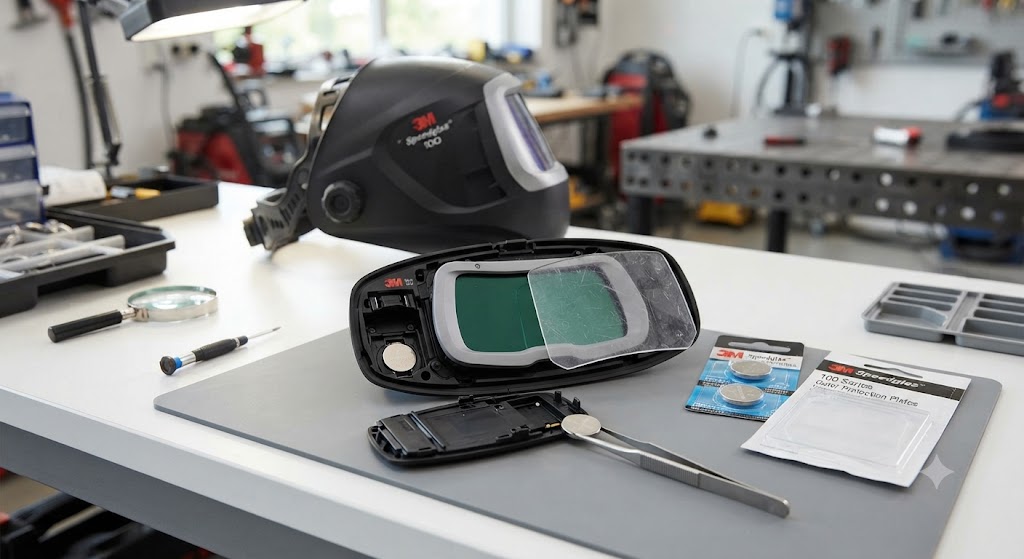
An auto darkening hood that feels like it is failing is usually sitting behind a scratched cover lens. That clear sheet in front is a consumable, and once it is pitted your expensive filter looks cheap. Keep packs on hand, wipe the sensor faces at the same time, and change the coin cell at the first sign of late darkening.
Do not store the helmet in a hot vehicle, do not leave it face down on hot steel, and never clean the filter with solvent. Those three habits account for most premature filter deaths.
What to take away
Auto darkening helmets have converged on the safety basics. Every reputable filter blocks ultraviolet and infrared continuously and switches faster than your eye can register. What you are choosing between is comfort and confidence.
Three things worth remembering. The fourth clarity digit is the one you feel in real welding positions, so do not treat all 1/1/1/x ratings as equal. Sensor coverage, not switching speed, decides whether you trust the hood in awkward work. And headgear quality outlasts every other consideration, because a helmet you dislike wearing is one you will stop wearing properly.
Frequently asked questions
Is an auto darkening helmet safe before it darkens? Yes. The ultraviolet and infrared filtering layer is always active regardless of shade state. Darkening controls visible brightness so you can see the weld pool, not radiation protection.
How many arc sensors do I really need? Two is enough for flat bench welding. Four matters when your hand, the joint geometry, or the workpiece can block the sensors, which happens constantly in fabrication and field work.
What switching speed is fast enough? Anything at 1/20,000 of a second or faster. Numbers beyond that are competitive marketing rather than a practical safety difference.
Why does my helmet darken when I am not welding? Sensitivity is set too high, so ambient light, sunlight, or a neighboring arc is triggering it. Turn sensitivity down one step at a time until it stops.
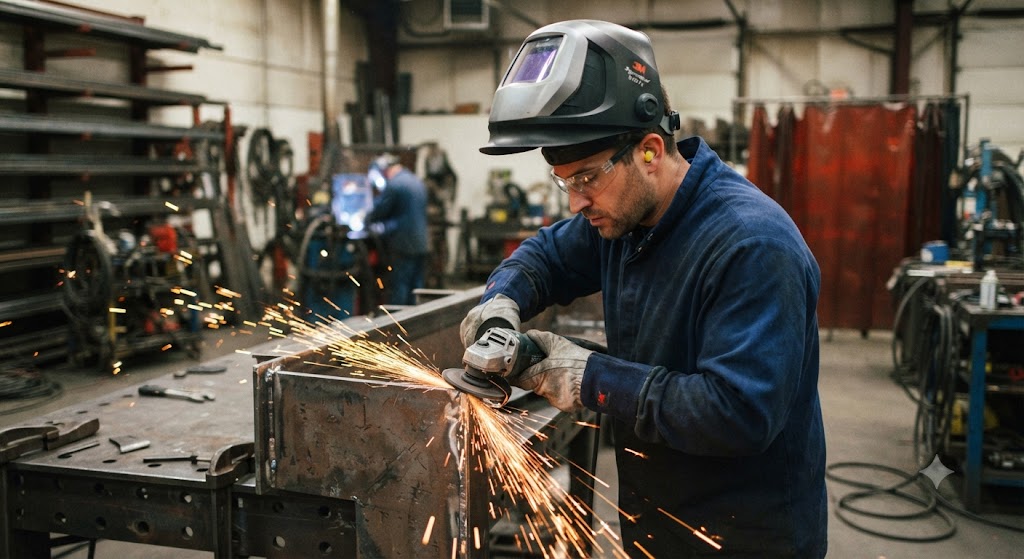
Can I use an auto darkening helmet for grinding? Yes, in grind mode, which locks the filter in its light state so it does not flicker on grinding sparks. Switch back before welding, because forgetting is the most common cause of an unexpected flash.
Do auto darkening helmets work in cold weather? Most are rated to around 14 degrees Fahrenheit. Below that, switching slows noticeably. Warm the hood indoors or in a vehicle before starting outdoor winter work.
What is true color optics? A filter design that preserves more of the visible spectrum so the weld area does not look heavily green tinted. It makes reading the puddle and the joint edges easier and reduces eye fatigue.
Should a beginner buy an expensive helmet? Not immediately. A mid-range hood with real optics and a low amperage rating teaches you what actually bothers you about welding gear, and that knowledge makes the second purchase far better targeted.
References
- Occupational Safety and Health Administration, Eye and Face Protection
- American National Standards Institute and ISEA, Z87.1 Occupational Eye and Face Protection
- National Institute for Occupational Safety and Health, Welding Safety and Health