Auto-Darkening Welding Helmet Not Working? A Fix-It Guide
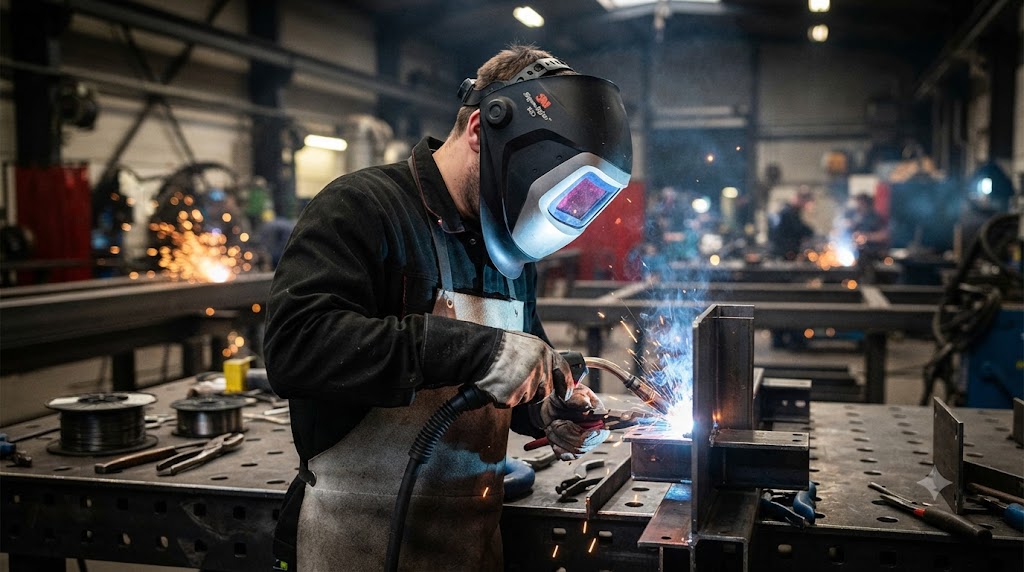
Few things stop a job faster than an auto-darkening welding helmet not working the way it should. One moment it is protecting your eyes, the next it flashes you at the arc, darkens unevenly, or refuses to react at all. The good news is that most of these failures come from a short list of simple, fixable causes, and only rarely from a truly dead lens. This guide walks through the problems in the order you should check them, so you can get back to welding without buying a new hood.
Start with the two-minute checks
Before assuming the worst, rule out the embarrassing-but-common causes. If your auto-darkening welding helmet is not working, first confirm the lens is switched on and not in grind mode, since grind mode deliberately keeps the lens light. Then check that you have removed any protective shipping film from both sides of the lens, a genuinely frequent culprit on new hoods. Finally, make sure the sensitivity is not turned all the way down and the shade is set appropriately for your amperage. These cost nothing and solve a surprising share of complaints.
Clean the cover lens and sensors
The most common real cause of a lens that will not darken or that flickers is dirt. The arc sensors on the front of the hood need a clear line of sight to the arc, and a cover lens caked in spatter, smoke film, or dust will blind them. Wipe the front cover lens clean or replace it if it is pitted or hazed, then gently clean the sensor windows themselves with a soft, dry cloth. This single step resolves a large share of darkening and flickering issues.
Check the battery and power
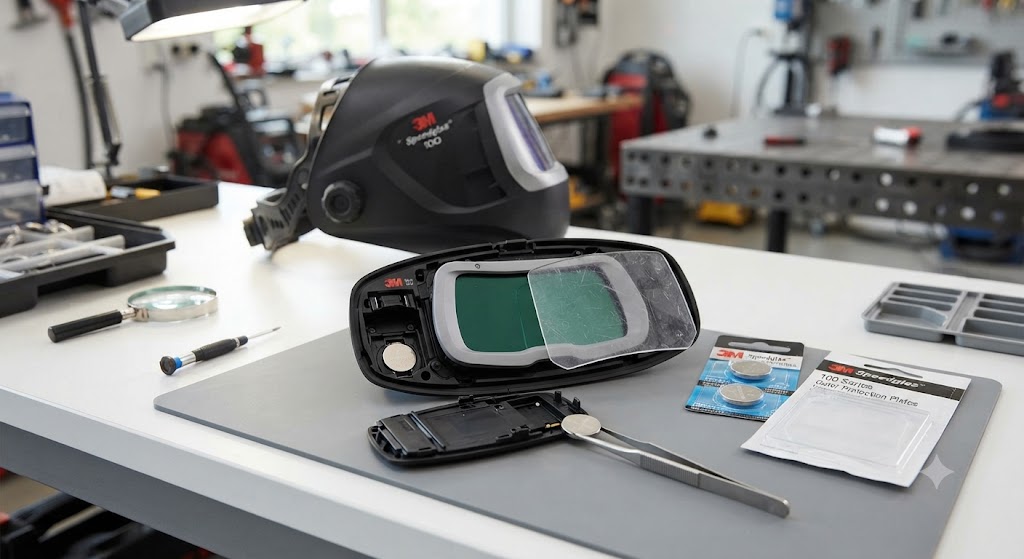
If cleaning does not help, suspect power. On battery models, low or dead cells are the leading cause of a lens that stops darkening, since the battery provides the instant switch even on solar-assisted hoods. Replace the cells with fresh ones of the correct type, confirm the polarity is correct, and clean any corrosion off the contacts. On solar-only hoods, let the lens charge in bright light for a while before testing. Many hoods will also warn you first through a low-battery indicator, so heed it.
Diagnose flickering and uneven darkening
A lens that flickers or darkens unevenly usually points to one of three things. Low welding current below the lens threshold can leave it struggling to trigger, so raise the sensitivity setting. An uneven headband that holds the lens at different distances from each eye can cause uneven shading, so reset the headband evenly. And dirty or partially blocked sensors, again, can cause intermittent switching. TIG welders at very low amperage should pay special attention to sensitivity, since low-amp TIG is the hardest case for any sensor.
When the lens is genuinely dead
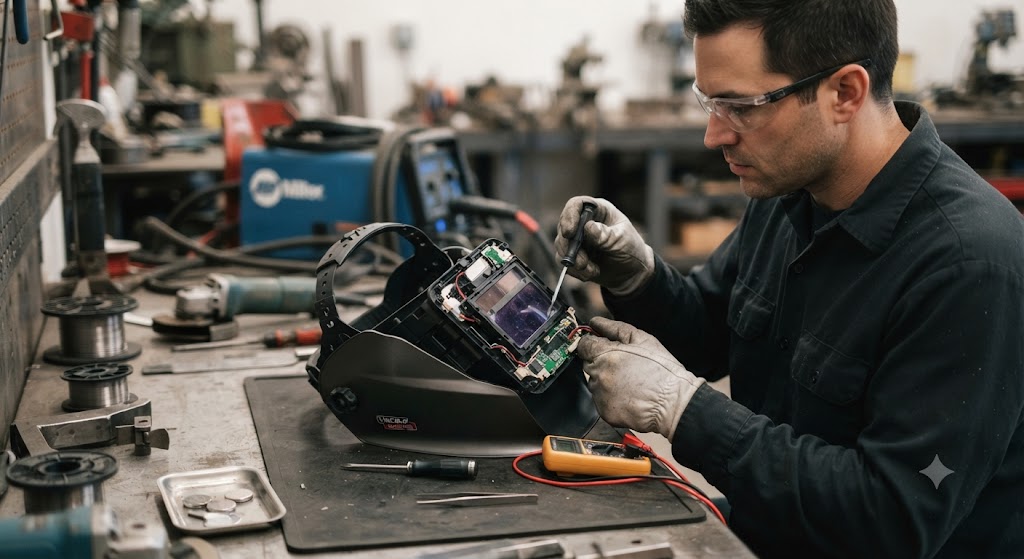
If you have cleaned the sensors, fitted fresh batteries with correct polarity, raised the sensitivity, and confirmed the mode and settings, and the lens still will not react, the auto-darkening filter itself has likely failed. On many hoods the ADF cartridge is replaceable, so check whether your model offers a replacement filter before discarding the helmet. Never keep welding with a lens that darkens inconsistently; an unreliable lens is an eye injury waiting to happen.
Prevent the next failure
Most darkening problems trace back to neglect, so a little maintenance goes a long way. Replace cover lenses before they get badly pitted, keep the sensors clean, store the hood out of direct sun and heat when not in use so solar-assisted batteries are not needlessly drained, and carry a spare set of batteries and a spare cover lens in your kit. A hood treated this way rarely leaves you flashing at the bench.
Who should just replace the hood? If your helmet is an old, unbranded model with a sealed, non-replaceable battery and no available replacement ADF cartridge, repair is rarely worth it; invest in a reputable hood with replaceable batteries and cover lenses instead.
Frequently asked questions
Why is my auto-darkening welding helmet not darkening? Most often dirty sensors or a dirty cover lens, a dead battery, sensitivity set too low, or the lens left in grind mode. Check those in that order.
Why does my welding helmet flash me? Usually low battery, low sensitivity relative to your welding current, or blocked sensors. Replace the battery, raise the sensitivity, and clean the sensors.
Can a solar welding helmet still need batteries? Yes. Many solar-assisted hoods rely on a battery for the instant switch, so a dead battery can stop the lens darkening even in bright light.
Why does my lens darken unevenly? Commonly an uneven headband holding the lens at different distances from each eye, or partially blocked sensors. Reset the headband and clean the sensors.
Is a flickering welding lens dangerous? Yes. A lens that darkens inconsistently risks arc flash to your eyes. Stop welding and fix the cause before continuing.
Can I replace the auto-darkening filter? On many mid-range and premium hoods, yes, the ADF cartridge is replaceable. Check your model before replacing the whole helmet.
References
- Manufacturer troubleshooting guidance for auto-darkening filters, Optrel and Weldclass
- Miller Electric, auto-darkening lens technology overview, millerwelds.com
- American Welding Society, eye protection and lens guidance
- OSHA fact sheet, eye protection during welding