The Best Welding Helmet for Daily Industrial Use
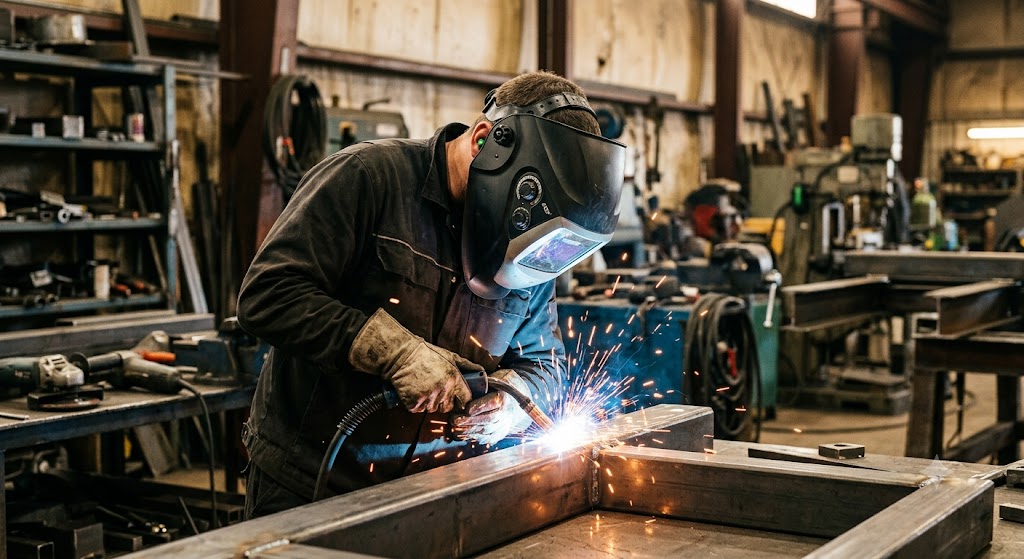
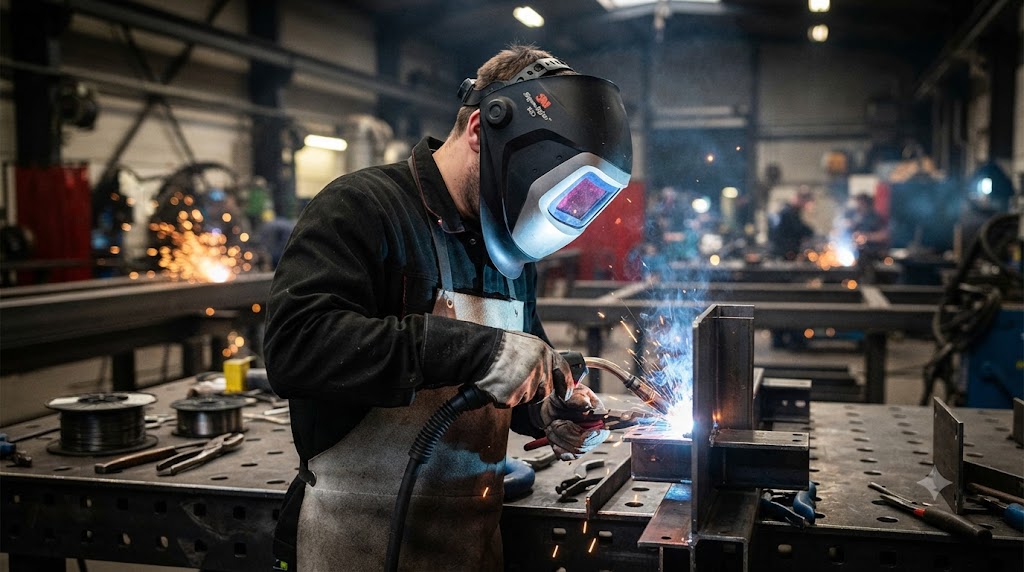
By hour three of a production shift, a bad hood turns into a problem you can feel. The lens flashes when the welder in the next bay strikes an arc. The headband bites into your temples. The shell already carries a crack from the morning it slid off the bench. None of that shows up in a ten minute test at the counter. It shows up when you wear the same helmet forty hours a week.
A helmet built for daily industrial welding is a different animal from the one a weekend hobbyist grabs off a pegboard. It has to darken fast and stay dark, take a beating, and sit on your head all day without leaving a mark. This guide covers three helmets that earn their keep on a real shop floor, and it tells you plainly who each one is wrong for.
What daily industrial use actually demands
An industrial grade auto darkening welding helmet has to clear a few bars that cheaper hoods skip.
- Optical clarity. Look at the four digit rating stamped on the lens, for example 1/1/1/1. The closer every number is to 1, the truer the view. A 1 in each slot means top marks for clarity, diffusion, and consistency across the lens and across viewing angles.
- A shell that survives abuse. Daily helmets use high impact nylon or similar materials that shrug off drops, sparks, and the odd dropped wrench.
- Headgear you forget you are wearing. All day comfort is the feature welders underrate until a cheap band gives them a headache by lunch.
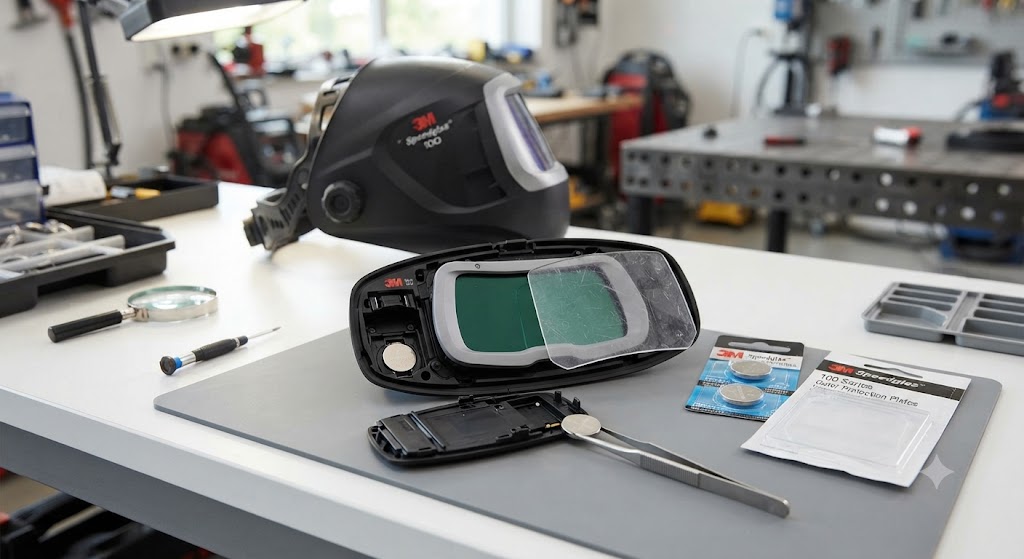
- A replaceable cover lens. You will scratch and spatter the outer lens. On a good helmet you swap it in seconds, not minutes.
Here is the short answer before the detail. For most daily industrial welders, the Lincoln Electric Viking 3350 is the one to beat. If you want the most capable helmet on the floor and plan to add powered air later, step up to the 3M Speedglas 9100. If you live in a fabrication shop and want fast controls and quick lens swaps, the ESAB Sentinel A50 is the pick.
Top pick: Lincoln Electric Viking 3350
The Viking 3350 is the helmet you see on more shop floors than any other, and there is a reason it stays there. Its 4C lens carries a 1/1/1/1 optical clarity rating, so the puddle looks like daylight instead of the green murk older hoods gave you. The viewing area is large enough to track a long weld without craning your neck, and the shade runs from 5 to 13, so you can set it for low amp TIG or heavy stick.
The verdict: this is the best all around helmet for a welder who runs different processes every day and wants one hood that does it all. Grind mode sits on an external button, the outer cover lens pops off fast, and the redesigned headgear spreads weight better than the model it replaced.
The flaw you should know about: it is not light. At roughly 20 ounces the 3350 sits on the heavier side, and overhead welders feel it by the end of a long ceiling job. The headgear is comfortable, but the weight is real.
Who should skip it: if most of your day is overhead or out of position work, a lighter hood or a powered air setup will treat your neck better.
The most capable: 3M Speedglas 9100
The Speedglas 9100 is what you reach for when the helmet is a tool you depend on every single shift. The curved filter and side windows open up your peripheral vision, which matters when you are tracking a joint that runs past the edge of a flat lens. It offers dark shades 5 and 8 to 13, seven levels of arc detection sensitivity, and it pairs with 3M Adflo powered air respirators when your work moves into fumes and tight spaces.
The verdict: this is the helmet for the industrial welder who wants the widest view, the most sensitivity control, and a clear path to add powered air later without buying a whole new system.
The flaw you should know about: it is bulky and heavy, and welders coming from a simple hood find the filter menu and setup more involved than they expected. The auto darkening filter is not bundled with every shell configuration, so you have to match the shell and the filter carefully before you order.
Who should skip it: a hobbyist or a light duty welder does not need this much helmet, and the extra bulk is a burden if you only weld a few hours a week.
The fabricator’s favorite: ESAB Sentinel A50
The Sentinel A50 won a following in fabrication shops for two reasons: its Halo headgear balances the hood nicely, and its color touch screen makes changing settings feel less like solving a puzzle. It carries a 1/1/1/2 optical rating, holds eight memory settings, and lets you swap the front cover lens in about ten seconds without taking the helmet off.
The verdict: for a shop welder who changes settings often and wants controls that make sense, the Sentinel A50 is easy to live with day to day.
The flaw you should know about: the touch screen sits inside the shell, so you cannot adjust it with the hood down, and thick gloves make the on screen taps fussy. ESAB has also moved its lineup toward the newer Sentinel A60, so stock on the A50 comes and goes. If you find the A50 available and it fits your shop, it is still a strong hood, but check the listing before you count on it.
Who should skip it: if you weld overhead a lot or need a TIG rating below 2 amps for very fine work, look at a helmet rated for lower amperage.
How the three compare
All three are real daily drivers, but they are not the same tool.
| Helmet | Optical rating | Best for | Watch out for |
|---|---|---|---|
| Lincoln Viking 3350 | 1/1/1/1 | One hood for mixed daily work | Weight on long overhead jobs |
| 3M Speedglas 9100 | High clarity, wide view | Widest view and a path to powered air | Bulk and a steeper setup |
| ESAB Sentinel A50 | 1/1/1/2 | Fast controls and quick lens swaps | Touch controls with gloves, spotty stock |
If you want one answer, the Viking 3350 splits the difference best. It is lighter to live with than the Speedglas and easier to find in stock than the Sentinel A50, while giving you the top 1/1/1/1 clarity rating. Welders who want the most helmet on the floor, and who expect to add a powered air respirator, are the ones who should stretch to the 3M. The popular Miller Digital Elite is another hood you will see in the same shops, and it welds well, though its headgear draws steady complaints for slipping down when raised, which is one reason it did not take the top spot here.
How often you replace parts on a daily use helmet
On a helmet that works every shift, the outer cover lens is the part you change most. Heavy welders swap it weekly or even daily once spatter and scratches start to blur the view. Keep a sleeve of spares in your drawer.
The inside cover lens lasts far longer, often months, since it sits protected behind the filter. The auto darkening filter itself can run for years on a quality hood, and the batteries on solar assisted models like the Viking 3350 stretch across long spans of daily use. The headgear sweatband is the other wear part. Change it when it stops holding sweat back, because a soaked band is the fastest route to a foggy lens.
Hobbyist versus daily industrial helmets
The gap between a weekend hood and a daily driver is not the arc, it is everything around it.
A hobby helmet often uses a lens with a weaker optical rating, fewer arc sensors, and a slower switching speed. That is fine for a few short welds. Run it eight hours and the eye strain adds up, the sensors miss low amp TIG starts, and the thin shell cracks sooner. Daily industrial helmets pay for themselves in the parts you do not replace and the headaches you do not get. They darken more reliably, take more punishment, and stay comfortable long after a cheap hood has become the thing you dread putting on.
Frequently asked questions
What welding helmet holds up best to daily industrial welding? The Lincoln Electric Viking 3350 is the strongest all around choice for daily industrial work thanks to its 1/1/1/1 optical clarity, durable shell, and comfortable headgear. For the widest view and powered air capability, the 3M Speedglas 9100 holds up just as well and adds room to grow.
How often should I replace an industrial helmet’s parts? Swap the outer cover lens as often as weekly under heavy use, replace the sweatband when it stops absorbing, and expect the inner lens to last months. A quality auto darkening filter can last years.
What is the difference between a hobbyist and a daily use industrial helmet? Daily helmets have higher optical clarity, more arc sensors, faster switching, tougher shells, and better headgear. They are built to stay reliable and comfortable across full shifts, where a hobby hood is built for short sessions.
Is an auto darkening helmet safe for eight hour shifts? Yes. A quality auto darkening helmet filters harmful UV and infrared light at all times, even in the light state, so your eyes stay protected whether or not the filter switches. Look for one that meets ANSI Z87.1.
What optical clarity rating should an industrial helmet have? Aim for 1/1/1/1, the top score in each of the four categories. The Viking 3350 hits that mark. A rating with a 2 in the last slot, like the Sentinel A50 at 1/1/1/2, is still very good for daily work.
Do I need a PAPR helmet for industrial welding? Not always, but if you weld in confined spaces or on coated metals that throw heavy fumes, powered air adds real protection. The 3M Speedglas 9100 pairs with the Adflo system, which is why it suits shops that expect to move that direction.
Can one helmet handle MIG, TIG, and stick all day? Yes. All three helmets here cover a wide shade range and switch between processes, and the Viking 3350 in particular is built to be the single hood a mixed process welder reaches for every day.
References
- Occupational Safety and Health Administration (OSHA), eye and face protection guidance for welding
- American National Standards Institute (ANSI) Z87.1 standard for eye and face protection
- Lincoln Electric, Viking 3350 Series product information
- 3M, Speedglas 9100 Series welding helmet technical data
- Miller Electric, Selecting the Right Welding Helmet resource