The Best Welding Helmet for TIG: Clarity and Low-Amp Sensitivity
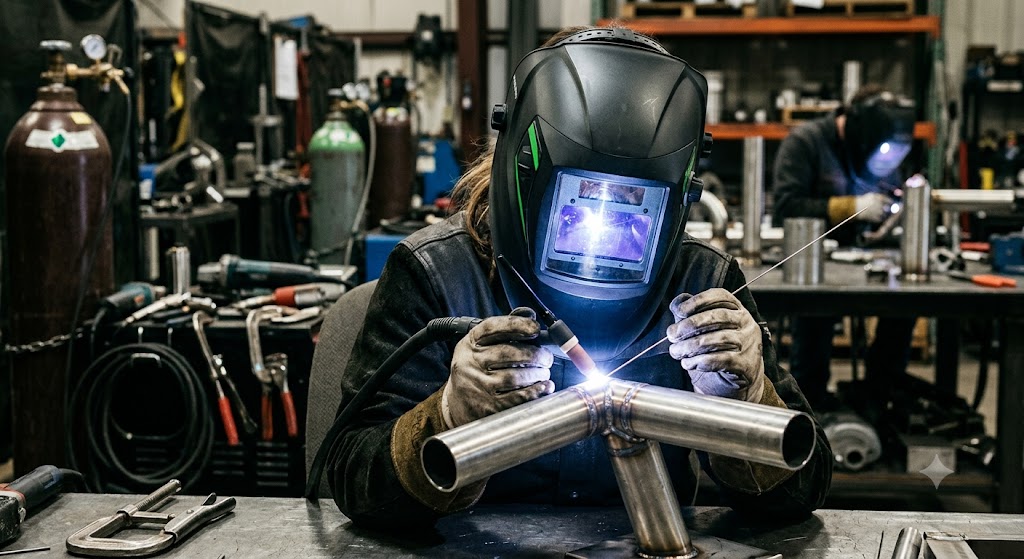
TIG welding is the discipline that punishes a poor hood. The best welding helmet for TIG needs two things that cheaper helmets skimp on: a lens that triggers reliably at very low amperage, and optics clear enough to read the delicate weld pool that TIG demands. Strike a low-amp arc under the wrong hood and the lens may flicker or fail to darken; try to lay a precise bead through a dim, tinted lens and your work suffers. This guide names the hoods that get TIG right.
What TIG demands from a helmet
TIG has specific needs. Low-amperage sensitivity is paramount, since TIG often runs well below the threshold that triggers a budget lens reliably, so you want four or more sensors and an adjustable sensitivity control. A wide shade range that reaches down to shade 8 helps for low-amp work, while true-color optics let you read the puddle and see the filler clearly. Finally, because TIG invites you to bring your face close to the work, a magnifying cheater lens is often a welcome addition. Prioritize sensitivity and clarity over everything else.
Best overall for TIG: Optrel Vegaview 2.5
The Optrel Vegaview 2.5 is a TIG specialist’s dream. Its record-setting shade 2.5 light state makes the idle view exceptionally bright, its three sensors and sensitivity control handle low amperage well, and its true-color optics render the pool beautifully. It is light and comfortable for the long, patient sessions TIG demands. You can check the Vegaview 2.5 listing here.
Who should skip it? Budget-focused welders, since this is a premium hood.
Best value for TIG: Lincoln Viking 3350
The Lincoln Viking 3350 balances excellent low-amp performance, a large bright true-color view, and all-day comfort at a mid-range price, making it a superb TIG hood for serious welders who do not want to pay flagship money. You can check the Viking 3350 listing here.
Who should skip it? Welders wanting the brightest possible idle view, who should choose the Optrel.
Best budget for TIG: YESWELDER panoramic
For low-amp TIG on a budget, the YESWELDER panoramic hood offers six sensors for reliable triggering, a large true-color view, and side vision, delivering surprising TIG capability for the money. You can check the YESWELDER panoramic listing here.
Who should skip it? Welders doing extremely low-amp precision TIG, who should invest in a premium hood.
How to choose for TIG
Choose the Optrel Vegaview 2.5 for the brightest view and premium low-amp performance, the Lincoln Viking 3350 for the best balance of capability and value, or the YESWELDER panoramic for budget TIG with plenty of sensors. The more precise and low-amp your TIG work, the more the premium hoods justify themselves.
A note on low-amp reliability
The single biggest TIG helmet frustration is a lens that will not darken at low amperage. If your hood flickers on low-amp TIG, raise the sensitivity first; if it still struggles, the hood’s sensors are simply not up to the task, and a better hood with more sensitive sensors is the fix. This is precisely why TIG welders should not cheap out on sensor count and sensitivity.
Who it is for
The best welding helmet for TIG rewards the welder who values clarity and low-amp reliability above all. Choose the Optrel Vegaview 2.5 for premium TIG, the Lincoln Viking 3350 for value, or the YESWELDER panoramic for budget TIG. Add a cheater lens if you weld up close, and your precision work will improve.
Frequently asked questions
What is the best welding helmet for TIG? The Optrel Vegaview 2.5 for premium TIG, with the Lincoln Viking 3350 for value and the YESWELDER panoramic for budget TIG.
Why does my helmet not darken during low-amp TIG? Low-amp TIG often falls below a lens’s trigger threshold. Raise the sensitivity, and if it still struggles, use a hood with more sensitive, higher-count sensors.
What shade do I need for TIG welding? Generally shade 8 to 10 for low-amp work and up to 12 to 14 for high-amp TIG, adjusted for arc brightness and comfort.
How many sensors should a TIG helmet have? Four or more, with an adjustable sensitivity control, to trigger reliably at the low amperage TIG often uses.
Is a cheater lens useful for TIG? Yes. TIG invites you to bring your face close to the weld, which is exactly the distance a magnifying cheater lens is tuned for.
Do I need a premium helmet for TIG? For precise, very low-amp TIG, a premium hood’s sensitivity and clarity help. For general TIG, a good mid-range or budget hood with enough sensors works well.
References
- Manufacturer specifications for Optrel, Lincoln Electric, and YESWELDER hoods
- American Welding Society, welding lens shade chart and eye protection guide
- ANSI/ISEA Z87.1-2020 eye and face protection standard
- OSHA fact sheet, eye protection during welding