Best Welding Helmet: How to Choose the Right One
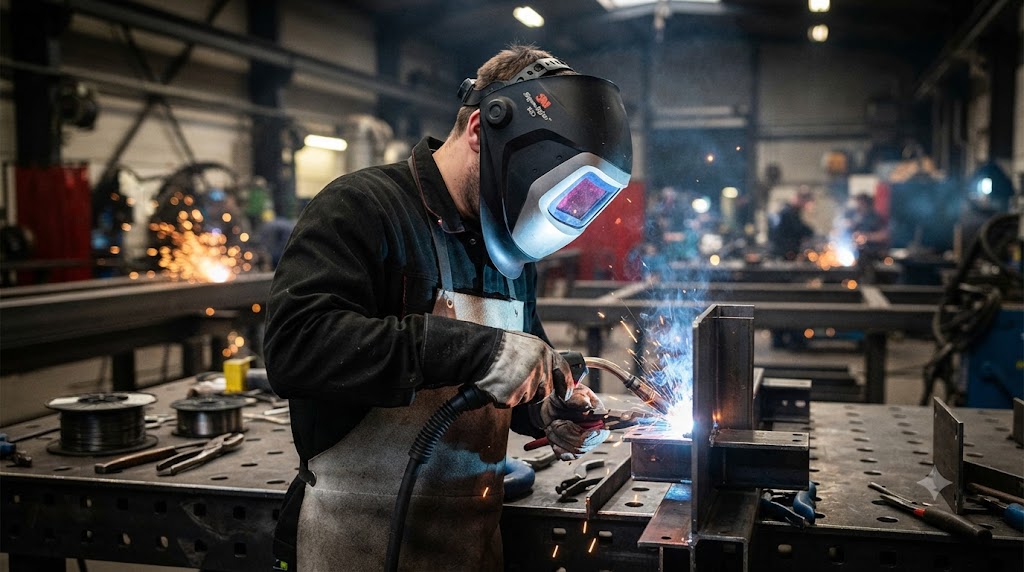
The first sign that a helmet is wrong for you is not the arc. It is the third hour. Your neck aches, the shell has crept forward, and you find yourself flipping the hood up between tacks because the light state is too dark to see your work. That is the moment cheap helmets get returned, and it has almost nothing to do with the shade number printed on the box.
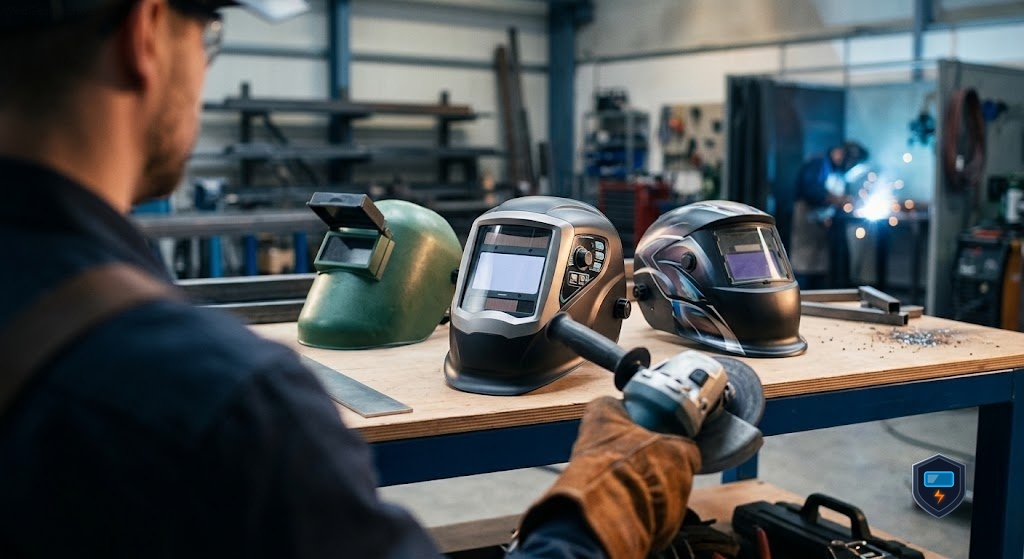
The best welding helmet is the one whose lens stays clear enough to read your puddle, whose headgear spreads weight across your skull instead of hanging off your forehead, and whose controls you can find with a glove on. Everything else is detail.
What a welding helmet actually is
A welding helmet is a shell plus a filter. The shell blocks spatter, radiant heat, and stray sparks. The filter, on modern hoods an auto-darkening filter (ADF), sits behind a clear cover lens and switches from a light state to a dark shade the instant arc sensors detect the arc. Passive helmets skip the electronics entirely and use one fixed dark shade.
For almost everyone buying today, the answer is an auto-darkening helmet with a variable shade range, at least two arc sensors, and a grind mode. That combination covers stick, MIG, and TIG on the same hood without flipping anything up.
The four specs that change your day
Optical clarity rating. Look for the four-digit rating (1/1/1/1 is the top score across clarity, diffusion, variance, and angle dependence). A 1/1/1/2 lens will look slightly different at the edges of your view. On short welds you will never notice. On a long fillet with your head turned, you will.
Viewing area. Small windows near 6 square inches feel like looking through a mail slot when you are welding overhead or in a corner. Larger windows above 9 square inches let you see your work and the piece around it. The tradeoff is weight and, on some models, a wider shell that catches on tight spaces.
Switching speed. Anything at 1/20,000 of a second or faster is fine for general work. Very low amperage TIG is the exception, because the arc is dim and some sensors miss it.
Headgear. This is the spec nobody photographs and everybody feels. A ratcheting band with a real top strap moves load off your forehead. Cheap headgear pivots on two plastic pins and slowly loosens all shift.
The picks
Lincoln Electric VIKING 3350: the one most welders end up keeping
The VIKING 3350 with 4C lens technology is the helmet other helmets get compared to, and the reason is the window. At 12.5 square inches with a 1/1/1/1 rating, it shows you the joint, the tack ahead of it, and your filler hand at the same time. The X6 headgear is genuinely good, with six contact points that let you run it slightly loose without it sliding.
The honest drawback: it is a big hood. In a truck frame or between two joists, the shell bumps into things a slimmer helmet would clear, and the extra glass adds weight you notice on overhead work. There is also a low profile external grind button, which is handy, though it sits where a heavy glove can bump it by accident.
Skip it if you spend most of your time in confined spaces or if you weld with your head cranked back for hours. A lighter, narrower hood will treat your neck better. If you like the optics but want a different look, the ADV version and the All American shell run the same lens platform.
Miller Digital Elite: the control layout that stays learnable
Where Lincoln wins on window size, Miller wins on the interface. The Digital Elite with ClearLight 4x uses four arc sensors and four distinct modes, including a cut mode and an X mode built for situations where your sensors are blocked, like welding around a corner or behind a flange. If you have ever had a hood fail to trigger because your hand covered the sensors, that mode alone justifies the pick.
The drawback is physical rather than optical. The window is smaller than the VIKING 3350, and the digital control panel lives inside the shell, which means adjusting sensitivity means taking the hood off. Miller’s own Digital Infinity solves the window complaint with 13.4 square inches, and costs you shell bulk in return.
Skip the Digital Elite if you mainly weld production runs at one setting and want the largest possible view. You are paying for adjustability you will not use.
Miller Classic Series: honest optics without the extras
The Classic Series is what a beginner should actually buy. It carries real ClearLight optics, shades 8 to 13, and two arc sensors, in a light shell with a simple ratchet band. It is rated for welding at five amps and below, which matters if you plan to learn TIG on thin material.
The drawback is the 6 square inch window. It is a mail slot compared with the VIKING, and two sensors instead of four means more care about hand position on out of position work. Skip it if you already know you will be doing overhead pipe or heavy fabrication, because you will outgrow the view within a year.
3M Speedglas 9100: the comfort argument
The Speedglas 9100 with the 9100XXi filter is built around all-day wear rather than around a spec sheet. The headband distributes weight better than anything else on this list, and the side windows change how aware you are of your surroundings in a busy shop.
The drawback is that the filter cartridge and the shell are sold as a system, so replacement parts follow 3M’s own part numbers rather than generic sizes, and stocking spares takes more planning. There is also a shell-only version that catches people out if they are not reading carefully.
Skip it if you weld occasionally in a home garage. The comfort advantage compounds over eight hour shifts and barely shows up on a Saturday project.
Jackson Safety Insight ADF: the lightweight answer
At roughly six ounces for the HLX shell, the Insight ADF solves the neck problem more directly than any other helmet here: it removes the weight. If your complaint is fatigue rather than optics, start here.
The drawback is that the shell feels less substantial in the hand, and the smaller viewing area puts it closer to the Classic Series than to the VIKING. Skip it if you want a big window or if you work somewhere that punishes light plastic, like heavy grinding next to hot spatter.
Head to head, where it matters
| View | Sensors | Best at | Weak at | |
|---|---|---|---|---|
| VIKING 3350 | 12.5 sq in | 4 | Fabrication, long welds | Tight spaces, weight |
| Digital Elite | Mid | 4 | Mixed processes, blocked sensors | Adjusting on the fly |
| Miller Classic | 6 sq in | 2 | Learning, low amp TIG | Out of position work |
| Speedglas 9100 | Mid | 3 | All-day comfort | Parts availability |
| Jackson Insight | Small | 2 | Overhead, long shifts | Big-picture visibility |
The VIKING 3350 and the Digital Elite are the two most people cross-shop, and the split is simple: if the thing that frustrates you is not seeing enough, buy Lincoln. If the thing that frustrates you is the hood not triggering when your body blocks a sensor, buy Miller.
Protect the lens you paid for
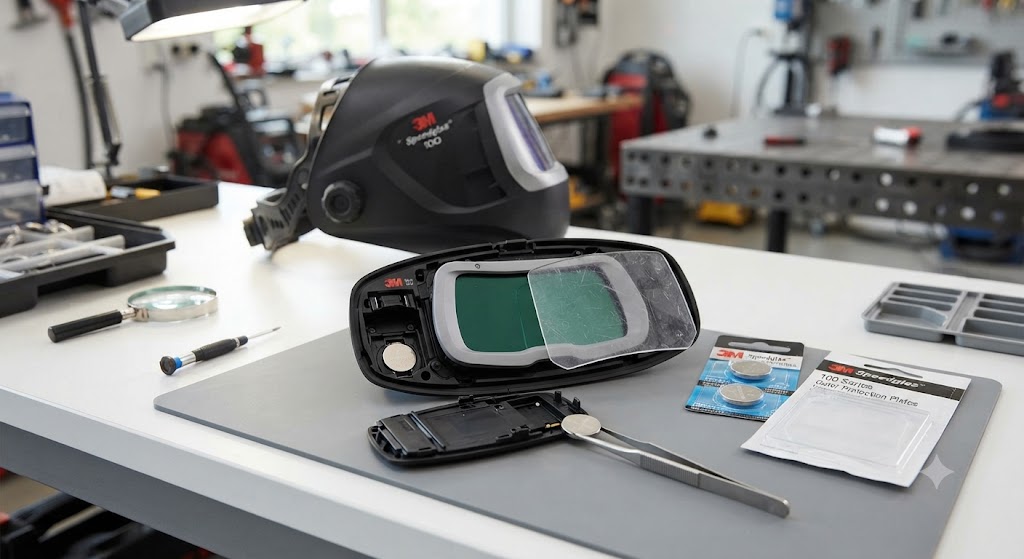
An ADF that looks hazy is almost never a dead filter. It is a scratched cover lens. Keep spares on the bench: outside cover lenses for VIKING helmets and Miller front cover lenses both cost a fraction of a filter and take seconds to swap. Most hoods that get replaced were never broken.
What I would actually buy
If you weld a mix of steel projects and want one hood for the next five years, buy the VIKING 3350 and keep a stack of cover lenses. If you are learning, buy the Miller Classic Series, accept the small window, and put the difference toward gas and steel. If you already know your neck is the problem, buy the Jackson Insight and stop reading spec sheets, because no amount of optical clarity fixes fatigue.
Three things worth carrying away. First, a scratched cover lens ruins a good helmet faster than any spec on the box. Second, sensor count matters more than shade range once you leave the flat position. Third, the helmet you adjust once and forget is worth more than the one with the longest feature list, because every second you spend fiddling is a second the puddle is cooling.
Frequently asked questions
What shade should I set my welding helmet to? For most MIG and stick work in the 100 to 200 amp range, shade 11 to 12 is a good starting point. Low amperage TIG usually sits at 9 to 10. Start darker than you think, then step down one shade at a time until you can see the puddle edges clearly without squinting.
Is a more expensive welding helmet actually better? Up to a point. Money buys optical clarity, sensor count, headgear quality, and warranty support. Beyond mid-range, you are mostly buying comfort features and shell design. A well-fitted mid-range hood beats a premium hood that does not sit right on your head.
How many arc sensors do I need? Two is enough for bench work in the flat position. Four becomes worth it when you weld in corners, overhead, or with your hand between the arc and the front of your hood, because a blocked sensor means the lens does not darken.
Can I use one helmet for MIG, TIG, and stick? Yes, as long as it has a variable shade range and is rated for low amperage. TIG at very low amps produces a dim arc that some entry level filters miss, so check that the helmet lists a low amp rating if you plan to do fine work.
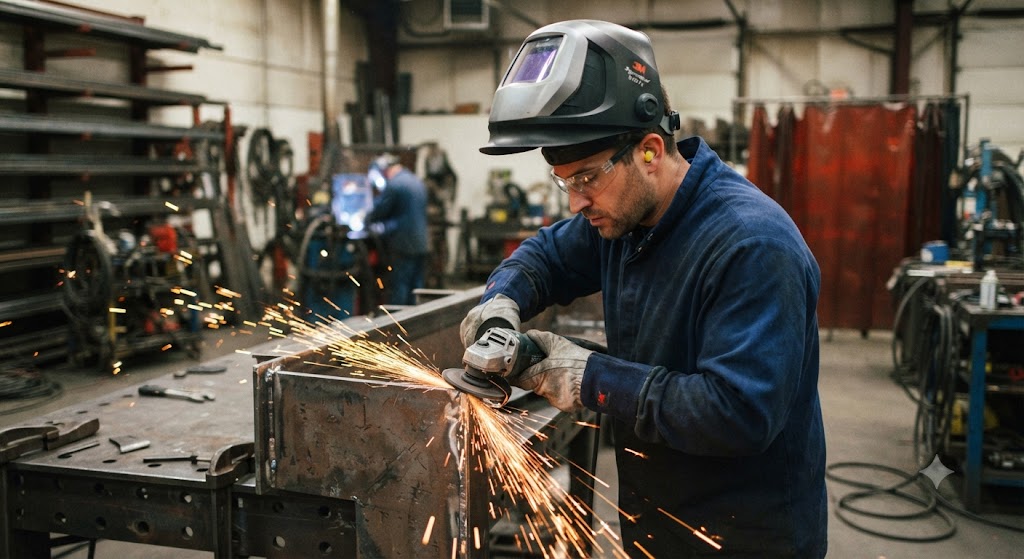
What does grind mode do? Grind mode locks the filter in its light state so the lens does not darken when sparks fly during grinding. It saves you from flipping the hood up and down, and it prevents the annoying flicker of a filter triggering on grinding sparks.
Why does my auto-darkening helmet look cloudy? Almost always a pitted or scratched outer cover lens. Replace it before assuming the filter has failed. Spatter etches the polycarbonate quickly, especially on MIG work with the nozzle held close.
Do welding helmets expire? The shell does not, but filters and headgear wear out. Batteries in non-solar filters typically last months rather than years, and headgear padding compresses over time. Replace parts individually rather than buying a new hood.
Is a bigger viewing area always better? No. A larger window usually means a larger shell, more weight, and less clearance in tight work. If you weld inside frames, tanks, or between structural members, a compact hood is easier to live with.
References
- Occupational Safety and Health Administration, Eye and Face Protection
- National Institute for Occupational Safety and Health, Welding and Manganese
- Lincoln Electric, VIKING Welding Helmets product documentation
- Miller Electric, Auto-Darkening Welding Helmet Technology