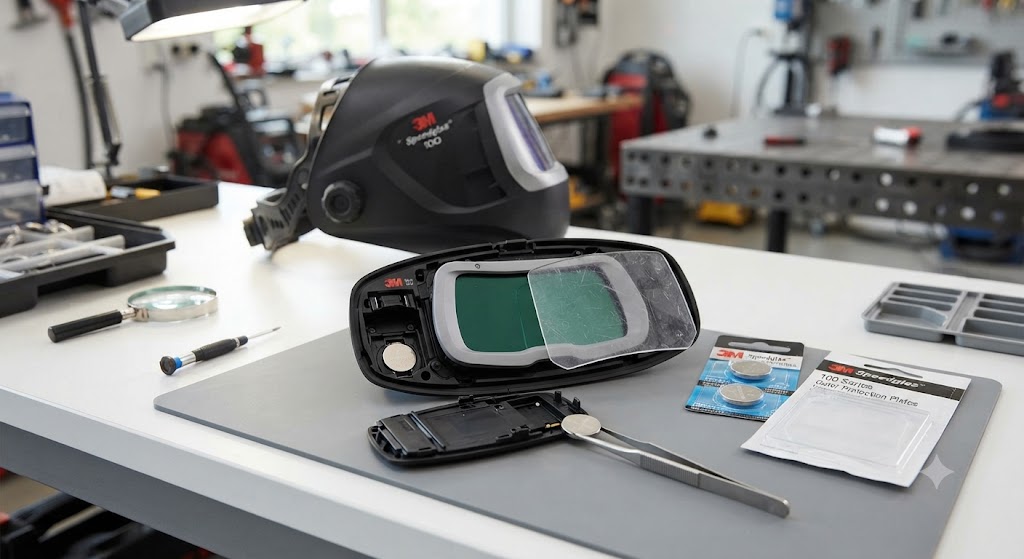
Cheater Lens for a Welding Helmet: See the Weld Pool Clearly Again
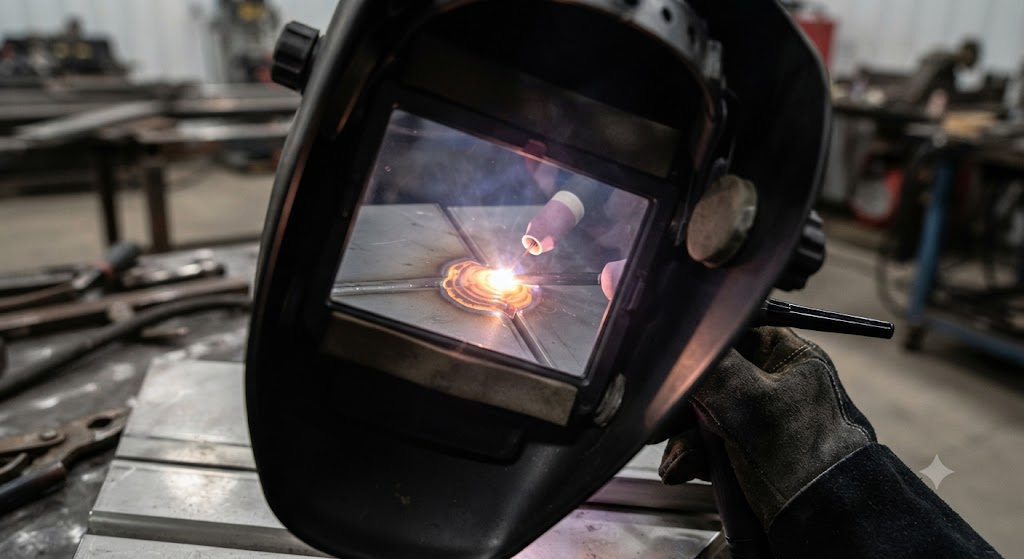
If you find yourself squinting at the weld pool or you already wear reading glasses, a cheater lens for your welding helmet can transform your view. Also called a magnifying lens or diopter plate, a cheater lens is an inexpensive magnifier that drops into your hood to sharpen close-up detail, and for welders with aging eyes it is often the single most impactful upgrade they can make. This guide explains how cheater lenses work, how to pick the right strength, and where they help most.
What a cheater lens is
The name is welder’s slang: a cheater lens is simply a magnifying plate, much like a pair of drugstore reading glasses, that installs inside your welding helmet behind the filter. It is rated by diopter, the same measurement used for reading glasses, typically ranging from 1.00 up to 2.50 in quarter-step increments. A higher diopter number means more magnification and a shorter focusing distance. The plate is usually clear, scratch-resistant polycarbonate and sits behind either a passive or auto-darkening filter, close to your eyes.
How to choose the right diopter
Getting the strength right is the whole game, and the reading-glasses comparison is your best shortcut. If you already wear readers, start with a diopter close to your reading glasses prescription. If you do not, a common starting point is around 1.00 to 1.50 for mild help and 1.75 to 2.50 for stronger magnification. The critical thing to understand is that higher magnification shortens the distance at which the weld comes into sharp focus. That is fine for TIG, where your face is close to the work, but a strong lens can be frustrating for stick welding, where you keep your head farther back. Match the strength to how close you actually get to the bead.
A practical way to test is to hold reading glasses of various strengths at arm’s length and note which brings your typical working distance into focus, then buy the matching diopter.
Where cheater lenses help most
Cheater lenses shine in precision, close-up work. TIG welders benefit the most, since the process invites you to bring your helmeted face close to the weld, exactly the distance a magnifier is tuned for. Fine fabrication, small parts, tacking, and detailed repair work all become easier to see and therefore easier to do well. For any welder over about forty, or anyone who already reaches for readers, a cheater lens often restores the crisp view they thought they had lost.
Installation and care
Most helmets accept a standard-size magnifying plate, commonly 2 by 4.25 inches, that clips into brackets behind the filter, and many hoods have dedicated recesses for it. Fitting one takes seconds. As with cover lenses, keeping the cheater behind the cover plate helps it stay clean longer, and a soft cloth is all you should use to wipe it. Branded magnifiers from the helmet maker often fit the clips more precisely and offer slightly better optical quality than generic plates, though for most working conditions an inexpensive plate does the job well.
The honest limitations
A cheater lens is not magic. Higher diopters shorten your focus distance so much that they can actually hurt your view if you weld with your head back, so more magnification is not always better. Magnifiers also do nothing for the overall brightness or color of your view; if your real problem is a dim or tinted lens, a cheater will not fix it, and a better filter or a proper shade setting is the answer instead.
Who should skip a cheater lens? Welders with good close vision who work at a distance, such as high-amperage stick welders, will gain little and may find a strong magnifier a hindrance.
The bottom line
A cheater lens for your welding helmet is one of the cheapest, most effective upgrades available for anyone whose close-up vision is not what it was. Match the diopter to your reading-glasses strength and your working distance, favor it most for TIG and fine work, and keep it clean behind the cover plate. For a few dollars, it can bring the weld pool back into sharp focus.
Frequently asked questions
What is a cheater lens for a welding helmet? A magnifying plate, rated by diopter, that installs inside the hood behind the filter to sharpen close-up vision, much like reading glasses.
What diopter cheater lens should I buy? Match it to your reading-glasses strength if you wear them, or start around 1.00 to 1.50 for mild help and up to 2.50 for stronger magnification.
Does a higher diopter mean better? Not necessarily. Higher magnification shortens the focus distance, which suits close TIG work but can hinder stick welding done with your head back.
Are cheater lenses best for TIG welding? Yes. TIG invites you to bring your face close to the weld, which is exactly the distance a magnifier is tuned for.
Will a cheater lens fit my helmet? Most hoods accept a standard 2 by 4.25 inch plate that clips behind the filter, and many have dedicated recesses. Confirm the size for your model.
Do cheater lenses make the view brighter? No. They only magnify. If your view is dim or tinted, the fix is a better filter or correct shade setting, not a magnifier.
References
- Jackson Safety, diopter magnifying plate specifications, jacksonsafety.com
- Phillips Safety, guide to choosing cheater lens power, phillips-safety.com
- American Welding Society forum guidance on magnifying lenses
- OSHA fact sheet, eye protection during welding