Chicago Electric Welding Helmet Full Review (Harbor Freight)
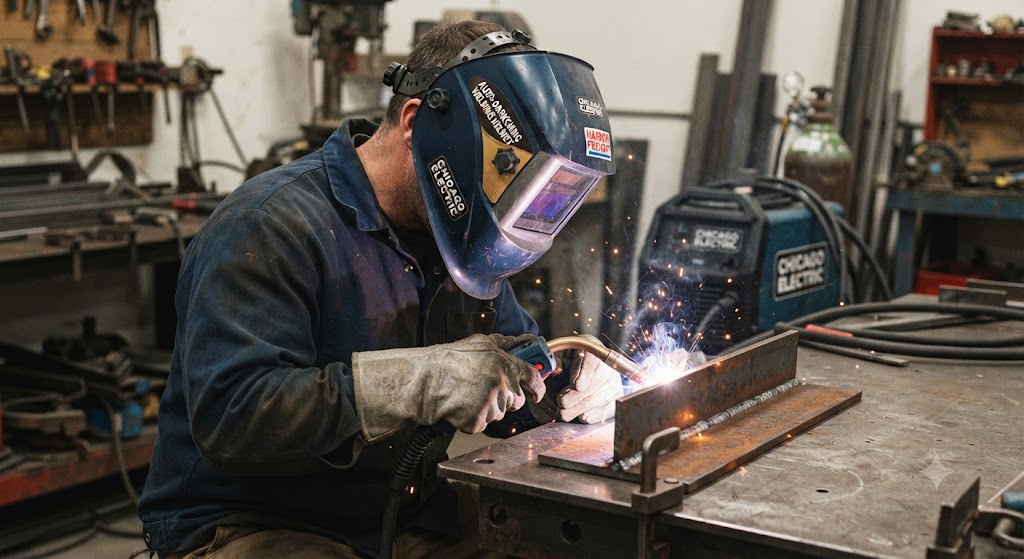
The Chicago Electric welding helmet is one of the most recognized budget auto-darkening helmets in North America - not because of any groundbreaking technology, but because Harbor Freight has sold millions of them at price points that make protecting your face almost an afterthought. If you’ve walked into a Harbor Freight store, you’ve seen these helmets stacked near the checkout. For welders on a tight budget, they represent the easiest entry point into auto-darkening protection.
This review covers the two most widely known Chicago Electric welding helmet models - the 46092 and 61612 - examining their specs, real-world performance, limitations, and who should (or shouldn’t) buy one.
What Is Chicago Electric?
Chicago Electric is a Harbor Freight house brand, not an independent manufacturer. You won’t find Chicago Electric helmets on Amazon, at Home Depot, or through any independent retailer - they exist exclusively at Harbor Freight stores and on HarborFreight.com. The brand covers a wide range of tools, from angle grinders to welding equipment, all manufactured to Harbor Freight’s price-driven specifications.
That context matters when evaluating quality. You’re buying a Harbor Freight product first, and a welding helmet second.
Chicago Electric Welding Helmet Models at a Glance
Model 46092 - The Classic Budget Helmet
The 46092 is the entry-level Chicago Electric helmet, often found on sale for $29.99–$39.99. Harbor Freight regularly runs it with a 20% off coupon, making it one of the cheapest functional auto-darkening helmets available anywhere.
Specs (Model 46092):
- Viewing area: 6 sq. in. (approximately 3.78” x 1.58”)
- Shade range: DIN 9–13 (variable)
- Resting shade: DIN 4
- Switching speed: 1/20,000 second (clear to dark)
- Power: Solar + battery assist
- Expected battery life: Up to 6 years under normal conditions
- ANSI standard: Z87.1 compliant
- Headgear: Ratcheting adjustable headband
- Weight: Approx. 14 oz.
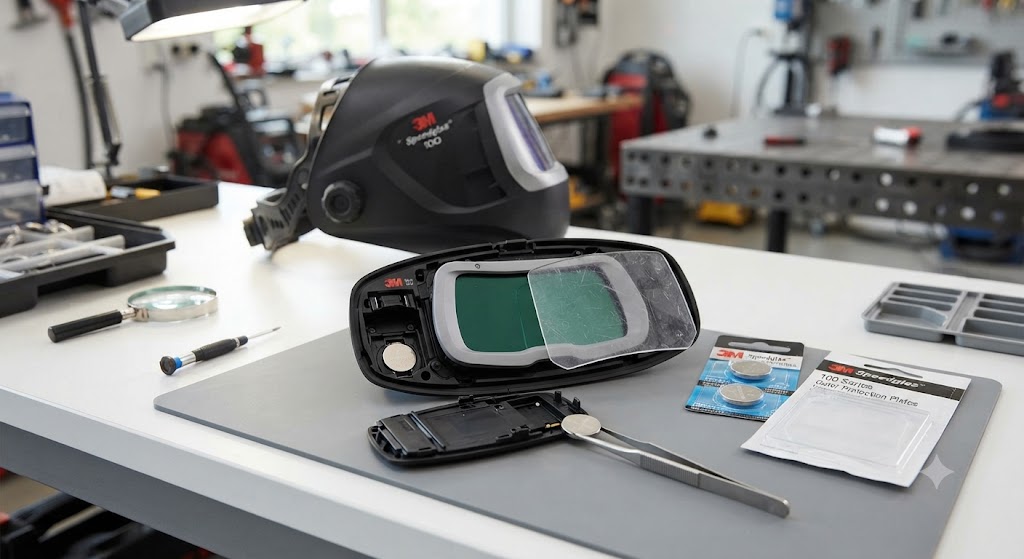
The solar panel extends battery life substantially - under typical shop use, most owners never need to replace the battery during the product’s lifespan. The CR2032 coin cell battery (used as backup) is replaceable if needed.
Model 61612 - The Upgraded Version
The 61612 is a slight step up in the Chicago Electric lineup, featuring an improved headband and slightly larger viewing area. It typically retails for $49.99–$59.99.
Specs (Model 61612):
- Viewing area: Approx. 7.5 sq. in.
- Shade range: DIN 9–13
- Switching speed: 1/25,000 second
- Power: Solar + battery
- Sensitivity and delay controls: External knobs
- ANSI Z87.1 compliant
The faster switching speed and external controls make the 61612 noticeably more usable for a wider range of applications, including lower-amperage TIG work (though performance at very low amps remains inconsistent).
Real-World Performance
What Chicago Electric Helmets Do Well
They work for basic MIG and stick welding. For hobby welders running a flux-core MIG or stick welder in the garage, these helmets do the fundamental job: they darken before the arc damages your eyes, and they’re comfortable enough for short to medium welding sessions.
The price is genuinely hard to argue with. A welder who is still learning the craft - and might drop the helmet, scratch the lens, or decide welding isn’t for them - has nothing to lose by starting here.
Solar power works. The combined solar and battery system performs reliably in well-lit shops.
Where Chicago Electric Helmets Fall Short
Low-amperage TIG performance is unreliable. At TIG amperages below ~30–40A, the helmet may fail to darken in time. This is a serious safety concern for TIG welders.
Optical clarity is below average. The lens on Chicago Electric helmets has a greenish tint and lower optical classification compared to mid-tier helmets.
Build quality reflects the price. The shell plastic feels light, the headgear adjustment mechanism is loose, and the external controls can be imprecise.
Sensor coverage is limited. Most Chicago Electric models have only 2 arc sensors - more expensive helmets have 3 or 4, reducing risk when one sensor is blocked.
ANSI Z87.1 Certification
Both models are advertised as meeting ANSI Z87.1 standards - the baseline requirement for welding eye protection. This does not mean the helmet offers the optical quality of certified industrial-grade helmets.
Who Should Buy a Chicago Electric Welding Helmet?
Good fit for:
- Complete beginners learning MIG or stick for the first time
- Welders who need a dedicated grinding helmet
- A backup helmet to keep in the truck
- Occasional hobby welders (a few hours per month)
Not a good fit for:
- TIG welders, especially at low amperage
- Professional welders spending hours per day under the hood
- Anyone who values optical clarity and true-color viewing
Chicago Electric vs. the Alternatives
| Feature | Chicago Electric 46092 | YESWELDER LYG-M800H | Lincoln Viking 1740 |
|---|---|---|---|
| Price | ~$40 | ~$85 | ~$155 |
| Viewing area | 6 sq. in. | 9 sq. in. | 6.25 sq. in. |
| True color | No | Yes | No |
| TIG capable | Limited | Yes (>5A) | Yes |
| Arc sensors | 2 | 4 | 4 |
| Where to buy | Harbor Freight | Amazon | Amazon/LWS |
The YESWELDER LYG-M800H is the most logical next step up - roughly twice the price but significantly better in every measurable category.
Where to Buy
Chicago Electric welding helmets are exclusively available at Harbor Freight - in-store and at HarborFreight.com. Harbor Freight frequently runs 20–25% off coupons through their app and email list.
FAQs
Are Chicago Electric welding helmets any good? For basic MIG and stick welding at hobby-level frequency, yes. They meet minimum safety standards and run on solar power. Not recommended for TIG welding or extended professional use.
Does the Chicago Electric welding helmet have a battery? Yes. Most models use a CR2032 coin cell battery combined with solar panels. The solar panel does the heavy lifting; the battery serves as backup.
How do you use a Chicago Electric welding helmet? Set the shade dial for your process, adjust sensitivity and delay if your model has those controls, remove the protective film from the lens cover if new, and strike the arc - the lens will darken automatically.
Where are Chicago Electric welding helmets made? Manufactured in China to Harbor Freight’s specifications.