ESAB Sentinel Battery Keeps Dying: Why It Happens and How to Fix It
The ESAB Sentinel is a gorgeous helmet, and nothing sours that romance faster than a low battery icon that returns days after you replaced the cells. If your ESAB Sentinel battery keeps dying, there is a specific reason this hood is more prone to the complaint than some rivals, and once you understand it, the fixes and the workarounds make sense. Let us get into it.
Why the Sentinel Runs Through Batteries
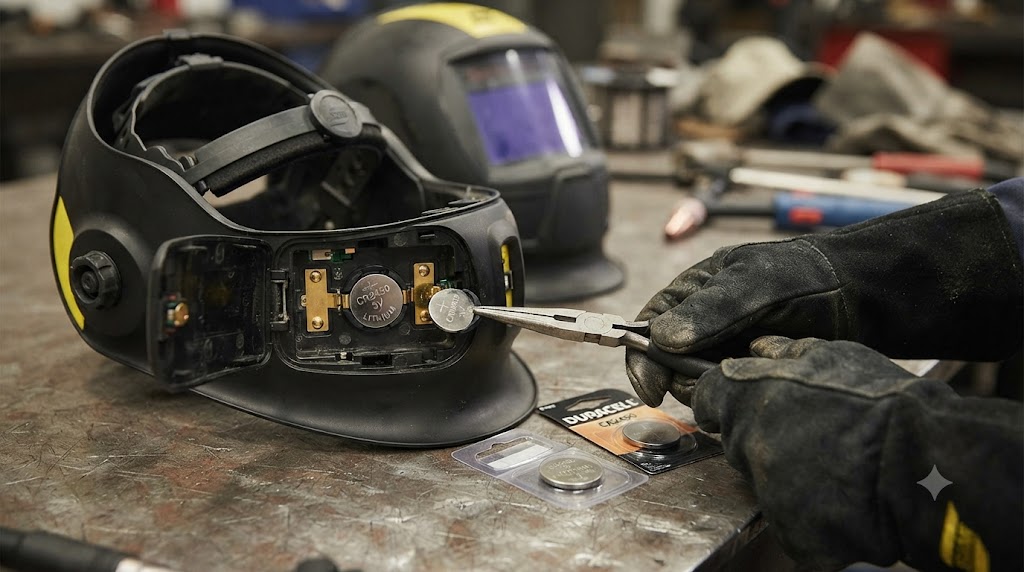
Here is the detail that explains everything: the ESAB Sentinel A50 and A60 are powered by two CR2450 lithium coin cells, and unlike many competitors, the Sentinel leans heavily on those batteries rather than a large solar assist. The A50 replacement battery is ESAB part 0700000807, a set of two CR2450 cells.[^https://www.weldsupportparts.com/esab-sentinel-a50.html] Because the electronics and that bright curved display draw real power, a battery-centric hood simply eats cells faster than a solar-dominant one, and it is more sensitive to weak or poorly seated batteries.
Owners routinely report battery life measured in months, and note that the factory-supplied cells often do not last as long as good aftermarket replacements.[^https://www.mig-welding.co.uk/forum/threads/esab-sentinal-battery-life.100733/]
The Real Causes
Low-quality or weak CR2450 cells. This is the number one culprit. The Sentinel is unforgiving of cheap multipack cells. Users who swap to high-quality name-brand CR2450 batteries see the problem largely disappear.
Dirty or corroded contacts. A frequent finding when a Sentinel shows low battery even after a fresh set: the battery contacts have corrosion or debris, raising resistance so the lens reads the cells as weak.[^https://proweldinghelmets.com/replace-battery-esab-a60/]
Sensitivity settings and constant triggering. Run the sensitivity high in a busy shop, with forklift beacons and other flashing lights constantly waking the lens, and the batteries drain faster because the ADF is triggering all day.
Storing it fully assembled for long periods. Because it is battery-centric, a Sentinel left sitting with the cells installed keeps drawing a trickle and slowly flattens them.
A defective helmet. A minority of Sentinels have shown low-battery faults straight out of the box that persist through multiple fresh sets. That is a manufacturing issue for ESAB to handle under warranty.
The Fix Sequence
- Fit two fresh, high-quality CR2450 cells. Replace both together, using name-brand lithium batteries rather than a bargain multipack. On the Sentinel, battery quality is the single biggest lever.
- Clean the contacts. Inspect the battery compartment for corrosion or film, and wipe the contact surfaces clean so they make solid connection.
- Dial back sensitivity when appropriate. If ambient flashing lights keep triggering the lens, reduce sensitivity to the level you actually need so the ADF is not firing constantly.
- Remove the cells for long storage. If the helmet will sit unused for weeks, take the batteries out to stop the slow idle drain.
- Reboot, then escalate to warranty. If a fresh, clean, quality set still reads low almost immediately, try a full battery-out reset, and if it persists, treat it as a defect and contact ESAB. Repeated low-battery readings on good cells with clean contacts is not normal.
The Sentinel vs Solar-Assisted Hoods
It helps to set expectations. A solar-dominant helmet like a Lincoln Viking or many Miller models offloads work to the solar cell, so its coin cell lasts longer. The Sentinel trades some of that battery economy for its display and feature set. That is not a flaw so much as a design choice, and it means the Sentinel rewards good batteries and clean contacts more than most hoods do.
The Bottom Line
When your ESAB Sentinel battery keeps dying, remember it is a battery-centric helmet that punishes cheap cells and dirty contacts harder than its solar-assisted rivals. Fit two quality CR2450 batteries, keep the contacts clean, tame the sensitivity, and pull the cells for long storage, and most Sentinels settle into predictable months-long battery life. Reserve the warranty call for the unit that fails good cells immediately. Understand the design and the Sentinel goes back to being what you paid for: one of the best views of a weld puddle on the market, powered without drama.
Frequently Asked Questions
What batteries does the ESAB Sentinel use? Two CR2450 lithium coin cells. The A50 replacement set is ESAB part 0700000807.
Why does my ESAB Sentinel keep saying low battery after I replaced the batteries? Usually low-quality cells or corroded, dirty contacts. Fit two fresh name-brand CR2450 batteries and clean the contact surfaces. Persistent low readings on good cells suggest a defect.
Is the ESAB Sentinel solar powered? The Sentinel is battery-centric rather than solar-dominant, which is why it goes through cells faster than some solar-assisted helmets and is sensitive to battery quality.
How long should Sentinel batteries last? Many owners report months of use on good cells. Factory-supplied batteries often last less than quality aftermarket replacements.
Does high sensitivity drain the Sentinel battery? Yes. High sensitivity in an environment with flashing lights keeps triggering the lens, which draws more power. Reduce sensitivity to what you actually need.
Should I remove the batteries for storage? Yes, for long storage. Because the helmet keeps drawing a small idle current, removing the cells prevents slow drain when the hood sits unused for weeks.
Could my Sentinel be defective? If fresh, high-quality cells with clean contacts still read low almost immediately, and a battery-out reset does not help, that points to a manufacturing fault. Contact ESAB about warranty.
References
- ESAB Sentinel A50 Helmet Parts Breakdown (battery part 0700000807, 2x CR2450): https://www.weldsupportparts.com/esab-sentinel-a50.html
- How to Replace Battery in ESAB Sentinel A60 (contacts and battery care): https://proweldinghelmets.com/replace-battery-esab-a60/