Jackson Safety Translight 555 Welding Helmet Review
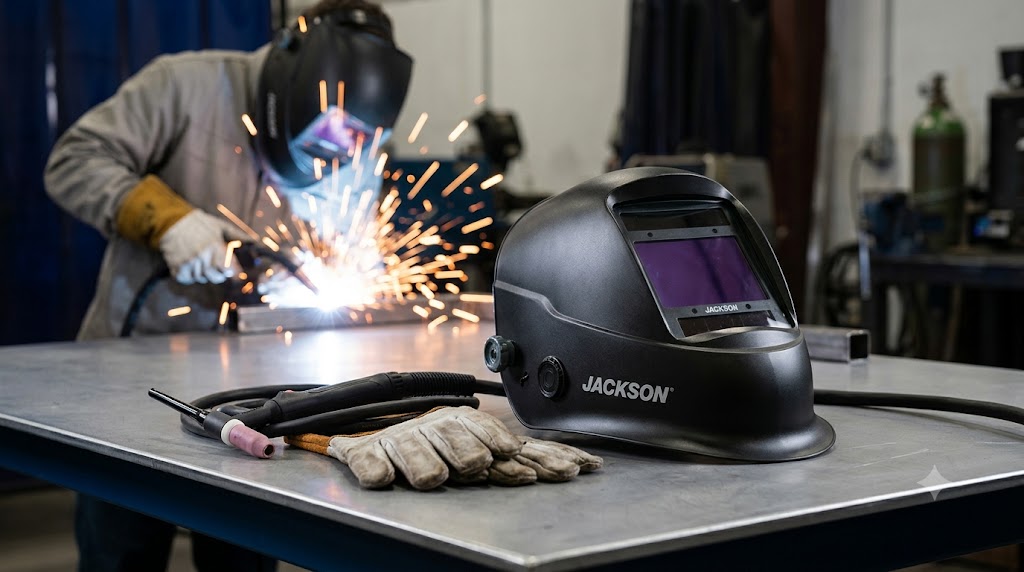
The Jackson Safety Translight 555 sits at the top of the Jackson lineup. It is the helmet Jackson built for the welder who wants the largest view, the clearest optics, and the fastest response without moving into the PAPR territory of industrial respiratory systems. It delivers on those promises and has one feature that genuinely stands out from the competition.
The Case for the Translight 555
The Translight 555 combines:
- 12.47 sq in of viewing area - among the largest in the non-PAPR auto-darkening market
- 1/1/1/1 optical clarity - the top rating
- 1/25,000 second switching speed - matches the fastest helmets available
- True Color technology - natural weld pool appearance without green tint
- External shade adjustment in 0.2 increments - the most precise shade control available
- 4 arc sensors - coverage for out-of-position welding
- ANSI Z87.1, CAN/CSA Z94.3, CE certified
That last specification - shade adjustment in 0.2 increments - is the feature that separates the Translight 555 from most competitors. Standard helmets adjust shade in 0.5 or whole-number increments. The 555 goes to 0.2, which matters for welders who have dialed in a precise comfort shade for a specific process. You can find your ideal shade without having to compromise between two steps that are both slightly wrong.
True Color: What It Actually Means at the Arc
True Color technology in the Translight 555 renders the weld pool, base metal, and filler in natural color rather than the green-tinted view produced by standard ADF lenses. At a practical level, this means:
- Better puddle visibility and penetration judgment
- Less eye strain during long welding sessions
- More natural color cues for reading the weld
Welders who switch to the Translight 555 from a standard helmet consistently report that the weld looks brighter, more detailed, and easier to follow. It is the kind of difference that is hard to describe until you experience it through the lens.
Specs
| Specification | Detail |
|---|---|
| Viewing Area | 12.47 sq in (3.86 x 3.23 in or 5.25 x 4.25 in variant) |
| Shade Range | 3/5-14 |
| Switching Speed | 1/25,000 sec |
| Optical Clarity | 1/1/1/1 |
| Arc Sensors | 4 |
| Shade Adjustment | 0.2 increments |
| Controls | Digital, external |
| External Grind Button | Yes |
| Headgear | 370 Speed Dial ratcheting |
| Standard | ANSI Z87.1, CAN/CSA Z94.3, CE |
| Shell | Lightweight, ergonomic |
The External Shade Adjuster: A Real Differentiator
Most welding helmets require you to reach inside the shell to adjust shade. The Translight 555 puts shade adjustment on the exterior. That means gloves-on shade changes between passes. It means adjusting to a different process without removing the helmet. It means spending less time on setup and more time welding.
The combination of external access and 0.2-increment precision makes the 555 the most adjustable helmet in this price class.
Four Modes, External Grind Button
The Translight 555 operates in four modes: Weld, Cut, Torch, and Grind. The external grind button allows mode switching without reaching inside the shell. This is a meaningful ergonomic win during fabrication work where grinding and welding alternate frequently.
Shade 5-14 in weld mode covers everything from delicate GTAW to high-amperage SMAW and FCAW. The extended shade range above 13 (to 14) is useful for heavy plate work or carbon arc gouging.
Verdict: The Right Helmet for Serious Mixed-Process Work
The Translight 555 is not trying to compete with the Insight on price. It is competing with premium helmets from Miller, Lincoln, and ESAB on performance. It earns the comparison. The 12.47-square-inch view, 0.2-shade increments, external controls, and True Color optics put it in genuine contention at the top of the non-respiratory ADF market.
The welder who will appreciate the 555 most is someone who does mixed-process work - TIG Monday, MIG Tuesday, stick on a construction site Wednesday - and wants one helmet that handles all of it at the highest visual quality without compromises.
The welder who will not get the value from the 555 is someone who does one process, rarely changes shade, and stores the helmet in a dark bag for months. For that welder, the Insight at a lower price point covers all practical needs.
Replacement Parts
- Outer safety plate: Part 46925 (Jackson Translight 555 External Safety Plate, sold in packs of 10)
- Inner safety plate: Part 46915 (Jackson Translight 555 Internal Safety Plate)
- Headgear: Part 20696 (370 Speed Dial, compatible with Translight 555)
FAQ
What shade range does the Jackson Translight 555 cover? Shade 3 (grind), 5-14 (weld/cut/torch). The extended range to 14 covers heavy SMAW and gouging applications.
Does the Translight 555 use CR2450 batteries? The Translight 555 uses lithium battery power integrated into the ADF. Check the current product listing at jacksonsafety.com for the specific battery format - the 555’s power supply differs from coin-cell models.
What is the difference between the Jackson Translight 555 and the Insight? The Translight 555 has a larger viewing area (12.47 vs ~8.93 sq in), external shade control, 0.2 increment adjustment, and extended shade to 14. The Insight is a lower-cost helmet with digital internal controls and a smaller view.
Is the Jackson Translight 555 worth the premium over the Insight? For production welders who do mixed-process work and value view size, shade precision, and True Color optics: yes. For occasional welders with a single process: probably not.
How many sensors does the Translight 555 have? Four arc sensors for broad coverage including out-of-position welding.
What certifications does the Translight 555 carry? ANSI Z87.1, CAN/CSA Z94.3, and CE certified.
Does the Translight 555 have an external grind button? Yes. The external grind button allows mode switching without removing the helmet or reaching inside.
What is the outer safety plate part number for the Translight 555? Part 46925, sold in packs of 10. Available at cyberweld.com and Airgas.
Specifications sourced from jacksonsafety.com (46250), acmetools.com, and jacksonsafety.eu.