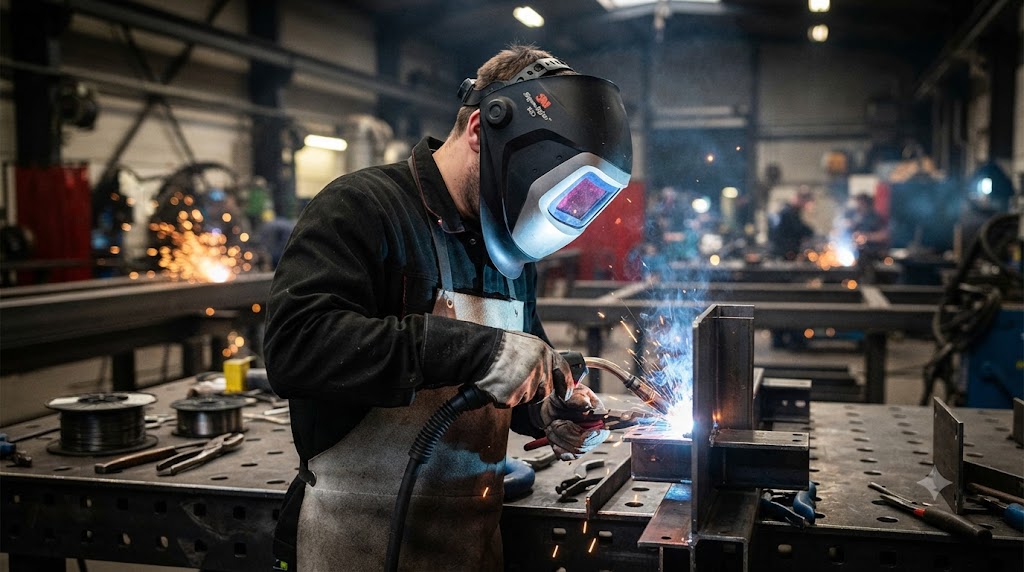
Jackson TrueSight II Review: The Optics-First Flagship
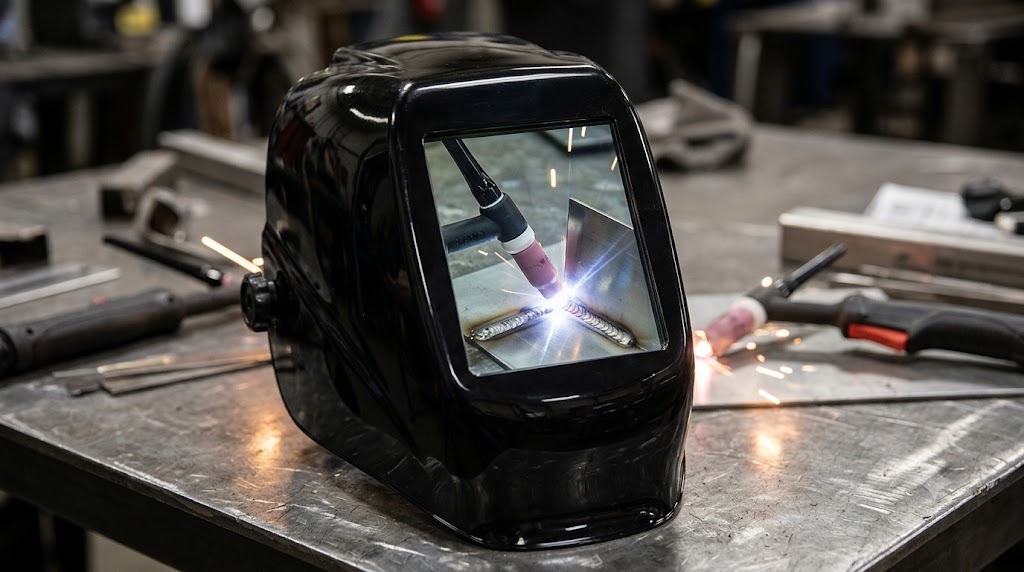
Some welders choose a hood for its features, and some choose it for the view. If you are in the second camp, the Jackson TrueSight II was built for you. It is Jackson’s flagship auto-darkening helmet, and it leads with the thing the brand does best: a massive, crystal-clear Balder true-color lens wrapped in one of the lightest shells on the market. This Jackson TrueSight II review covers whether that optics-first approach makes it the right hood for your work.
The Halo X version is a popular pick. You can check the current TrueSight II listing here. A black Halo X SH10 variant is also available, which you can find here.
What sets the TrueSight II apart
Start with the view, because that is the whole point. The TrueSight II gives you roughly 13 square inches of viewing area, measuring 4 by 3.25 inches, which is one of the largest windows in any welding hood at this level. Behind that glass sits the patented Balder auto-darkening filter with a best-in-class 1/1/1/1 optical clarity rating and true-color rendering, so the puddle, the joint, and the surrounding metal all look natural rather than swamped in green. For welders who struggle to read the puddle through cheaper lenses, this is a revelation.
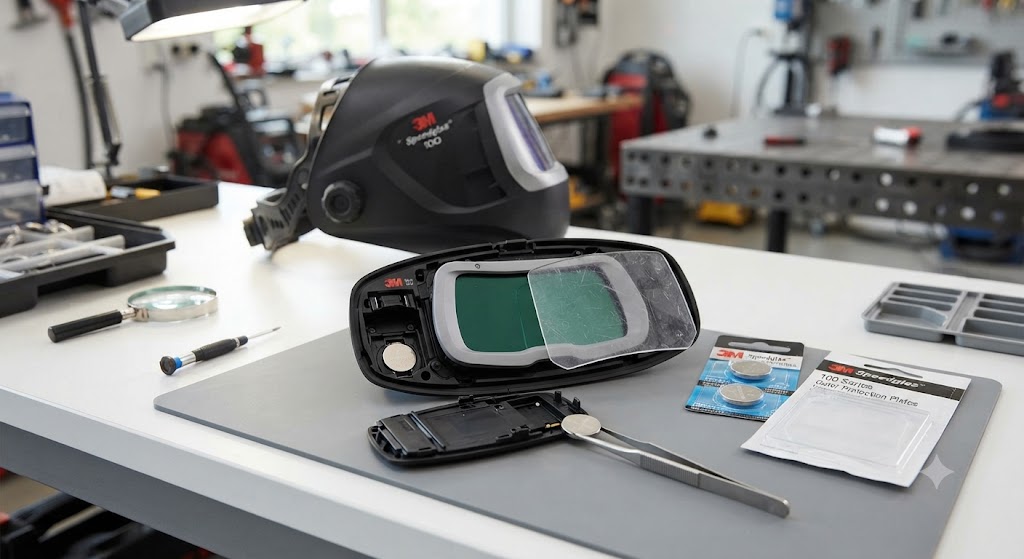
The feature set backs up the optics. You get digital controls with weld, grind, and torch modes, four independent arc sensors positioned to resist blockage, and a TIG rating down to a very low 3 amps, which means it fires reliably even on delicate low-amp TIG work where many hoods struggle. There is a built-in magnification lens holder for cheater lenses, a low-battery indicator, and an industry-leading five-year lens warranty.
The comfort story
Jackson pairs the lens with its featherweight Hydraflex shell, which weighs around six ounces, and the excellent 370 Speed Dial ratcheting headgear. The combination is genuinely easy on the neck through a long day, and the flexible shell shrugs off knocks. Welders moving from a heavier hood consistently name the reduced neck fatigue as the first thing they notice.
How it compares
The TrueSight II’s natural rival is the Lincoln Viking 3350, the other great optics-first hood. Both offer superb clarity; the TrueSight II counters with a slightly different lens character, the 370 headgear, and its very low 3-amp TIG rating, while the Viking answers with its famous 4C lens and often a lower price. Against the ESAB Sentinel A50 and Miller Digital Elite, the TrueSight II wins on raw viewing size and optical rating, while those rivals offer touchscreen or X-Mode features the Jackson lacks. If your priority is the biggest, clearest view, the TrueSight II is right at the top of the class.
The honest flaws
Two things to weigh. First, Jackson lenses have historically carried a reputation for switching a touch slower than the very fastest rivals; the TrueSight II is much improved, but welders doing constant rapid arc strikes should be aware of it. Second, it runs on two AAA batteries rather than a coin cell, which some welders love for the easy-to-find cells and others find bulkier; there is no solar assist, so the lens depends on those batteries. The large shell also offers less of a low-profile feel than some compact hoods.
Who should skip it? Welders who need the absolute fastest switching speed for high-frequency arc strikes, and those who prefer a compact, low-profile hood with touchscreen controls. For them a Miller or ESAB flagship may suit better.
Who it is for
The Jackson TrueSight II is for the welder who puts the view first: a large, true-color, 1/1/1/1 window, a feathery shell, and a low TIG rating that suits fine work. If you have ever fought to see your puddle clearly, this is the hood that fixes it, and its five-year lens warranty backs the confidence.
Frequently asked questions
What is the viewing area of the Jackson TrueSight II? Roughly 13 square inches, measuring 4 by 3.25 inches, one of the largest windows available at this level.
What is the optical clarity rating of the TrueSight II? It carries a best-in-class 1/1/1/1 rating with Jackson’s patented Balder true-color technology.
Is the TrueSight II good for TIG welding? Yes. It is rated for TIG down to a very low 3 amps, so it fires reliably even on delicate low-amp work.
What batteries does the TrueSight II use? It uses two AAA batteries and has no solar assist, so keep spare AAA cells on hand.
Does the TrueSight II have a grind mode? Yes. Its digital controls include weld, grind, and torch modes, plus a built-in magnification lens holder.
How does the TrueSight II compare to the Lincoln Viking 3350? Both are optics-first hoods with excellent clarity. The TrueSight II offers a very low 3-amp TIG rating and the 370 headgear, while the Viking is known for its 4C lens and often a lower price.
References
- Jackson Safety by SureWerx, TrueSight II welding helmet specifications, Jackson Safety
- Jackson Safety, Balder lens technology overview, Jackson Safety
- American Welding Society, welding lens shade chart and eye protection guide
- OSHA fact sheet, eye protection during welding