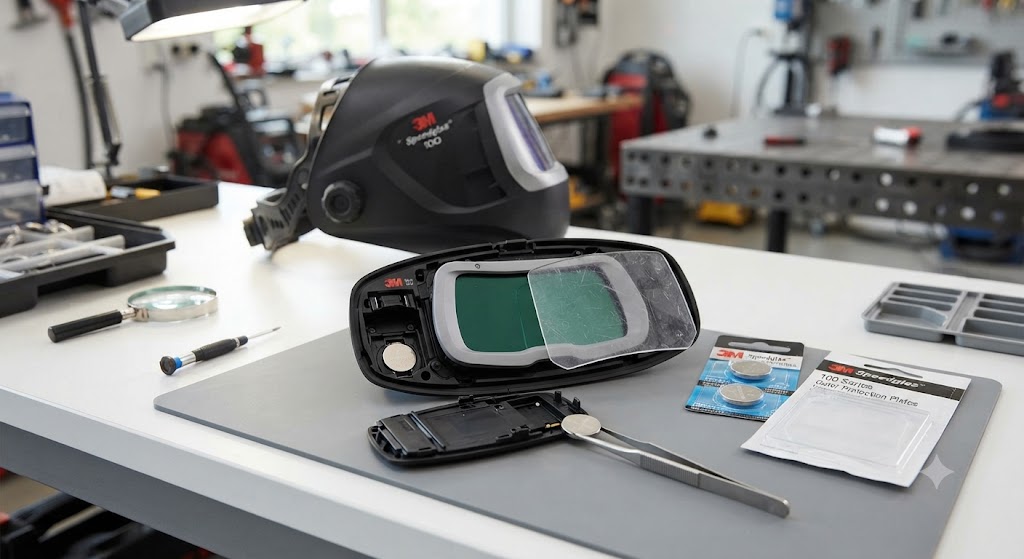
Lincoln Viking 3250D Not Darkening: Troubleshooting Guide
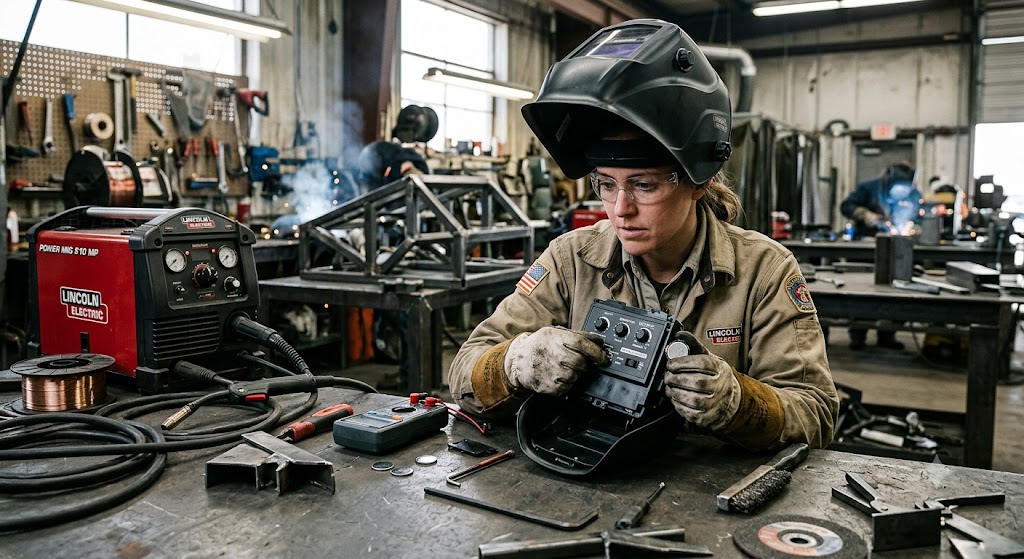
The Lincoln Viking 3250D FGS is a professional-grade helmet and it should darken without hesitation every time you strike an arc. When it does not, there is a logical path through the causes. Almost every darkening failure on the 3250D traces back to one of the issues below, and most are resolved without any special tools or service visits.
Confirm the Helmet Is Active
Start by pressing the sensitivity or shade adjustment buttons to confirm the helmet is powered on. Like most auto-darkening helmets, the 3250D enters sleep mode after a period of inactivity. If the controls respond, the helmet is active. If there is no response at all, proceed immediately to the battery check.
Step 1: Replace Both Batteries
The Viking 3250D requires two CR2450 batteries, part number KP4491-1. Battery failure is the most common cause of darkening failure, and the 3250D’s solar-assist design can mask aging batteries - the solar panel supplements power during active welding use, but the battery still degrades over time and loses the ability to start the darkening reaction reliably.
Install two fresh KP4491-1 batteries simultaneously. If the helmet then darkens correctly, you are done. If not, continue troubleshooting.
Note: The 3250D uses two CR2450s while the Viking 3350 uses only one. If you have been servicing both helmets and accidentally installed only one battery in your 3250D, that is a likely cause of unreliable darkening.
Step 2: Check Sensitivity Settings
The Viking 3250D has a sensitivity adjustment that controls how readily the ADF responds to an arc. If sensitivity is set too low, the helmet may miss low-amperage arcs or arcs in positions where the sensor exposure is partially limited.
For most welding applications, a mid-to-high sensitivity setting is appropriate. For TIG welding at low amperages, increase sensitivity toward the maximum. For high-amperage stick or MIG, a mid-range sensitivity setting usually works well.
Access the sensitivity control through the external knobs or buttons on the ADF cartridge. On the 3250D, the controls are located on the outside of the lens assembly - accessible without removing the helmet. Adjust in small increments and test with a low-amperage arc to verify improvement.
Step 3: Check the Mode Setting
The Viking 3250D has multiple operating modes. If the helmet is in grind mode, the lens stays at a fixed protective shade (typically shade 3) and will not darken further in response to an arc - this is correct grind-mode behavior.
Verify that the helmet is in Weld mode before testing arc detection. Cycle through modes if necessary and confirm you are in the welding operational mode.
Step 4: The FGS Position - A Unique 3250D Issue
The 3250D FGS has a flip-front design. If the flip-front grinding shield is not fully seated in the welding position (slightly raised), it can partially obstruct the arc sensors, which sit in or near the ADF cartridge behind the flip-front panel. This is a unique failure mode specific to the FGS design.
Confirm that the flip-front panel is fully locked in the down (welding) position before troubleshooting further. If it is even slightly ajar, the sensors may not have clear sight lines to the arc.
Step 5: Clean the Arc Sensors
The 3250D has four arc sensors. Spatter residue, grinding dust from the FGS shield area, and metal fume buildup can coat the sensor windows and reduce detection sensitivity.
With the helmet off, use a soft cloth slightly moistened with isopropyl alcohol to gently clean the sensor windows (small dark rectangles on the ADF cartridge face). Be careful around the FGS hinge area where grinding debris may accumulate. Dry fully before testing.
Step 6: Check Physical Sensor Exposure
The 3250D’s four-sensor configuration provides good arc detection from varied angles, but extreme positions can still shadow sensors. In particular, the flip-front FGS design means that the sensors are positioned slightly differently than on a standard helmet.
If darkening is failing only in specific positions - very tight overhead joints, confined space work, or joints where a structural member is between your helmet and the arc - reposition so at least two sensors have a clear view of the arc zone.
Step 7: Inspect the ADF Cartridge
If all above steps fail to resolve the issue, the ADF cartridge itself may have reached end of service life or sustained physical damage. Lincoln’s auto-darkening cartridges have a warranty period - check your purchase documentation for the warranty term on your specific 3250D.
Signs of cartridge failure:
- Permanent discoloration or dark streak across the lens field
- Uneven darkening where part of the lens darkens and part remains clear
- Hazy, fogged area that does not clear with cover lens replacement
Contact Lincoln Electric customer support or your dealer with the helmet’s serial number if you believe the ADF has failed within warranty.
Troubleshooting the FGS Shield Separately
If the auto-darkening function works correctly but the grinding shield (the flip-front clear panel) is scratched or cracked, those are independent issues. The grinding shield can be replaced without touching the ADF cartridge. Contact Lincoln or a Lincoln distributor with your 3250D FGS model number for the grinding shield replacement part.
Summary Checklist
| Check | Action |
|---|---|
| Helmet awake? | Press controls to wake from sleep |
| Batteries | Replace both KP4491-1 CR2450 batteries |
| Sensitivity | Increase for low-amperage work |
| Mode | Confirm in Weld mode, not Grind |
| FGS position | Confirm flip-front fully seated/locked |
| Sensors clean? | Clean with IPA and soft cloth |
| Sensor exposure | Reposition to eliminate obstruction |
| Cartridge damage | Inspect; warranty claim if applicable |
Frequently Asked Questions
Why does my 3250D darken for high-amperage MIG but not for TIG? TIG produces a lower-intensity arc at lower amperages. Increase sensitivity toward maximum for TIG applications.
Could the flip-front shield cause darkening issues? Yes. If the FGS flip-front is not fully locked in welding position, it can partially block the arc sensors. Always verify the flip-front is fully seated before welding.
My 3250D was fine last week. Now it will not darken at all. Batteries? Almost certainly. Replace both KP4491-1 batteries. CR2450 batteries can drop quickly in the final discharge phase.
Does the Viking 3250D have X-Mode like some Miller helmets? No. Lincoln Viking helmets use optical arc sensing without an equivalent to Miller’s X-Mode electromagnetic detection. Sensitivity and sensor positioning are the primary adjustments available.
How many sensors does the 3250D have? Four arc sensors, same as the Viking 3350.
The ADF lens area is fine but the grinding shield is scratched. What part number do I need? The grinding shield on the FGS variant is a separate replaceable component. Contact Lincoln Electric or a distributor with your 3250D FGS model number for the correct part number.
Keywords: lincoln viking 3250d not darkening, lincoln viking 3250d troubleshooting, lincoln viking 3250d FGS ADF, lincoln 3250d sensitivity, lincoln viking not darkening