Lincoln Viking 3350 4C Lens Explained
Walk through any welding supply aisle and you will see the term stamped on the box, but few people can tell you what the Lincoln Viking 3350 4C lens actually does. It is not marketing filler. The 4C lens is the specific technology that makes the puddle and base metal look close to their real colors instead of the murky green tint older auto-darkening filters produced. This article explains what the 4C designation means, why it matters for your eyes and your bead, and whether the lens can be serviced on its own.
What the 4C lens is
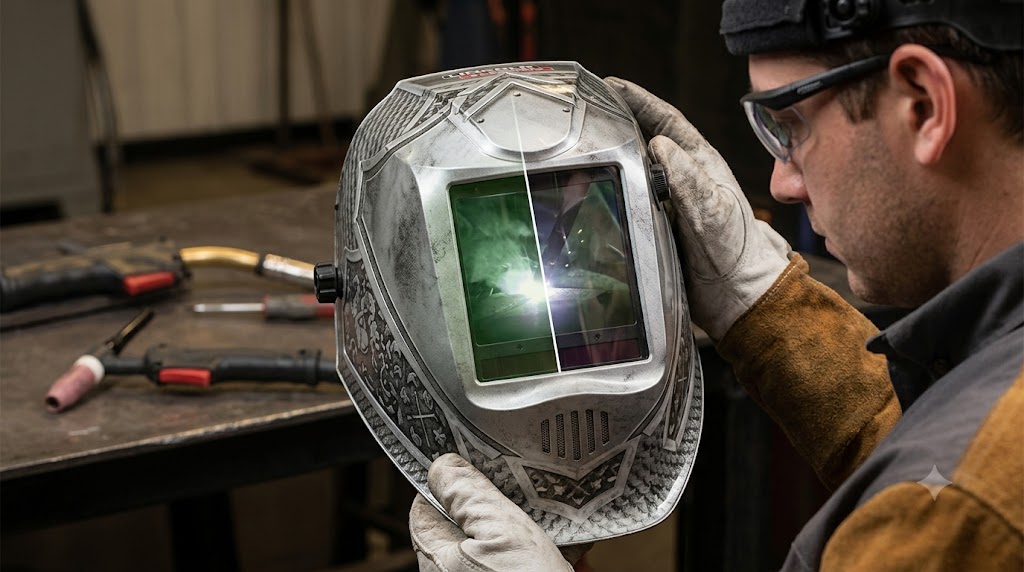
4C is Lincoln Electric’s name for its color-clarity lens technology, and the Viking 3350 uses it as the heart of its cartridge. The idea is straightforward: a proprietary liquid crystal display passes a broader, more accurate range of color and hues in both the light and dark states. Instead of the heavy green cast of a traditional filter, you see the arc, the puddle, and the surrounding metal in something much closer to natural color. On the 3350 that lens fills a 12.5 square inch window and carries a perfect 1/1/1/1 optical clarity rating.
The direct answer: what 4C means and why it matters
The “4C” name points to color clarity, and the practical payoff is real. Because the lens shows truer color, you can read the puddle more accurately, which helps you judge heat, travel speed, and wetting. Beginners tend to learn faster because the weld looks like what their bare eyes would expect. Experienced welders report less eye strain over a long day, because the brain is not fighting a heavy color cast. Combined with the 1/1/1/1 clarity rating, which certifies minimal distortion and even shade across the lens, the 4C system is the single biggest reason the 3350 feels a step above budget hoods.
Is it better than older Viking lenses? Yes, noticeably. Earlier generations were good, but the 4C lens broadens the visible color range in a way you can see the moment you strike an arc.
How 4C compares to a standard auto-darkening lens
A standard auto-darkening filter protects your eyes just fine, but it renders the scene in a strong green monochrome that flattens detail. The 4C lens keeps the same protection while restoring color separation, so a steel puddle no longer looks like the same shade as the plate around it. Think of it as the difference between an old tinted window and a modern one: both block the harmful light, but only one lets you see clearly through it. Rival brands have their own versions of this idea, such as Miller’s ClearLight, which tells you how central true-color viewing has become to premium helmets.
The trade-off worth knowing
The honest flaw is cost of ownership, not performance. A true-color cartridge like the 4C lens carries a higher replacement price than a plain green filter, and the 3350’s large window means cover plates are a bigger consumable. Who should skip paying for 4C: a welder who only tacks together the occasional repair and would never notice the color difference, and who would be better served by a smaller, cheaper hood.
Can the 4C lens be replaced separately?
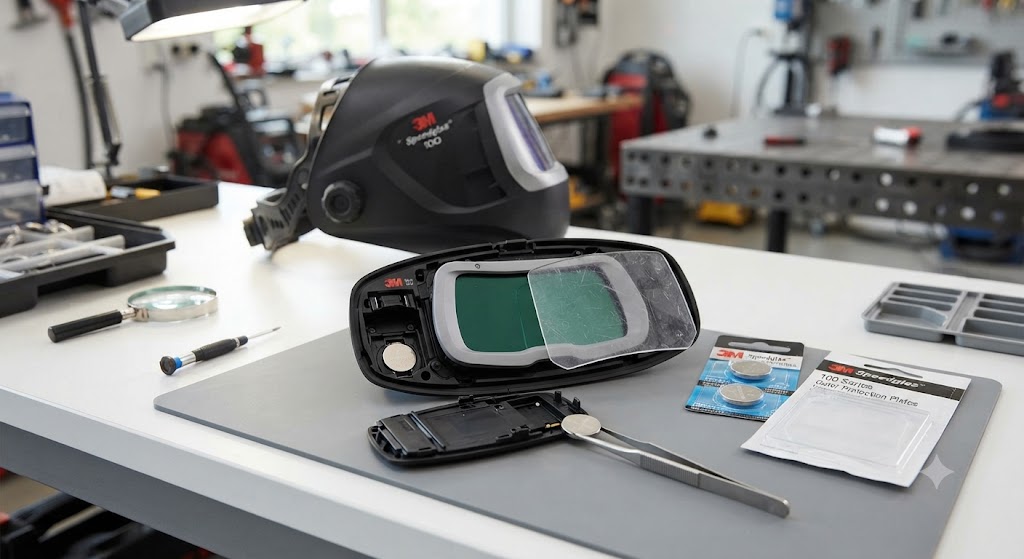
Yes. The 4C auto-darkening cartridge is a replaceable unit, and the outside and inside cover lenses that protect it are inexpensive consumables you should keep on hand. That matters, because a scratched or spatter-pitted cover plate ruins clarity long before the cartridge itself fails. Replace cover lenses often and the expensive 4C cartridge will last far longer.
Why the 4C lens is the reason to buy the 3350
Strip away the styling and the headgear, and the Lincoln Viking 3350 4C lens is the feature you are really paying for. True-color viewing, a 1/1/1/1 clarity rating, and a large window add up to a helmet you can see out of clearly all day, which is exactly what protects your eyes and improves your welds. Just remember that the lens still meets the same ANSI Z87.1 protection baseline as any compliant hood; the 4C technology is about clarity, not extra safety margin.[^https://www.osha.gov/sites/default/files/publications/OSHAFACTSHEET-EYEPROTECTION-DURING-WELDING.pdf]
Frequently asked questions
What does 4C lens mean on the Viking 3350? 4C is Lincoln’s color-clarity lens technology. It passes a broader, more accurate range of color in both light and dark states, so the arc and puddle look close to natural color instead of heavily green.
Is the 4C lens better than older Viking lenses? Yes. It noticeably broadens the visible color range and reduces the green cast, which most welders can see immediately.
Can the 4C lens be replaced separately? Yes. The auto-darkening cartridge is replaceable, and the cover lenses that protect it are inexpensive consumables.
Does the 4C lens change the shade protection? No. It improves clarity and color, not the level of protection. The lens still meets the same ANSI Z87.1 baseline and covers the 5 to 13 shade range.
Does true color reduce eye strain? Many welders report less fatigue over a long day because the eyes are not compensating for a heavy color cast.
Do other brands have something like 4C? Yes. Premium rivals offer their own true-color systems, such as Miller’s ClearLight, which shows how standard the feature has become at this tier.
References
- Lincoln Electric, VIKING 3350 Black Welding Helmet (K3034-4): https://www.lincolnelectric.com/en/Products/k3034-4
- U.S. Occupational Safety and Health Administration, Eye Protection During Welding: https://www.osha.gov/sites/default/files/publications/OSHAFACTSHEET-EYEPROTECTION-DURING-WELDING.pdf