Miller Digital Performance Welding Helmet Review
The Miller Digital Performance sits in the part of the lineup that buyers often skip over because they are either deciding the Digital Elite is worth the upgrade or settling on a budget brand. It is not the flagship and it is not the entry point, which makes it easy to overlook. But for a specific type of buyer, it is actually the right call: someone who wants a genuine Miller product with reliable daily performance but does not need everything the Digital Elite brings to the table. I have seen it used in welding training programs and small fab shops where the budget is real but the need for daily reliability is also real.
What the Miller Digital Performance Is
The Digital Performance is Miller Electric’s mid-tier auto-darkening welding helmet. It uses a four-arc-sensor auto-darkening filter, covers shade range 5 to 13, and meets ANSI Z87.1 certification. It does not include Miller’s X-Mode current-sensing technology, which is a distinction from the Digital Elite. It does include standard light-sensing auto-darkening detection with four sensors.
Viewing area is 3.0 x 2.0 inches, which is smaller than the Digital Elite’s 3.5 x 2.69 inch panel. The smaller viewing area is the most operationally noticeable difference between the two helmets in daily use. For welders who prioritize situational awareness and wide puddle visibility, the Elite’s larger window is a meaningful difference.
How It Compares to the Digital Elite
The most honest comparison between the Digital Performance and the Digital Elite comes down to three factors: viewing area, X-Mode, and price.
The Digital Elite has a larger viewing area. For MIG welding where you are tracking a long bead or doing multi-pass work with constant repositioning, the wider window helps. For TIG welding at a fixed torch position, the smaller window is less consequential.
The Digital Elite has X-Mode. For out-of-position welding, pipe welding, or any scenario where your body or the workpiece regularly blocks sensor line-of-sight to the arc, X-Mode provides significantly more reliable detection. For flat and horizontal shop welding where sensors are rarely obstructed, X-Mode’s advantage is minimal.
For a welder who does primarily flat and horizontal MIG and stick in a home or light commercial shop, the Digital Performance is a capable, reliable helmet at a lower price than the Elite. For a production welder doing varied positions all day, the Elite’s features justify the upgrade cost.
Build Quality and Headgear
The Digital Performance uses Miller’s standard headgear assembly. It is adjustable and comfortable for extended wear. The shell is the same general profile as the Digital Elite. Build quality reflects Miller’s production standards throughout the lineup, which means the Digital Performance is built significantly more robustly than budget helmets at similar prices from non-established brands.
Shade Range and Sensor Performance
Shade 5 to 13 covers all common welding processes at standard amperages. Four sensors provide reliable detection for most welding positions. The sensitivity dial adjusts for different arc intensities, including some low-amperage TIG applications, though the absence of X-Mode means the Digital Performance is somewhat less reliable than the Elite for very low-amperage TIG in constrained spaces.
Parts and Battery
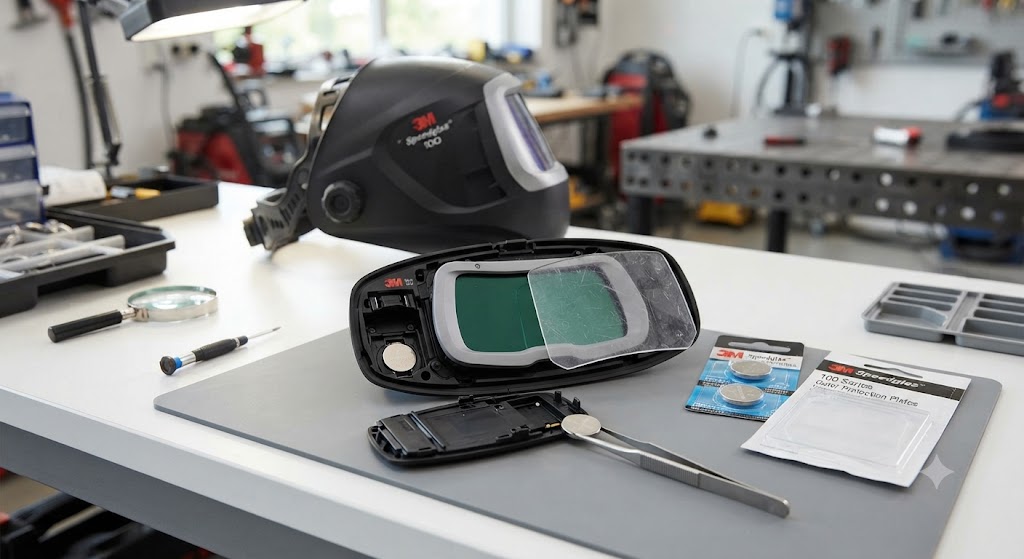
The Digital Performance uses a CR2450 battery. Miller sells replacement lens cartridges, cover lenses, and headgear assemblies through their authorized parts network. Parts availability for Miller helmets is one of the brand’s consistent strengths.
Who Should Buy the Digital Performance
The Digital Performance is the right choice for a small shop owner or instructor who needs a reliable daily-use Miller helmet at a price point below the Elite, does primarily flat and horizontal welding, and does not need X-Mode. It is also a reasonable choice for a serious home shop welder who wants a step up from entry-tier brands without the full Elite investment.
Who Should Buy the Digital Elite Instead
If you weld out of position regularly, need X-Mode for constrained arc strike situations, want the larger viewing area for wide-field puddle tracking, or are using this helmet for daily production work where every feature supports efficiency, the Digital Elite is worth the additional investment.
Frequently Asked Questions
How does the Digital Performance compare to the Digital Elite? The Digital Elite has a larger viewing area, X-Mode current-sensing technology, and ClearLight lens technology. The Digital Performance has a smaller viewing area and standard light-sensing auto-darkening. Both are ANSI Z87.1 certified and use four sensors.
Is the Digital Performance a good mid-tier choice? Yes, for flat and horizontal welding in home and light commercial shop use. It delivers Miller build quality and parts support at a price point below the Elite.
What battery does it use? CR2450 lithium coin cell, solar-assisted.
Does the Digital Performance have X-Mode? No. X-Mode is exclusive to the Digital Elite and Digital Infinity in Miller’s current lineup.
Where can I buy the Miller Digital Performance? Through authorized Miller Electric dealers and authorized Amazon sellers. Check millerwelds.com for a dealer locator.
References
https://www.millerwelds.com https://www.osha.gov https://www.ansi.org
SEO Title: Miller Digital Performance Welding Helmet Review