Miller Elite Welding Helmet Review: Where It Fits Today

Search for a Miller Elite welding helmet today and you will notice something quickly: the results keep steering you toward the Digital Elite. That is the honest starting point for this review. The non-digital Elite was a well-regarded hood in its day, but Miller’s lineup has moved on, and understanding what the Elite was, and what replaced it, saves you from buying the wrong thing or overpaying for old stock. Here is a clear-eyed look.
What the Miller Elite was
The Elite sat as Miller’s premium auto-darkening helmet before the digital era took over. It featured a large viewing area for its time, multiple arc sensors, variable shade control, and the comfort and build quality Miller is known for. It shares consumables with the current Digital Elite, notably the same cover lenses and the CR2450 battery, which tells you how closely related the two hoods are. In practice, the Elite was the analog predecessor to today’s Digital Elite.
The direct answer: should you buy a Miller Elite today?
For most buyers, no, and not because it was a bad helmet. The issue is availability and value. The non-digital Elite has largely been superseded by the Digital Elite, which adds digital controls, memory presets, X-Mode, and the latest ClearLight optics for a similar market position. New Elite units are hard to find, and any you do locate may be old stock or third-party listings, so verifying exactly what you are buying is difficult.
If you already own an Elite and it works, keep welding with it and simply maintain it, since parts like cover lenses and batteries are still available. But if you are shopping new, the Digital Elite is the logical modern replacement and the safer purchase. I would rather tell you that plainly than point you at a listing I cannot confirm is current and genuine.
Why the Digital Elite replaced it
The move from analog to digital was not just marketing. The Digital Elite added push-button digital controls, two memory presets for switching between processes, X-Mode for reliable darkening outdoors and on low-amp TIG, and successive generations of ClearLight optics that improved color and clarity. Each of those addresses a real limitation of the older analog design, which is why Miller consolidated the premium tier around the digital model.
Maintaining an Elite you already own
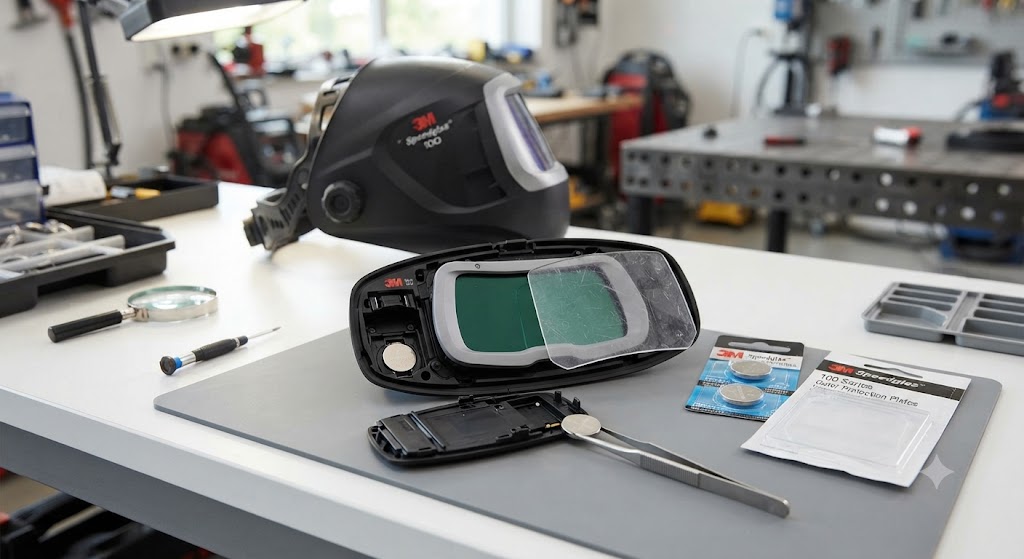
The good news for existing owners is that the Elite is not orphaned. It uses the CR2450 battery, part number 217043, shared across the Miller line, and its outside cover lenses are the same 216326 units that fit the MP-10 and Digital Elite. So keeping an Elite running is a matter of stocking those common consumables, cleaning the sensors, and replacing cover lenses as they scratch, just as you would with any current Miller.
The flaw worth knowing
The honest issue is not performance but obsolescence. Buying a new Elite today means chasing scarce stock and missing the digital features that define the current tier. Who should skip it: anyone shopping new who wants current optics, digital control, and X-Mode. They should buy the Digital Elite instead. The only people the Elite still suits are current owners maintaining a hood they already trust.
How it compares
Compared to the Digital Elite, the analog Elite gives up digital controls, memory, X-Mode, and the newest ClearLight generation while offering broadly similar comfort and build. Compared to the Classic Series, the Elite historically offered a larger window and more sensors, but the Classic is current and easier to buy new. In today’s market, the comparison almost always resolves in favor of a current model.
Where the Elite lands now
This Miller Elite welding helmet review reaches a practical conclusion: respect it as the capable predecessor it was, maintain it if you own one, but buy the Digital Elite if you are shopping new. Chasing discontinued stock rarely serves you well when a better, current version exists at the same market position. Whatever helmet you run, confirm the ANSI Z87.1 marking that OSHA references for welding eye protection
Frequently asked questions
How does the Elite compare to the Digital Elite? The Digital Elite is the modern successor. It adds digital controls, memory presets, X-Mode, and the latest ClearLight optics, while the analog Elite lacks those features and is harder to buy new.
What battery does the Elite use? The CR2450 lithium coin cell, part number 217043, the same battery used across nearly all Miller helmets.
Where can I find replacement parts? The Elite shares consumables with the Digital Elite, including outside cover lens 216326 and the 217043 battery, both widely available from welding suppliers.
Is the Elite still sold new? Rarely. It has largely been superseded by the Digital Elite, so new listings may be old stock or third-party sellers. Verify carefully before buying.
Should I buy an Elite or a Digital Elite? For a new purchase, the Digital Elite, because it offers current optics and digital features at the same market position. Keep an Elite only if you already own one.
Can I still maintain an older Elite? Yes. Its battery and cover lenses are still sold, so cleaning sensors and replacing consumables keeps it running for years.
References
- Miller Electric, Digital Elite ClearLight 4x (millerwelds.com)
- U.S. Occupational Safety and Health Administration, Eye Protection During Welding