Miller T94i PAPR Welding Helmet Review: Protecting Your Lungs
Most welding helmet reviews stop at your eyes, but this Miller T94i welding helmet review is about the part of you a standard hood ignores: your lungs. The T94i paired with Miller’s powered air purifying respirator is built for welders who breathe fumes all day, from stainless to galvanized steel, and it treats respiratory protection as seriously as arc protection. It is heavy, expensive, and absolutely the right tool for a specific job. Here is who needs it and who does not.
What the Miller T94i PAPR is
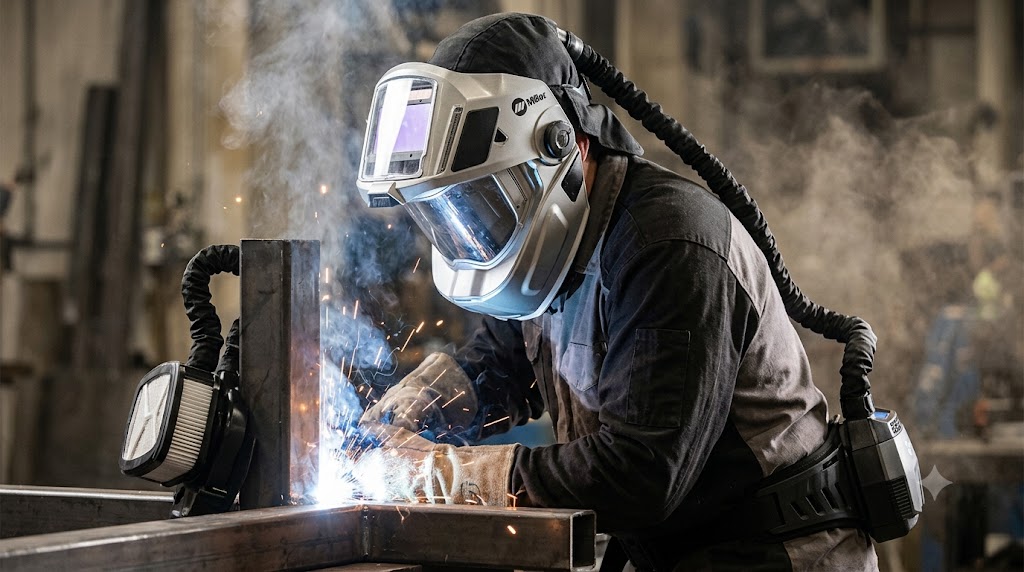
The T94i is a flip-front auto-darkening welding helmet with ClearLight lens technology, and in its PAPR configuration it pairs with a belt-mounted powered air purifying respirator. The system pulls air through a HEPA filter and pre-filters, then feeds filtered air into the helmet through a Dualtec air manifold with a six-point distribution design for cooling and comfort. It includes a low-profile blower, breathing tube, spark guard, two lithium-ion batteries, a charger, a flowmeter, and a padded belt with shoulder straps. The flip-front design gives you a dedicated grinding shield.
The direct answer: who needs the T94i PAPR?
Buy the T94i PAPR if you weld fume-heavy materials regularly or work in a space with limited ventilation. The filters are rated to protect against hexavalent chromium from stainless steel, zinc oxide from galvanized steel, manganese, aluminum, nickel, iron oxide, and other welding fumes. If that describes your daily work, this system protects the health that a standard helmet and even a half-mask respirator cannot fully address, while keeping you cooler under the hood.
Who should skip it: hobbyists, occasional welders, and anyone welding clean mild steel in a well-ventilated shop. For them the T94i PAPR is expensive overkill, and a standard ClearLight helmet plus good ventilation or a fitted P100 respirator is the sensible, affordable answer. This is a professional health-protection tool, not a general-purpose upgrade.
Fume protection that matters
The reason the T94i exists is fume toxicity. Welding stainless releases hexavalent chromium, a known carcinogen, and galvanized steel releases zinc oxide that causes metal fume fever. A PAPR delivers a steady supply of filtered air into a sealed helmet, which provides a higher and more consistent level of respiratory protection than a mask that depends on a perfect face seal. For daily exposure to those fumes, that difference is meaningful.
Comfort and the flip-front design
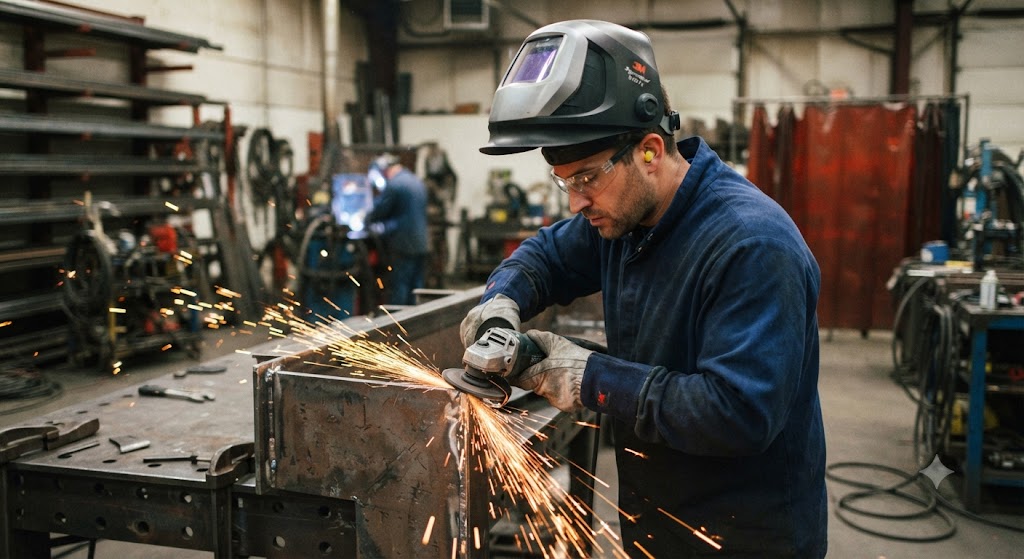
The Dualtec manifold spreads airflow across six points, which both filters your air and noticeably cools your face, a real benefit during long sessions. The flip-front lets you raise the ClearLight welding lens and drop to a clear grinding shield without removing the helmet, and the integrated shoulder straps distribute the blower and battery weight to reduce back strain.
The flaw worth knowing
The honest drawbacks are weight, cost, and complexity. A PAPR system is a significant investment, adds a blower, tube, and battery pack to carry, and requires filter changes and maintenance a simple hood never needs. Because it is a specialized professional system rather than a shelf item, it is best purchased and fitted through a welding supplier rather than a generic marketplace listing. Who should skip it: anyone whose work does not produce serious fumes, who would carry all that weight and complexity for protection they do not need.
How it compares
Against 3M’s Adflo Speedglas system and the YESWELDER PAPR, the T94i competes on Miller’s ClearLight optics and the Dualtec cooling manifold, and like them it is a full respiratory system rather than a helmet alone. Against a standard Miller like the Digital Elite, the comparison is not really about optics, it is about lungs: the Digital Elite protects your eyes, the T94i protects your eyes and your breathing.
Where the T94i PAPR fits
This Miller T94i welding helmet review lands on a focused recommendation: it is essential for welders facing daily fume exposure and unnecessary for those who are not. Buy it if you weld stainless, galvanized, or in poor ventilation for a living, and buy it through a proper welding supplier who can fit and service it. Otherwise, a standard ClearLight helmet with good ventilation or a P100 respirator is the right call. Confirm any helmet meets ANSI Z87.1 and that respiratory components carry NIOSH approval
Frequently asked questions
What is a PAPR welding helmet? A powered air purifying respirator helmet uses a battery blower to draw air through a filter and feed clean air into a sealed helmet, protecting your lungs in addition to your eyes and face.
Does the T94i protect against fumes? Yes. Its filters are rated against hexavalent chromium, zinc oxide, manganese, aluminum, nickel, iron oxide, and other welding fumes, making it suited to stainless and galvanized work.
How long does the PAPR battery last? The system uses lithium-ion batteries and ships with two plus a charger, so you can rotate packs across a shift. Actual runtime depends on airflow setting and battery condition.
Is the T94i good for grinding? Yes. Its flip-front design lets you raise the welding lens and use a dedicated clear grinding shield without removing the helmet.
Where should I buy a T94i PAPR? Through a welding supplier who can fit and service the system, rather than a generic marketplace listing, because it is a specialized professional respiratory product.
Do hobbyists need a T94i PAPR? Generally no. Hobbyists welding clean mild steel with good ventilation are well served by a standard helmet and, if needed, a fitted P100 respirator.
References
- Miller Electric, PAPR with T94i-R product information (via authorized welding supplier) (store.cyberweld.com)
- U.S. Occupational Safety and Health Administration, Eye Protection During Welding