The Pipeliner Welding Helmet: Why the Shape Changes Everything
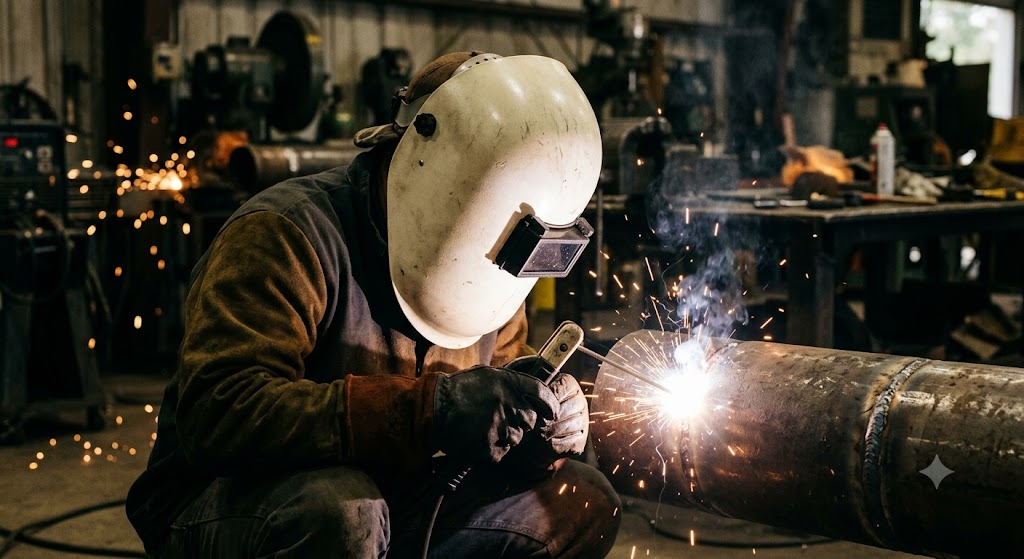
Walk onto a pipeline job and you will see a helmet that looks nothing like the big auto darkening hoods in a fabrication shop. It is small, round, and it flips up with a nod of the head. A pipeliner welding helmet is shaped the way it is for a reason, and once you understand that reason, the whole design makes sense. These hoods exist to get into tight spaces, to flip clear fast so the welder can inspect the bead, and to survive the kind of abuse a pipeline right-of-way dishes out.
A pipeliner welding helmet is a compact, low-profile hood, often called a bucket or pancake style, built for pipe welding in confined spaces. The defining traits are a small, close-fitting shell that clears pipe and fittings, a spring-loaded flip front so the welder can drop the lens with a head flick and lift it to check work, and a tough shell material. Many pipeliners still run a passive fixed-shade lens rather than auto darkening, for simplicity and reliability.
The short version: the Jackson Safety PL280 is the pipeliner hood most welders point to, a light bucket-style shell with a spring-loaded lift front and a fixed shade 10 lens. It is not for everyone, and this guide explains exactly who it is for and who should look elsewhere.
Why pipeliners use a different shape
The first reason is clearance. Pipe welding means working around a cylinder, often in a ditch or against a wall, and a big shop hood simply will not fit into those positions. The compact bucket shape lets the welder get their face close to the joint where a bulky helmet cannot go.
The second reason is workflow. Pipe welders inspect their bead constantly between passes, so a flip front that lifts with a head nod and drops with a flick is faster than reaching up to swing a whole helmet. That rhythm, weld a pass, flip up, wire brush, inspect, flip down, is the heartbeat of pipe work, and the hood is designed around it.
The third reason is durability. A pipeline right-of-way is hard on gear, so these hoods favor tough shell materials and simple, hard-to-break mechanisms over delicate electronics.
The pick: Jackson Safety PL280
The Jackson Safety PL280 is the modern reference for a pipeliner hood. It is a traditional bucket-style shell made from Super Tuff nylon, which makes it lighter than the old fiberglass hoods while still taking abuse, and it uses a spring-loaded lift front so you can flick the passive shade 10 lens down and lift it to inspect. It is ANSI Z87.1 rated and can be run with ratcheting headgear or a slotted hard hat adapter for job sites that require head protection.
The honest flaw is that the standard lens is a fixed passive shade 10, not auto darkening, so you strike your arc blind the way pipeliners always have, and the flip front adds a little weight up top. Side visibility is limited by the compact shell. Skip it if you want a modern auto darkening experience or do general shop work, and choose it if you weld pipe, work in tight positions, or simply prefer the flip-front rhythm.
Passive versus auto darkening on a pipeliner
Many pipeliners deliberately stick with a passive fixed-shade lens because it never fails to darken, never needs a battery, and is dead simple in a harsh environment. The tradeoff is that you cannot see clearly before the arc strikes, so you rely on positioning your electrode by feel and habit. If you want the convenience of auto darkening in this hood shape, you can fit an auto darkening cartridge or step up to a purpose-built industrial flip-up helmet, but many pipe welders consider the passive lens a feature, not a limitation.
Who a pipeliner hood is really for
This is a specialist tool. If you weld pipe, work in ditches and tight spaces, or spend your day flipping up to inspect between passes, the shape is a genuine advantage that a shop hood cannot match. If your welding is bench work, general fabrication, or you are new and want to see your joint before you strike, a standard auto darkening helmet will serve you far better. Buying a pipeliner hood because it looks the part is the most common way welders end up frustrated with one.
The takeaway on pipeliner helmets
A pipeliner welding helmet earns its odd shape through clearance, a fast flip-front workflow, and durability, and the Jackson Safety PL280 delivers all three in a light, tough, ANSI-rated package. Just go in clear-eyed: the standard lens is passive shade 10, so this is a hood for pipe welders and flip-front devotees, not for someone who wants a modern auto darkening view. Match the tool to the job, and the pipeliner hood is exactly right for the work it was born to do.
Frequently asked questions
What is a pipeliner welding helmet? It is a compact, low-profile hood, often called bucket or pancake style, built for pipe welding in tight spaces. It usually has a spring-loaded flip front and, traditionally, a passive fixed-shade lens.
Why do pipeliners use a different shaped helmet? The small shell clears pipe and fittings in confined positions, and the flip front lets the welder inspect the bead quickly between passes. A large shop hood cannot fit or flip as fast.
Can you add an auto darkening lens to a pipeliner helmet? Often yes, with a compatible auto darkening cartridge, or you can choose an industrial flip-up helmet built for it. Many pipe welders still prefer the passive lens for its simplicity and reliability.
Is the Jackson PL280 auto darkening? The standard PL280 uses a passive fixed shade 10 lens with a spring-loaded lift front, not an auto darkening filter. You strike your arc the traditional way and flip up to inspect.
Do I need a pipeliner helmet if I do not weld pipe? No. The shape is a specialist advantage for pipe and tight-space work. For bench and general fabrication, a standard auto darkening helmet is more comfortable and easier to use.
Can a pipeliner helmet be used with a hard hat? Yes. Hoods like the PL280 can run with a slotted hard hat adapter, which is required on many regulated job sites for head protection.
References
-
OSHA, Eye Protection During Welding fact sheet: https://www.osha.gov/sites/default/files/publications/OSHAFACTSHEET-EYEPROTECTION-DURING-WELDING.pdf
-
ISEA and NIOSH, ANSI/ISEA Z87.1-2020 standard information: https://wwwn.cdc.gov/PPEInfo/Standards/Info/ANSI/ISEAZ8712020
-
URL slug: pipeliner-welding-helmet
-
Excerpt: A pipeliner welding helmet looks nothing like a shop hood, and for good reason. This guide explains why the bucket shape and flip front matter for pipe work, reviews the Jackson Safety PL280, and shows who should buy one and who should skip it.