Vulcan Welding Helmet Review (Harbor Freight)
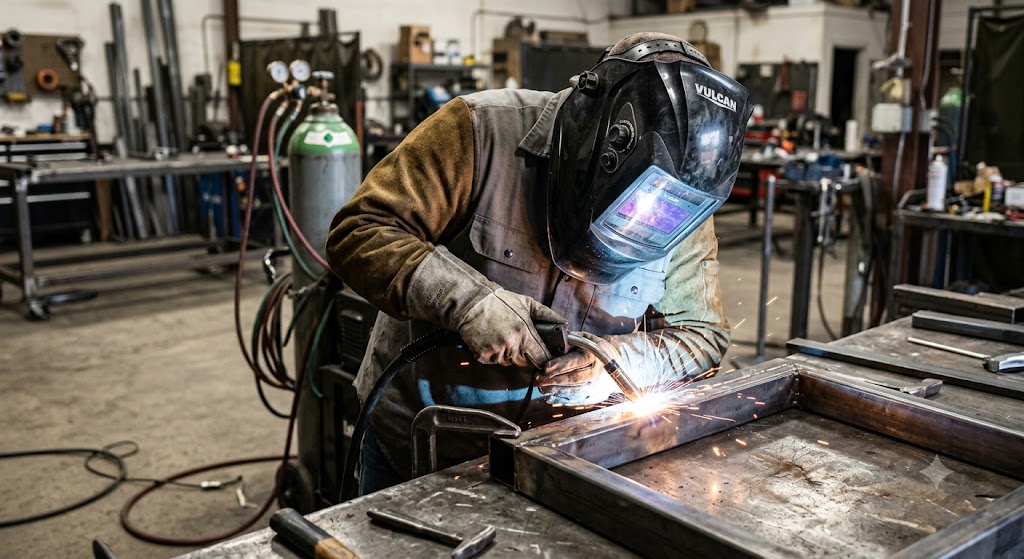
Harbor Freight’s Vulcan is the brand they use for their more serious welding products, positioned above the Chicago Electric house brand. Where Chicago Electric covers the absolute entry point, Vulcan is meant to signal a step up in quality for the Harbor Freight shopper who wants something with a bit more credibility. Whether that positioning holds up in practice for the welding helmet line is what this review addresses.
What the Vulcan Welding Helmet Is
Harbor Freight’s Vulcan auto-darkening welding helmet is a store brand product sold exclusively through Harbor Freight stores and their online channel. It is not the same product as Chicago Electric, which is Harbor Freight’s lowest-tier welding brand. The Vulcan helmet carries ANSI Z87.1 certification on the lens, comes in multiple versions with varying viewing areas and shade ranges, and is priced at the lower end of the market.
The Vulcan helmets that show up most frequently in comparisons are the auto-darkening models covering shade 5 to 13 with standard light-sensing detection. Harbor Freight has updated the Vulcan line several times, and the current versions are better than the early Vulcan helmets that reviewers criticized in the brand’s first years.
ANSI Z87.1 Certification
The Vulcan auto-darkening helmets carry ANSI Z87.1 certification. This is the critical baseline for any welding helmet used in an occupational setting. On this standard, the Vulcan qualifies. The Z87.1 marking is on the lens itself, which is the correct place to verify it.
However, ANSI Z87.1 is a minimum standard. It certifies that the lens meets basic impact, optical, and UV/IR filtration requirements. It does not guarantee reaction time, sensor count, optical clarity beyond the minimum thresholds, or long-term reliability. A certified budget lens and a certified premium lens can both carry Z87.1 while differing significantly in actual optical quality and operational performance.
How the Vulcan Compares to YESWELDER and Chicago Electric
Versus YESWELDER. YESWELDER occupies a similar budget position but sells direct-to-consumer online with a more developed customer service infrastructure. YESWELDER’s true color lens models deliver better optical performance than standard Vulcan models at similar price points. YESWELDER also offers better parts availability as an online-first brand. For someone buying online, YESWELDER is generally the stronger option in the budget tier.
Versus Chicago Electric. Chicago Electric is Harbor Freight’s lower tier. The Vulcan is a genuine step up from Chicago Electric in sensor count, viewing area, and auto-darkening filter quality. If you are choosing between Harbor Freight brands, Vulcan is the better buy.
Versus mid-tier brands (Hobart, entry Lincoln/Miller). The Vulcan’s primary limitation is parts availability and long-term support. When a Hobart or Lincoln entry-tier helmet needs a replacement lens or headgear, those parts are available through the manufacturer’s network. For the Vulcan, you are largely limited to Harbor Freight’s own replacement parts stock, which is inconsistent. If you plan to use the helmet daily and expect to maintain it over years, a brand with a defined parts support network serves you better.
Battery
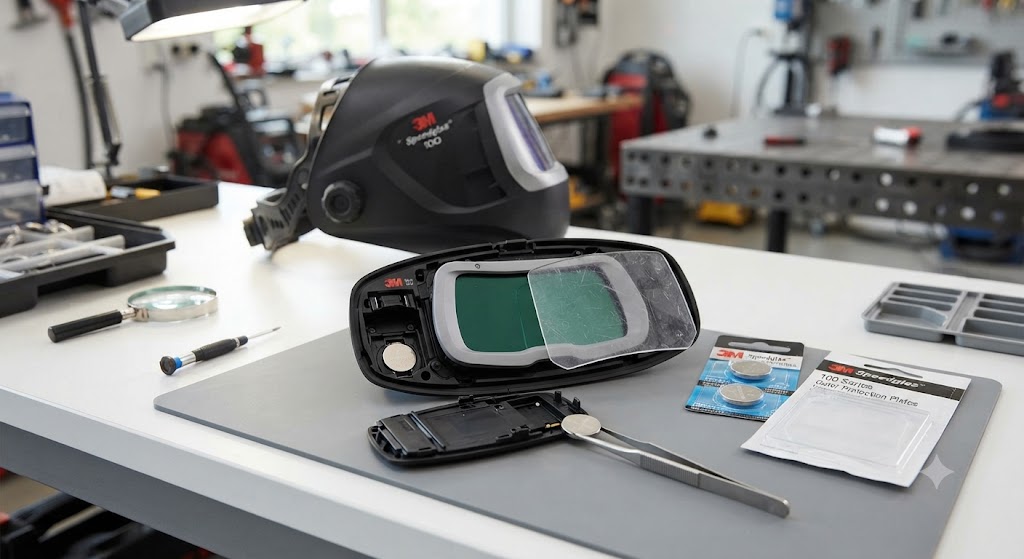
Recent Vulcan auto-darkening models use CR2032 or CR2450 depending on specific version. Check your model’s documentation. CR2032 is widely available; CR2450 is also available but in fewer retail locations.
Reaction Time
Vulcan helmets spec reaction times in the 1/25,000 to 1/3,600 second range depending on the version. Current models have improved from the older 1/3,600 second specs. Confirm the reaction time for the specific Vulcan model you are considering by checking the product page.
Who Should Buy a Vulcan Welding Helmet
The Vulcan is appropriate for someone who is genuinely learning to weld for the first time, plans to use the helmet infrequently, and wants to spend as little as possible on the first helmet while still getting an ANSI certified product. It is an acceptable starting point.
For anyone who plans to weld more than occasionally, who works professionally, or who values having a parts-supported helmet they can maintain over years, a Hobart, entry-level Lincoln, or YESWELDER equivalent is a better investment for modest additional cost.
Frequently Asked Questions
Is the Vulcan welding helmet from Harbor Freight any good? For occasional home use and learning, yes. It is ANSI Z87.1 certified and functional. It does not match the parts support, optical quality, or long-term reliability of established brands like Hobart or Lincoln Electric entry models.
How does it compare to YESWELDER and ANDELI? YESWELDER generally offers better optical performance and customer support at similar prices. The Vulcan’s advantage is in-store availability at Harbor Freight locations.
What battery does the Vulcan use? Depends on the specific version. Recent models use CR2032 or CR2450. Check the product documentation for your specific model.
Can I buy replacement lenses for a Vulcan helmet? Replacement lenses are available through Harbor Freight’s parts channel but availability is less consistent than established brands. Plan for potential difficulty sourcing parts after initial purchase.
How does the Vulcan compare to the Chicago Electric Harbor Freight helmet? The Vulcan is a genuine step up from Chicago Electric. Better sensor count, larger viewing area, and improved auto-darkening filter quality.
References
https://www.harborfreight.com https://www.ansi.org https://www.osha.gov/laws-regs/regulations/standardnumber/1910/1910.133
SEO Title: Vulcan Welding Helmet Review (Harbor Freight)