Best Welding Helmet and Glove Combo Kits
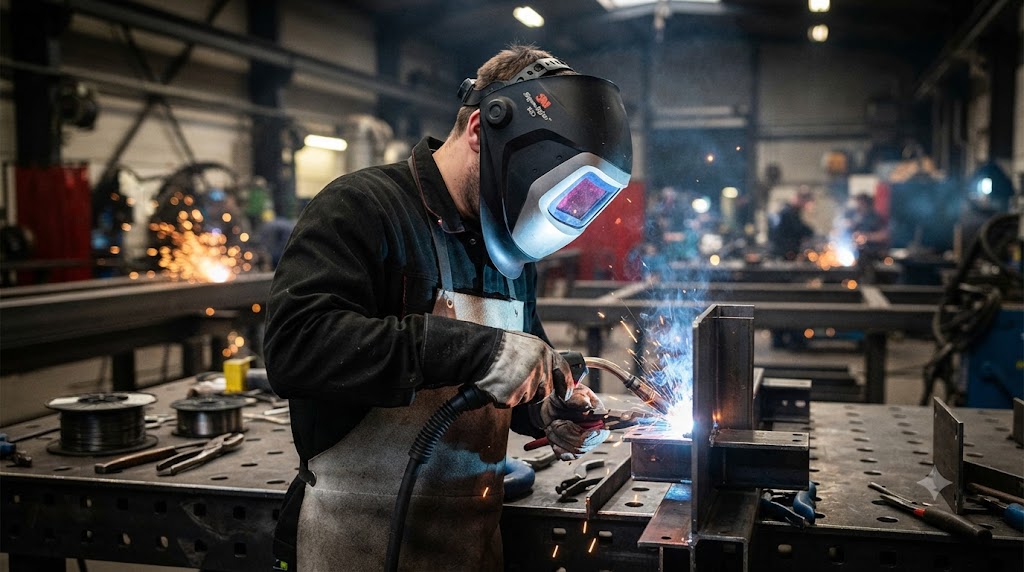
When my nephew asked me what to buy for his first welding setup, the first question I asked him back was what process he was learning on and what his budget looked like. The reason that matters for a helmet and gloves kit is that the two items that dominate every starter bundle selection are almost always a compromise for the buyer, and knowing what you are compromising on before you buy keeps you from being disappointed. Here is the full picture on welding helmet and glove combo kits: when they make sense, what to look for, and when you are better off buying the pieces separately.
What Welding Starter Kits Typically Include
A welding helmet and glove combo kit typically bundles an auto-darkening or passive welding helmet with one pair of welding gloves and sometimes additional items like a welding jacket, chipping hammer, wire brush, or ear plugs. The primary appeal is price: bundled gear is usually less expensive than the sum of the same items purchased separately, and the combination is marketed as a complete get-started package.
The helmet in most consumer-tier kits is an entry-level auto-darkening model or a passive shade helmet. The gloves are typically a pair of heavy cowhide MIG-style gauntlet gloves. Both items are functional at a basic level, but both are optimized for cost rather than for any specific process or user preference.
For a beginner who is learning to weld for the first time, this baseline is often entirely adequate. You need something that works, you are not yet sure what preferences you will develop, and spending the minimum while you learn is rational. For a professional who welds daily, a kit purchase is almost always the wrong approach.
Who Benefits from a Combo Kit
Beginners buying their first welding setup who want to get started without over-investing before they know their preferences.
Gift buyers who want to give a complete functional starter set to someone who is beginning to weld. A kit is a better gift than a single item because it acknowledges that the person needs both pieces to actually weld safely.
Occasional home welders who weld a few times a year for repairs and small projects and have no interest in optimizing each piece of gear. Functional protection for light occasional use is all they need.
Professional welders buying a spare set for a second workstation or a job site where dedicated gear reduces transport.
What Makes a Good Starter Kit
ANSI Z87.1 certified helmet. This is non-negotiable regardless of kit price. The helmet must carry the Z87.1 marking on the lens. Any kit that includes a helmet without Z87.1 certification is not acceptable for welding, regardless of the bundle price or marketing claims.
Leather gloves, not synthetic. The gloves in the kit must be leather. Synthetic gloves melt on contact with welding spatter and cause serious burn injuries. Check the glove material description before buying any kit. Cowhide leather gauntlet gloves are the correct glove type for most starter kit scenarios, since MIG is the most common first process.
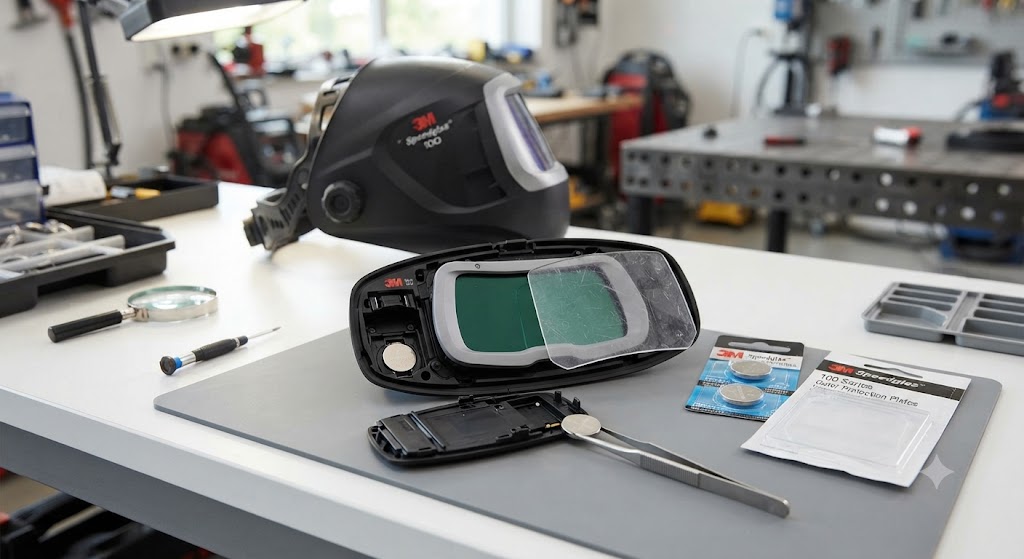
Auto-darkening vs passive helmet. Many entry kits include a fixed-shade passive helmet at shade 10 or 11. A passive helmet at the correct shade is perfectly safe and was the industry standard for decades. An auto-darkening helmet is more convenient and allows better visibility before and after the arc without flipping the helmet. Both are correct choices. If the kit includes an auto-darkening helmet, check whether it is hybrid solar-battery or pure solar. Avoid pure solar-only auto-darkening helmets for the reliability reasons covered in the solar lens guide.
Shade range appropriateness. For a MIG welding beginner, shade 10 is the appropriate shade for most common wire diameters and amperages. Check that the helmet shade matches the process the buyer is learning.
Kit Buying vs Buying Separately
| Factor | Kit Buying | Buying Separately |
|---|---|---|
| Cost | Lower upfront | Higher upfront |
| Optimization for specific process | Low, generic choices | High, choose exactly what you need |
| Glove type match | Usually MIG style only | Choose by process (MIG, TIG, stick) |
| Upgrade path | Replace when outgrown | Build incrementally |
| Best for | Beginners, gifts, occasional use | Daily production welders, TIG welders, process-specific needs |
When to Buy Separately Instead
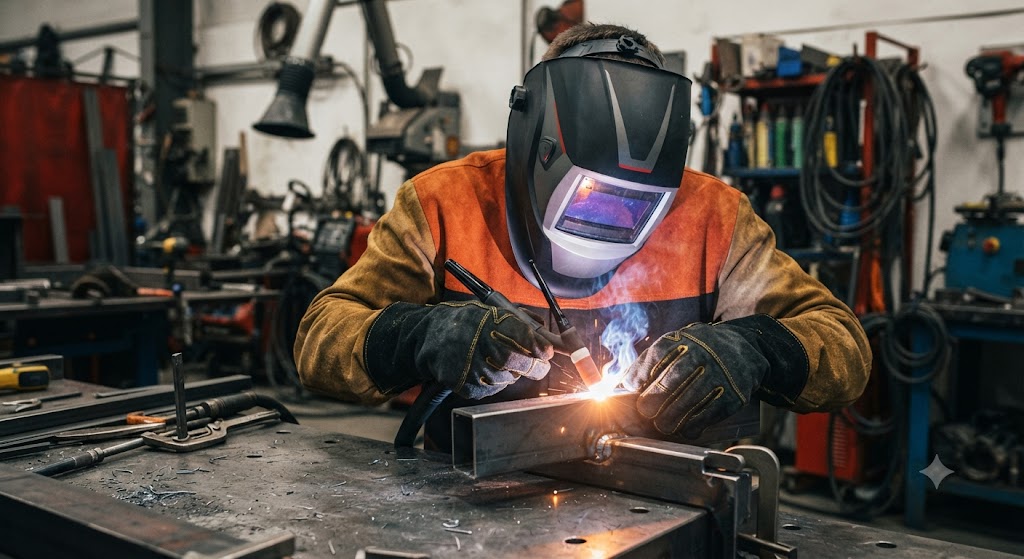
If you are doing primarily TIG welding, the heavy cowhide gauntlet gloves in most kits are the wrong gloves for your process. TIG welding requires light, fine-grain leather gloves for the tactile sensitivity that TIG technique demands. A kit gives you MIG gloves when you need TIG gloves.
If you are a professional or serious hobbyist who has specific helmet requirements, such as a wide viewing area, specific shade range, high optical clarity, or particular headgear design, the kit helmet is unlikely to match those preferences. At that level, the small cost saving of a kit does not justify accepting a helmet that is not the right tool for your work.
If you already own one of the two items at a quality level that exceeds what the kit offers, buy only the item you need. Paying for a kit to get a second, inferior copy of something you already have well-covered is wasteful.
What a Minimum Complete Welding Safety Set Looks Like
Beyond the helmet and gloves that most kits include, a complete minimum welding safety setup requires FR clothing (jacket or sleeves plus FR pants or leather chaps), leather welding boots, and a P100 half-mask respirator for indoor welding. Most kits do not include all of these items. Check what each kit specifically includes and budget for the missing items, particularly the respirator, which most kits omit entirely.
The Bottom Line
A welding helmet and glove combo kit is a good starting point for a beginner or a gift, provided the helmet carries Z87.1 certification and the gloves are leather. It is not the right purchase for a production welder or for a TIG welder who needs process-specific gloves. The money saved on a kit versus buying separately is real but small. The process-fit and quality fit of buying separately is significant for anyone welding regularly. Start with a kit if you are new and uncertain about your preferences. Upgrade each piece individually once you know what you actually need.
Frequently Asked Questions
Are welding starter kits worth buying? For beginners and gift buyers, yes. A kit provides functional protection at a lower cost than buying each item separately. For production welders with specific process requirements, buying separately is a better investment.
What should I look for in a welding helmet and gloves kit? ANSI Z87.1 certification on the helmet lens, leather (not synthetic) gloves, and a shade range appropriate for the process you are learning.
Do welding kits include a respirator? Most do not. A respirator is an essential piece of welding PPE that most kit buyers will need to purchase separately, particularly for indoor welding.
Are gloves in welding kits the right type for TIG welding? No. Most kit gloves are heavy cowhide MIG-style gauntlet gloves. TIG welding requires lightweight fine-grain goatskin or kidskin gloves. If you are buying a kit primarily for TIG welding, plan to buy TIG-specific gloves separately.
What is the minimum complete welding safety set? Helmet, gloves, FR jacket or sleeves, FR pants or leather chaps, leather welding boots, P100 respirator for indoor use, and ear protection for grinding and plasma cutting.
Can I give a welding kit as a gift for a beginner? Yes, provided you confirm the helmet is Z87.1 certified and the gloves are leather. A functional certified kit is a useful and practical gift for someone starting to learn welding.
Should I buy a kit if I already own a quality welding helmet? No. Buy the specific gloves you need for your process rather than paying for a kit that includes a helmet you do not need.
References
https://www.osha.gov/laws-regs/regulations/standardnumber/1910/1910.133 https://www.aws.org https://www.millerwelds.com https://www.lincolnelectric.com
SEO Title: Best Welding Helmet and Glove Combo Kits Guide