Welding Helmet Arc Sensors Explained
When I started comparing budget welding helmets years ago, one of the specifications that confused me the most was arc sensor count. Some helmets had two sensors. Some had four. Marketing materials implied that more sensors meant better detection, but nobody explained why or under what conditions the difference actually mattered. This guide explains exactly what arc sensors do, why sensor count and placement affect real-world performance, and what you should look for when choosing a helmet.
What Arc Sensors Do
Arc sensors are photodetectors mounted in the lens frame or cartridge of an auto-darkening welding helmet. They detect the intense light produced by the welding arc and send a signal to the electronics that switch the liquid crystal lens from its light state to the dark welding shade. The sensors work by measuring light intensity above a threshold that corresponds to an arc event, distinguished from ambient light by both intensity and spectral profile.
The core requirement is simple: the sensors must detect the arc before UV and IR radiation from the arc reaches your eyes in harmful quantities. A fast, reliable sensor system means the lens darkens before your eyes are exposed.
Two Sensors vs. Four Sensors
The difference in sensor count is about coverage reliability, not about how fast the lens darkens. Darkening speed is a function of the electronics and LCD response time, not sensor count. Sensor count determines the probability that at least one sensor has a clear line of sight to the arc at the moment of arc strike.
Two sensors are placed on the left and right sides of the lens frame. With only two sensors, there are welding positions and body orientations where your arm, the workpiece, or structural obstacles between you and the arc can block both sensors simultaneously. When both sensors are blocked, the helmet does not detect the arc, and the lens does not darken.
Four sensors add two additional sensors above and below the primary pair (or in a quad layout around the viewing area). Four-sensor coverage significantly reduces the chance that all sensors are simultaneously blocked. The additional sensor coverage matters most for:
- Pipe welding where the body and torch position change frequently
- Overhead welding where arm position relative to the sensors changes constantly
- Tight corner welds where the workpiece can shadow sensors
- Production welding environments with multiple nearby arcs
For straightforward flat and horizontal welding in a home shop, two sensors are often sufficient. For out-of-position work and professional daily use, four sensors are the practical standard.
Sensor Placement on Different Helmets
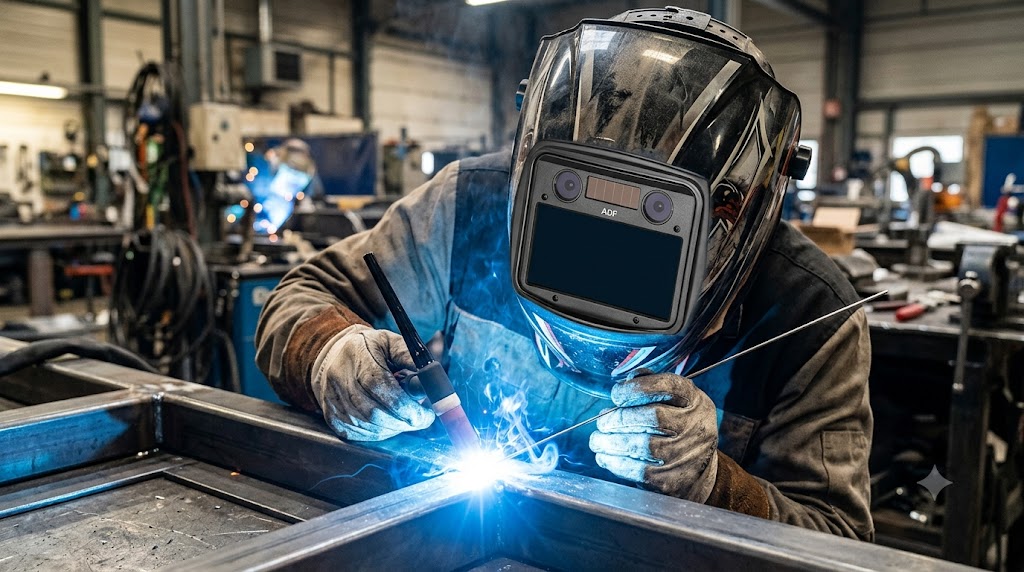
Sensor placement varies by helmet design. On most auto-darkening helmets, two sensors appear as small clear windows on either side of the lens. On four-sensor helmets, additional sensors appear above and below the main pair, or in a quad arrangement at the corners of the lens frame.
The physical size and placement of sensors is partly why premium helmets (Lincoln Viking, Miller Digital Elite, ESAB Sentinel, Optrel) command higher prices over budget helmets. Premium helmets use larger, higher-sensitivity sensors in optimized placement positions. Budget helmets may use smaller or differently positioned sensors that meet the basic specification without matching the premium placement geometry.
How to Clean Arc Sensors
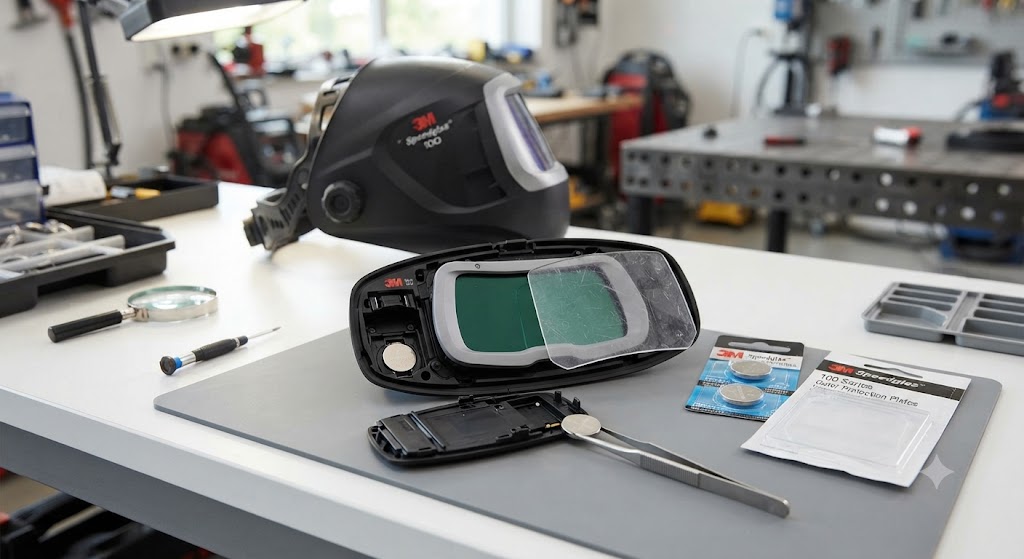
Arc sensors are covered by the front cover lens, which protects them from spatter. However, if the cover lens is cracked, missing, or coated with spatter and residue, detection reliability can degrade.
To clean sensors:
- Remove the front cover lens.
- Inspect the sensor windows in the lens frame for spatter deposits, dust, or residue.
- Clean gently with a soft cotton cloth or compressed air. Do not use abrasive materials.
- Inspect the cover lens for cracks or opacity. Replace if damaged.
- Reinstall a clean cover lens before welding.
Never spray cleaning solution directly onto the lens assembly or sensor areas. Moisture intrusion into the lens cartridge causes electronic failures.
Does Sensor Count Affect Price?
Yes, but not in isolation. Four-sensor helmets are almost always more expensive than two-sensor helmets from the same brand, but other factors (lens optical quality, reaction speed, shade range, shell design) drive price differences simultaneously. You rarely find a four-sensor helmet at budget pricing because the helmets in the budget tier use fewer sensors as part of a broader cost reduction package.
A four-sensor premium helmet from Lincoln, Miller, or ESAB justifies its price across the full feature set, not just sensor count alone.
The Bottom Line
For home shop welding in predictable positions, two sensors may serve adequately. For professional daily use, out-of-position welding, pipe work, or any scenario where body and workpiece geometry regularly places sensors in shadow, four sensors are worth the additional cost. Keep sensors clean and the front cover lens in good condition for reliable performance regardless of sensor count.
Frequently Asked Questions
How many arc sensors does a good welding helmet need? For professional daily use, four sensors are the practical standard. For occasional home shop welding in flat or horizontal positions, two sensors may be adequate.
Why would a helmet fail to darken with clean sensors? If sensors are clean and unobstructed, the most common causes of failed darkening are a depleted battery, a sensitivity setting too low for the arc’s light intensity, or a failing lens cartridge.
Does sensor count affect darkening speed? No. Darkening speed is determined by the electronics and LCD response time, not by how many sensors the helmet has. Sensor count affects detection reliability, not reaction time.
Can I clean arc sensors with window cleaner? No. Use a soft dry cloth or gentle compressed air. Liquid cleaning agents risk moisture intrusion into the lens cartridge.
Do budget two-sensor helmets meet ANSI Z87.1 requirements? Yes. ANSI Z87.1 does not mandate sensor count. The certification covers impact resistance, optical clarity, UV and IR filtration, and shade accuracy. Sensor count is a performance feature, not a certification requirement.
Why does my four-sensor helmet sometimes not darken during TIG? Low-amperage TIG welding produces less arc light than MIG or stick at equivalent arc visibility. If sensitivity is set too low, even a four-sensor helmet may not detect the TIG arc reliably. Increase sensitivity setting for low-amperage TIG work.
References
https://www.lincolnelectric.com https://www.millerwelds.com https://www.ansi.org https://www.osha.gov
SEO Title: Welding Helmet Arc Sensors Explained