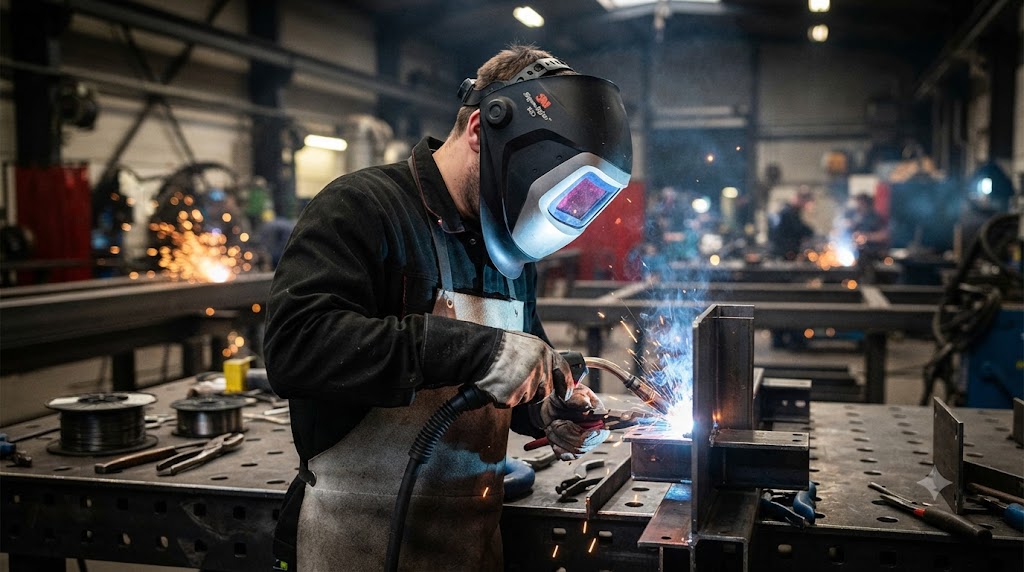
Welding Helmet Buying Guide for Cast Iron Repair: What the Work Actually Demands
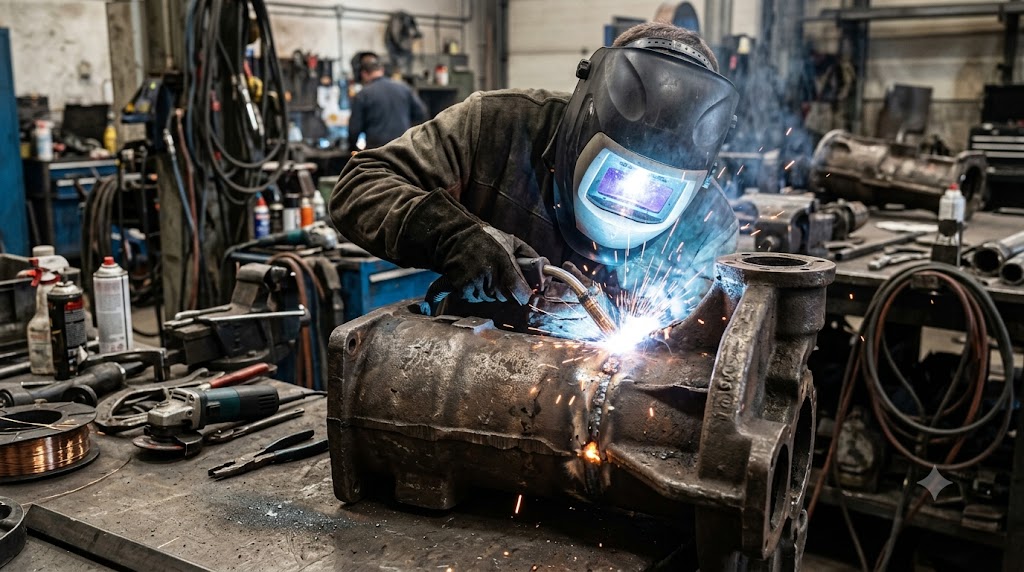
Cast iron repair is not glamorous welding. It is slow, careful, diagnostic, and unforgiving of errors in preparation or observation. The work involves grinding and cleaning before the first bead, short stitch welds with constant interruptions, and low amperage stick work with nickel rods that requires watching the puddle carefully for signs of cracking. If you are shopping a welding helmet specifically for cast iron repair, the features that matter most are different from what a production MIG welder needs, and a buying guide that ignores the process misses the point. This one does not.
What Cast Iron Repair Welding Actually Looks Like
Cast iron repair is primarily stick welding (SMAW) using nickel-alloy rods, most commonly 55% or 99% nickel, both of which weld at lower amperages than typical structural stick welding.[^https://www.lincolnelectric.com/en/welding-and-cutting-resource-center/welding-how-tos/guidelines-for-welding-cast-iron] The work requires:
- Preheat, usually 500 to 1200 degrees F, never above 1400 degrees F, to reduce thermal shock and cracking risk[^https://www.lincolnelectric.com/en/welding-and-cutting-resource-center/welding-how-tos/guidelines-for-welding-cast-iron]
- Short beads, approximately one inch at a time, followed by peening while still warm to relieve stress
- Slow cooling, no quenching with water or air, allowing the casting to cool in ambient air or buried in dry sand
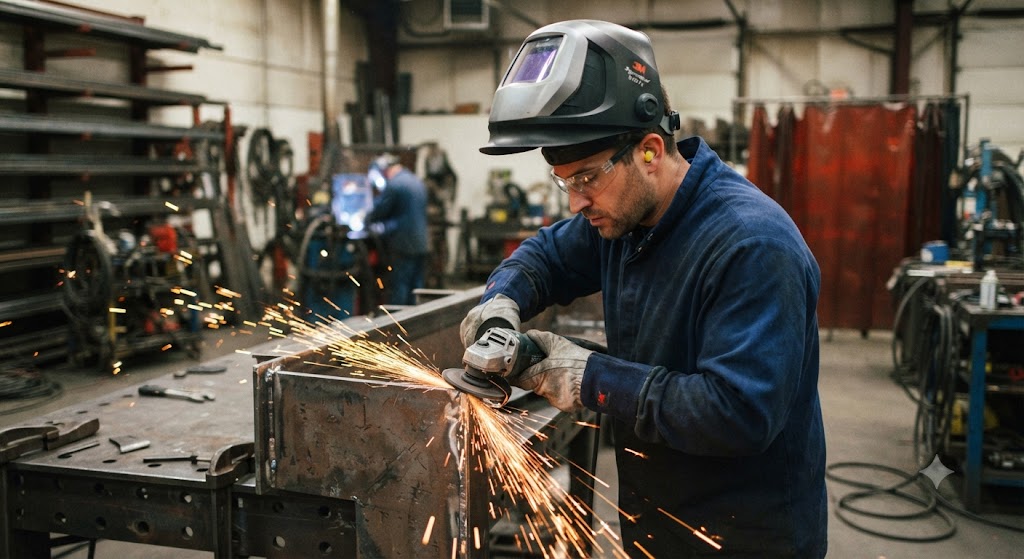
- Extensive grinding and preparation before welding, and cleanup after each pass
- Varied and often awkward positions, since broken castings on machines, engine blocks, and agricultural equipment rarely sit in the flat position
That process tells you what the helmet needs.
What to Prioritize in a Helmet for Cast Iron Repair
Low-amperage sensitivity. Nickel-rod stick welding often runs at 70 to 120 amps, sometimes lower, which is at or below the sensitivity threshold of cheap auto-darkening lenses. A good helmet must reliably darken at low current. Helmets with a TIG rating down to 1 or 2 amps handle this with ease. Check the minimum amperage spec before buying.
A grind mode with an external button. Cast iron repair involves constant switching between grinding and welding. A helmet with an easily accessible external grind-mode button (not a buried menu control) saves time and frustration during the repetitive grind-weld-peen-grind cycle. The Lincoln Viking 3350 and Miller Digital Elite both have accessible grind mode controls.
Shade range that covers stick welding. Cast iron repair uses standard stick shades, typically shade 10 to 12 for the amperages used. Any variable-shade auto-darkening helmet covering shade 9 to 13 handles the full range.
Good optical clarity. Watching the puddle during short stitch welds on a preheat-hot dirty casting requires the best image your budget allows. Clear, undistorted vision of the puddle edge and the heat-affected zone either side of the bead lets you stop before cracking begins. A 1/1/1/1 optical clarity rating makes a real difference on precision repair work.
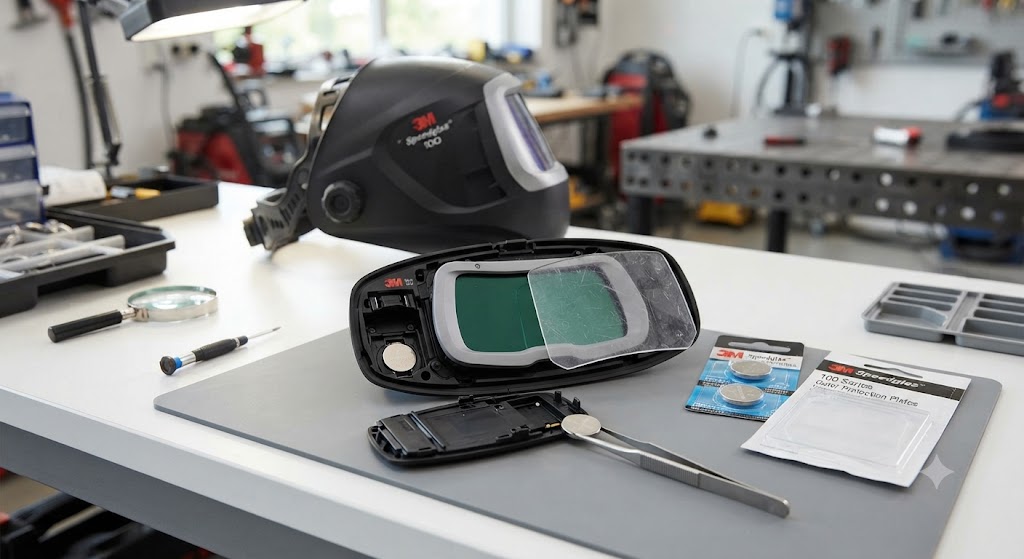
A durable shell and cover lens. Repair work in field environments, garages, and on farm equipment means the helmet takes more incidental abuse than a booth welder. A polycarbonate or nylon shell that can take a knock without cracking, and a cover lens you are not afraid to replace after a dirty grinding session, is more practical than a premium helmet you are nervous to use in a gritty field repair.
Recommended Features Summary
- Variable shade 5 to 13 (wider is better)
- TIG/low-amp rating (1 to 5 amps minimum)
- Accessible grind mode (external button preferred)
- 1/1/1/1 optical clarity
- 4 arc sensors (better angle coverage in awkward positions)
- Wide viewing area (helps when head angle is constrained)
- Replaceable cover lenses that are readily available
Is a Fixed-Shade Helmet Ever the Right Choice?
For some dedicated repair welders, a fixed shade 10 passive lens helmet is a legitimate option. It never needs batteries, never fails to darken, and costs almost nothing to maintain with a cover lens. The trade is that you lose the light state for positioning and grinding, and you cannot adjust shade for the current you are running. For a welder who does cast iron repair occasionally alongside other jobs, an auto-darkening helmet with a wide shade range is more practical. For someone dedicated to repair work who never needs the light state, the passive option is not wrong.
Who should skip premium-weight auto-darkening helmets for this job: repair welders working entirely in a fixed shop booth, for whom the extra weight of a large-cartridge helmet is never a concern, but comfort during constant on-off grinding cycles matters more than the lightest possible hood.
The Bottom Line
Buying a welding helmet for cast iron repair means buying for sensitivity, grind mode, and durability rather than maximum viewing area or minimum weight. A 1/1/1/1 clarity lens with low-amp TIG sensitivity, a readily accessible grind button, and four sensors to handle the varied positions that repair work demands. The Lincoln Viking 3350 and Miller Digital Elite cover those requirements well, and both are durable enough for the dirty, repetitive work that cast iron repair asks of your gear.
Frequently Asked Questions
What shade do I need for welding cast iron? Typically shade 10 to 12 for the low to mid amperages used with nickel rods. A variable-shade auto-darkening lens covering shade 9 to 13 handles the full cast iron repair range.
Why does low-amp sensitivity matter for cast iron repair? Nickel-rod stick welding for cast iron often runs 70 to 120 amps, which is at the low end of many auto-darkening lenses. A helmet with a TIG/low-amp rating ensures the lens darkens reliably at those currents.
Do I need grind mode for cast iron repair? Yes. Cast iron repair involves constant grinding before and between welds. A grind mode with an easily accessible external button makes the constant switching practical.
What kind of rod is used for welding cast iron? Most commonly nickel-alloy stick rods, either 55% or 99% nickel. These are more expensive than mild steel rods but are the standard choice for repairing gray cast iron because nickel welds accommodate the different thermal expansion of cast iron without cracking.
Is a fixed-shade helmet acceptable for cast iron repair? Yes, for dedicated repair welders. A shade 10 passive lens never needs batteries and always works. The trade is losing the light state for positioning and grinding visibility.
What temperature do I preheat cast iron before welding? Typically 500 to 1200 degrees F, and never above 1400 degrees F. The exact temperature depends on the casting’s thickness and alloy; thicker sections need higher preheat.
Can I use any welding helmet for cast iron repair? Any auto-darkening helmet with low-amp sensitivity and grind mode works. The recommendations here are about which features make the job easier and safer, not a strict minimum.
References
- Lincoln Electric Guidelines for Welding Cast Iron (preheat, short beads, slow cooling, nickel rod procedure): https://www.lincolnelectric.com/en/welding-and-cutting-resource-center/welding-how-tos/guidelines-for-welding-cast-iron