Welding Helmet Cracked Lens Replacement: Know Your Layers Before You Order
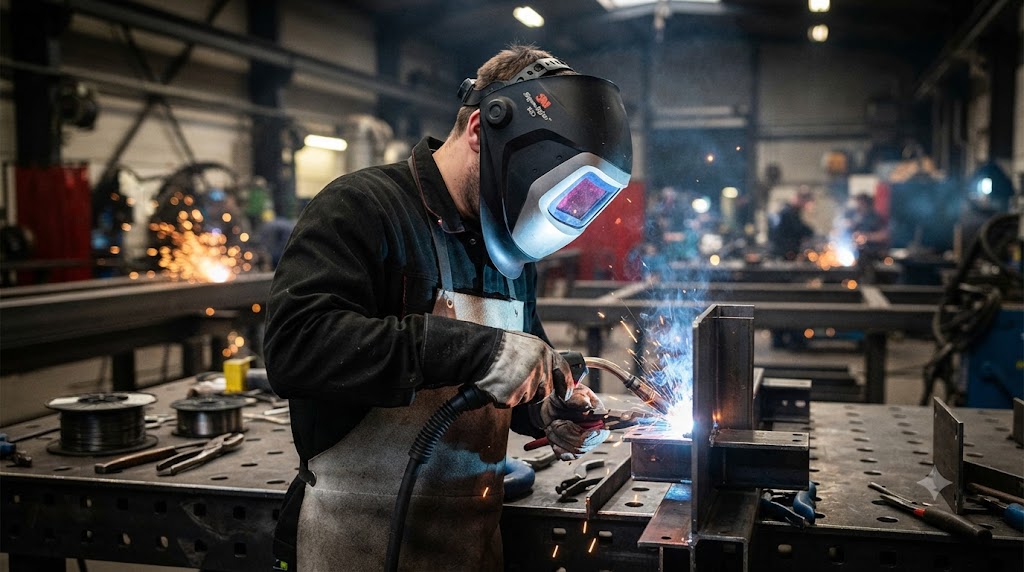
A cracked lens inside your welding helmet is the kind of discovery that stops you cold. The instinct is to keep welding carefully, or to assume you need a new helmet, and both are wrong. The right response depends on which layer is cracked, because a welding helmet has multiple lenses stacked in a precise order, and they are not all the same part. This guide sorts out which lens cracked, what it protects, and exactly what to order to fix it.
The Lens Stack, Explained
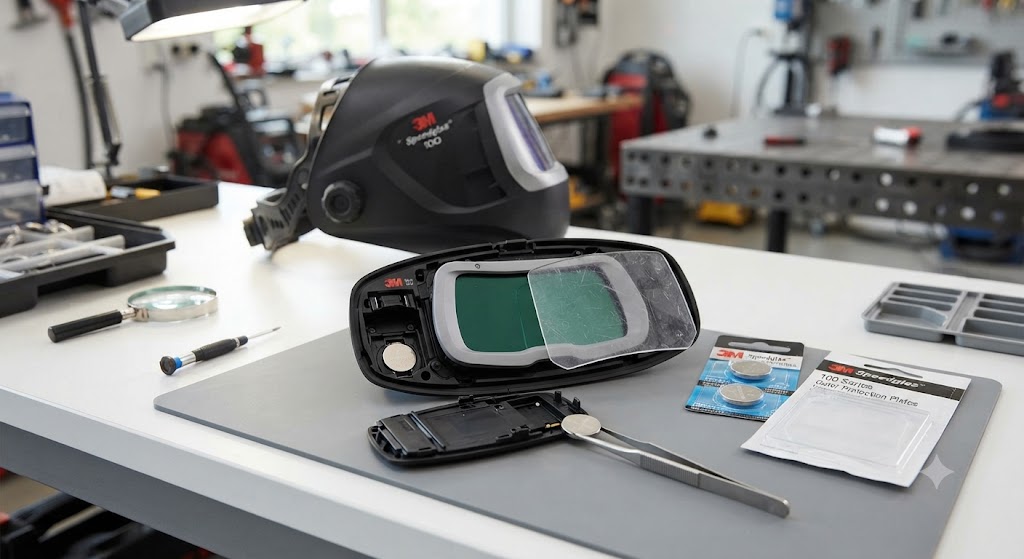
From the outside of the helmet to your eyes, the typical auto-darkening welding helmet has this order of layers:
- Outside cover lens (or front cover lens): a clear polycarbonate sheet that sits in front of everything, taking spatter, scratches, and arc flash so the valuable electronics behind it do not. This is a sacrificial, frequently replaced consumable.
- Auto-darkening filter (ADF) cartridge: the electronic lens that darkens on demand. It is not a single layer but a sealed assembly of liquid crystal, coatings, and electronics. In the USA and Canada, it is required by ANSI Z87.1 and CSA Z94.3 to be protected on both sides by polycarbonate cover lenses.[^https://www.weldersupply.com/C/467/WeldingHelmetLenses]
- Inside cover lens (or inner cover lens): a clear polycarbonate lens between your face and the ADF, protecting the filter from sweat, breath, and dust from inside the helmet.
Why This Matters for Replacement
The good news: if the cracked piece is the outside cover lens, you replace a cheap consumable and continue welding. If it is the inside cover lens, same outcome. If it is the ADF cartridge itself, that is a more expensive repair. And if you are unsure which layer cracked, it is almost always the outside cover lens, because it is the one that faces the arc and the spatter.
Step 1: Identify the Layer
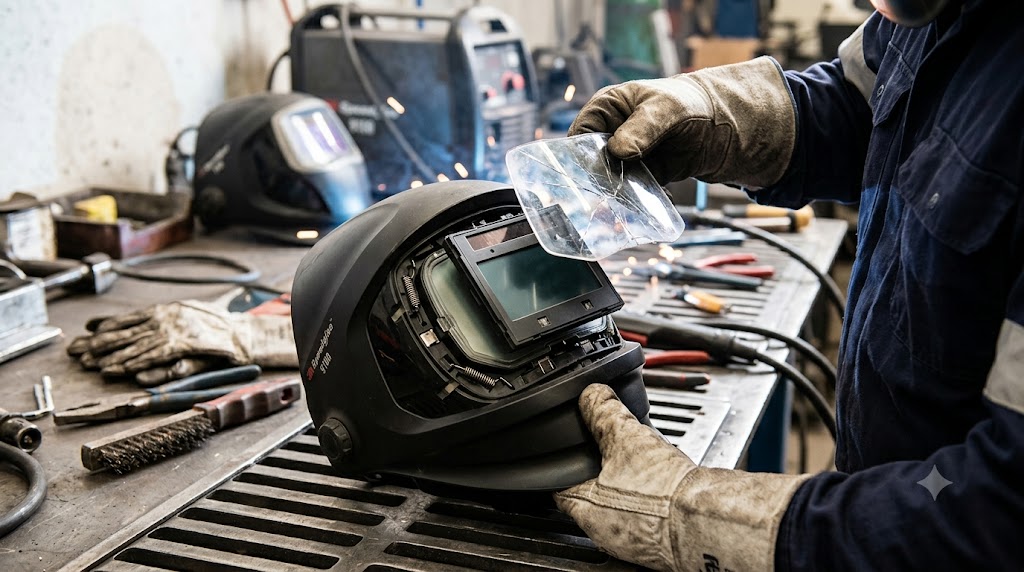
Remove the front of the helmet and look carefully. The outside cover lens sits in the outermost groove or frame of the cartridge or shell. The inside cover lens is the thin clear plastic between the ADF and your face. If the ADF itself is cracked, you will usually see the crack running through the tinted, electronically active portion of the lens.
If only the polycarbonate outside or inside cover lens is cracked, you are replacing a consumable. If the ADF glass is cracked, you are replacing the cartridge.
Step 2: Match the Replacement to Your Helmet
This is where most ordering mistakes happen: cover lenses are not universal.[^https://www.weldersupply.com/C/467/WeldingHelmetLenses] Each helmet brand and model specifies its own dimensions and often its own mounting groove. A Lincoln Viking cover lens will not fit a Miller Digital Elite, and even helmets within the same brand often differ. Confirm your exact model number before ordering.
Some reliable examples from earlier articles in this series: the Miller Digital Elite uses outside cover lens part 231921 and inside cover lens 216327. The Lincoln Viking 3350 uses its own KP series cover lenses. Always match the part to the model.
How Often to Replace Cover Lenses
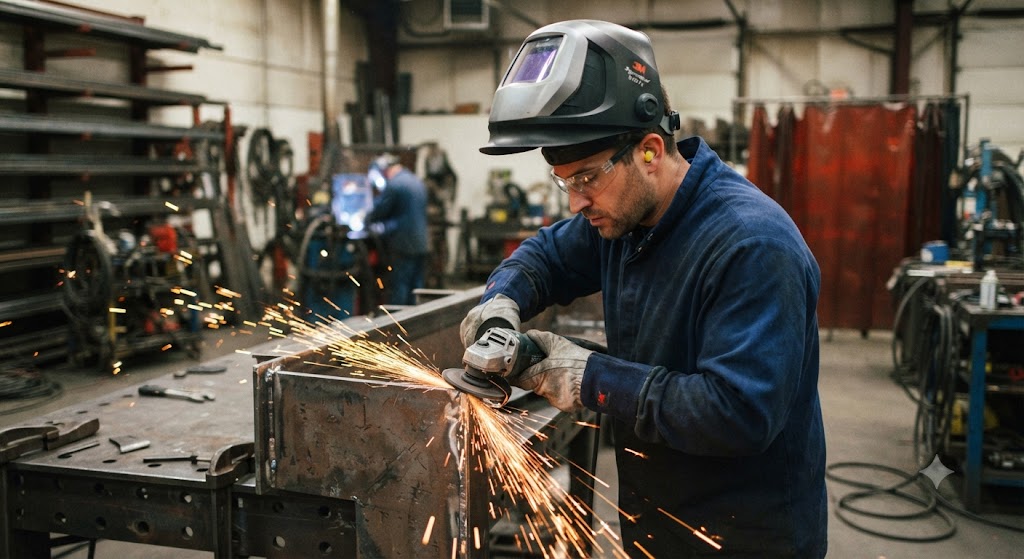
The outer cover lens should be replaced whenever the view is cloudy, pitted, or scratched. For active welders in spatter-heavy work, that can be every few weeks. The inner cover lens, protected from the outside, typically needs replacing roughly once a month under normal use, and never weld without it in place, since it protects the ADF from internal contamination that cannot be cleaned.[^https://www.apexweldingsafety.com.au/blog/how-often-should-you-change-your-welding-helmet-spare-parts]
When It Is the ADF That Cracked
A cracked ADF cartridge is not weldable-through and is not repairable. You need a replacement cartridge. Check your brand’s parts catalog for the correct cartridge replacement. On many premium helmets, the cartridge is sold as a service part; on budget helmets, the cartridge cost can approach that of a new helmet.
Who should skip the cartridge repair: owners of budget helmets where a replacement ADF costs nearly as much as a better complete helmet. Run the math first.
The Bottom Line
Before you panic over a cracked welding helmet lens, identify the layer. Most cracks are in the outside cover lens, a consumable that costs a few dollars and replaces in minutes. The inner cover lens is also cheap and quick. Only a cracked ADF cartridge is a serious repair cost, and even then a replacement cartridge on a premium hood is still far cheaper than a new helmet. Match every replacement to your exact model, never skip the inner cover lens, and your helmet gives you clear, safe views for years.
Frequently Asked Questions
Which lens in my welding helmet cracked? In most cases it is the outside (front) cover lens, the clear sacrificial polycarbonate sheet that faces the arc and takes spatter. Look at which layer cracked before ordering anything.
Do I need the same brand replacement lens? Yes. Cover lenses are not universal. Each helmet model has its own dimensions and mounting groove. Match the part number to your exact model.
Can I weld with a cracked outside cover lens? Briefly in an emergency, but replace it as soon as possible. A cracked cover lens lets spatter reach and damage the expensive ADF behind it.
Can I weld without the inside cover lens? No. The inside cover lens protects the ADF from sweat and contamination. Never weld without it in place.
How often should I replace cover lenses? The outside cover lens whenever it is cloudy or pitted, which can be every few weeks in heavy work. The inside cover lens roughly once a month under normal use.
Is a cracked ADF cartridge repairable? No. A cracked cartridge needs to be replaced. Check your brand’s parts list for the correct replacement cartridge for your model.
When is it cheaper to buy a new helmet? If a replacement ADF for your budget helmet costs nearly as much as a better complete helmet, the economics favor upgrading.
References
- 26 Replacement Welding Helmet Lenses: types of cover lenses and fitment notes: https://www.weldersupply.com/C/467/WeldingHelmetLenses
- How Often Should You Change Your Welding Helmet Spare Parts (inner and outer cover lens schedule): https://www.apexweldingsafety.com.au/blog/how-often-should-you-change-your-welding-helmet-spare-parts