Welding Helmet Fit Guide: Stop the Neck Pain and the Sag
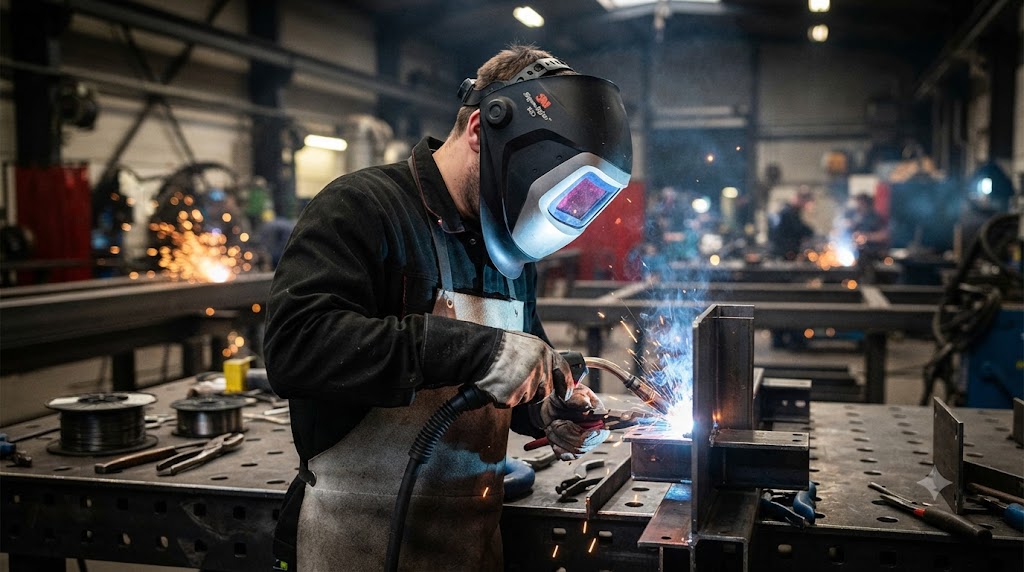
The helmet that looks best in the review is useless if it sags when you nod, pinches after an hour, or slides when you flip it down. Most complaints that sound like quality problems are actually fit problems, and they are fixable. This welding helmet fit guide is about the part of the buying decision nobody photographs: how the hood sits on your head, how the weight rides on your neck, and how to dial in the headgear so a long day does not end with a headache. Get the fit right and even a mid-priced helmet feels premium.
Welding helmet fit is the relationship between the shell, the headgear, and your head. The things that decide it are the headgear adjustment range, how the shell weight is balanced front to back, whether the helmet clears your glasses or a respirator, and whether it can mount to a hard hat if your job site requires one. None of that shows up in a spec sheet, which is why fit is the most overlooked part of choosing a helmet.
The short version: weight and balance matter more than raw grams, a good ratcheting headgear with a top strap fixes most sag and pressure problems, and if you wear glasses or need a hard hat, confirm compatibility before you buy, not after.
The three fit problems welders actually have
The first is sag, where the helmet does not stay up when you flip it back or drops too far when you nod down. This is almost always a headgear tension issue, solved by tightening the pivot tension and the top strap so the shell holds the angle you set.
The second is pressure and pinch, the ache across your forehead or crown after an hour. That comes from headgear that is too tight or badly balanced, and it is fixed by loosening the circumference, adjusting the crown strap to spread the load, and making sure the weight is not all riding on your forehead.
The third is neck fatigue, which is about total weight and balance more than the number on the spec sheet. A slightly heavier helmet that sits close and balanced tires you less than a lighter one that hangs forward, which is why balance beats grams.
Dialing in the headgear
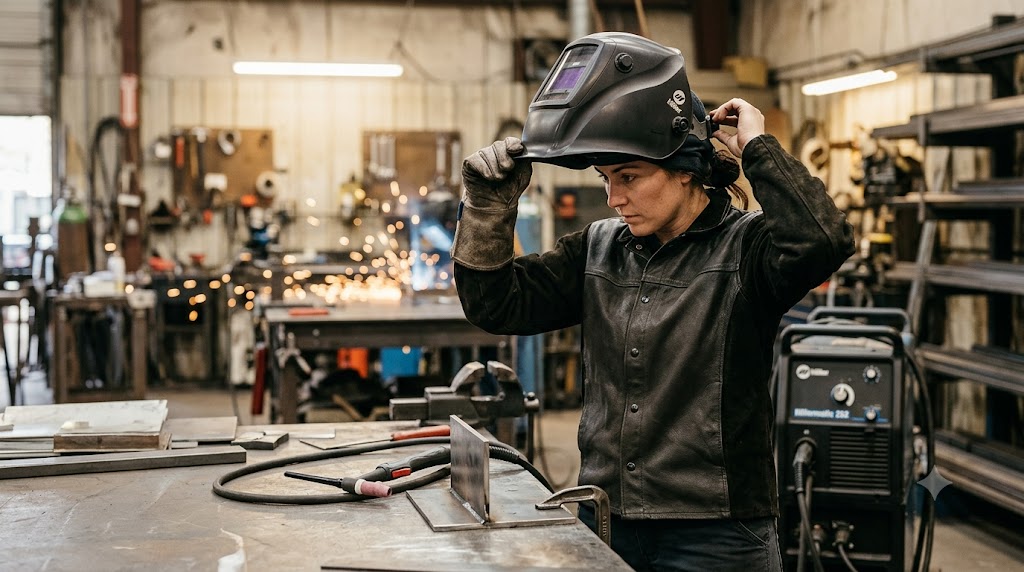
Almost every fit problem is solved at the headgear, not the shell. Start with the circumference so the band is snug but not tight, then set the crown strap over the top of your head so the weight spreads across your skull instead of your forehead. Adjust the distance between your face and the lens next, closer gives a wider view but less room for glasses, and finally set the pivot tension so the helmet stays exactly where you flip it. A ratcheting headgear system, like the X6 headgear on the Lincoln Viking 3350, makes these adjustments quick and repeatable.
Special cases: glasses, respirators, and hard hats
If you wear glasses
You can absolutely wear glasses under a helmet, but you need clearance between your face and the lens, so set the headgear to sit the shell a little further out. A lightweight helmet like the Jackson Safety Insight, which weighs only around six ounces, reduces the pressure that glasses-wearers feel most, since the combined load on your nose and ears is lower.
The flaw with any glasses setup is fogging and pressure at the temples, and a very close lens distance makes it worse. Skip the tightest lens-distance setting if you wear glasses, and choose a lighter shell to keep the all-day load down.
If you wear a respirator or need a hard hat
A respirator eats into the space inside the shell, so confirm the helmet has room and does not break the mask seal. If your job site requires head protection, buy a helmet that offers a hard hat adapter rather than trying to force one on later, because not every shell supports it.
Measuring and checking fit before you commit
Measure your head circumference just above your eyebrows and ears and compare it against the helmet headgear range, since most helmets fit a wide band but the extremes matter if your head is very large or small. When the helmet arrives, do the nod test: flip it down, look up and down, and shake your head gently. If it sags, slides, or pinches, adjust the headgear before you decide it is the wrong helmet, because nine times out of ten the adjustment fixes it.
Bringing it together
A welding helmet fit guide comes down to one idea: comfort is set at the headgear, not bought on the spec sheet. Prioritize balance over raw weight, learn to adjust the circumference, crown strap, lens distance, and pivot tension, and confirm glasses, respirator, or hard hat compatibility before you buy if any of those apply to you. Do that, and the helmet disappears on your head the way good gear should, leaving you to think about the weld instead of your neck.
Frequently asked questions
How do I know what size welding helmet to buy? Most helmets fit a wide range of head sizes through adjustable headgear, so measure your head circumference above the eyebrows and check it against the headgear range. Only very large or very small heads need to worry about the limits.
Why does my welding helmet sag when I look down? The pivot tension and top strap are too loose. Tighten the headgear pivot so the shell holds the angle you set, and adjust the crown strap so the helmet stays put when you nod.
Can I wear glasses under a welding helmet? Yes. Set the headgear so the lens sits a little further from your face for clearance, and choose a lighter helmet to reduce the combined pressure on your nose and ears.
What is a hard hat adapter for a welding helmet? It is a kit that lets the helmet mount to a hard hat for job sites that require head protection. Not every shell supports one, so confirm compatibility before buying.
Does a heavier helmet always cause more neck fatigue? No. Balance matters more than raw weight. A balanced helmet that sits close to your face tires you less than a lighter one that hangs forward and pulls on your neck.
How do I stop my helmet from giving me a headache? Loosen the circumference so it is snug rather than tight, and use the crown strap to spread the weight across your skull instead of your forehead. Most pressure headaches are a headgear adjustment, not a helmet flaw.
References
-
OSHA, Eye Protection During Welding fact sheet: https://www.osha.gov/sites/default/files/publications/OSHAFACTSHEET-EYEPROTECTION-DURING-WELDING.pdf
-
Lincoln Electric, VIKING 3350 Series specifications: https://www.lincolnelectric.com/en/Products/k3034-4
-
URL slug: welding-helmet-fit-guide
-
Excerpt: Most welding helmet complaints are really fit problems, and they are fixable. This fit guide covers sag, pressure, and neck fatigue, how to dial in the headgear, and how to make a helmet work with glasses, a respirator, or a hard hat.