Welding Helmet Flickering While Welding: Causes and Fixes
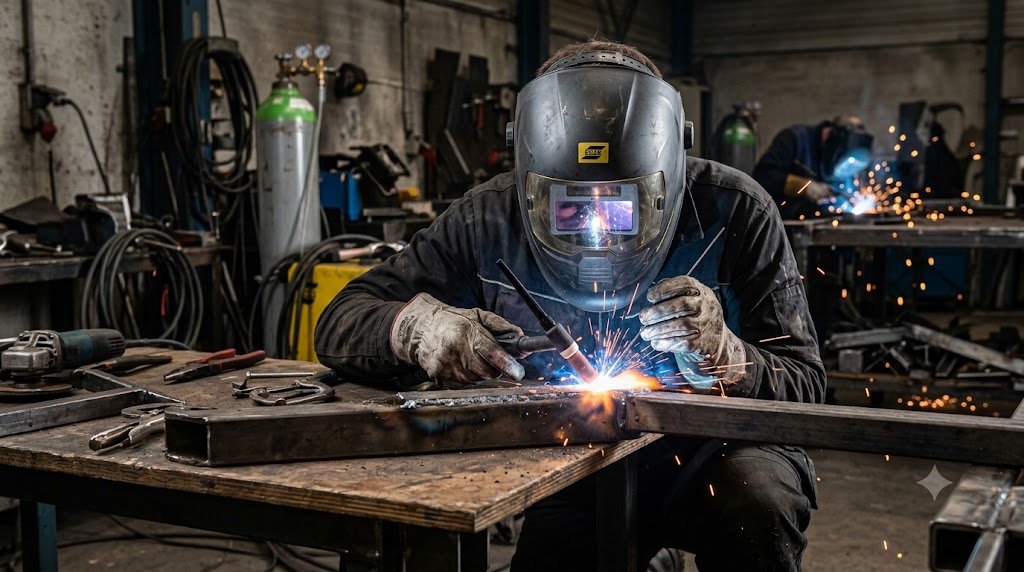
Few things rattle your focus like a lens that strobes light and dark in the middle of a bead. A welding helmet flickering while welding is not just annoying, it is a real hazard, because every flicker is a flash of unfiltered arc reaching your eyes. The reassuring part is that flickering almost always comes from a short list of fixable causes: power, sensors, and settings. Work through them in order and you can usually stop the strobe before it costs you an arc-eye headache.
Cause 1: A Weak Battery
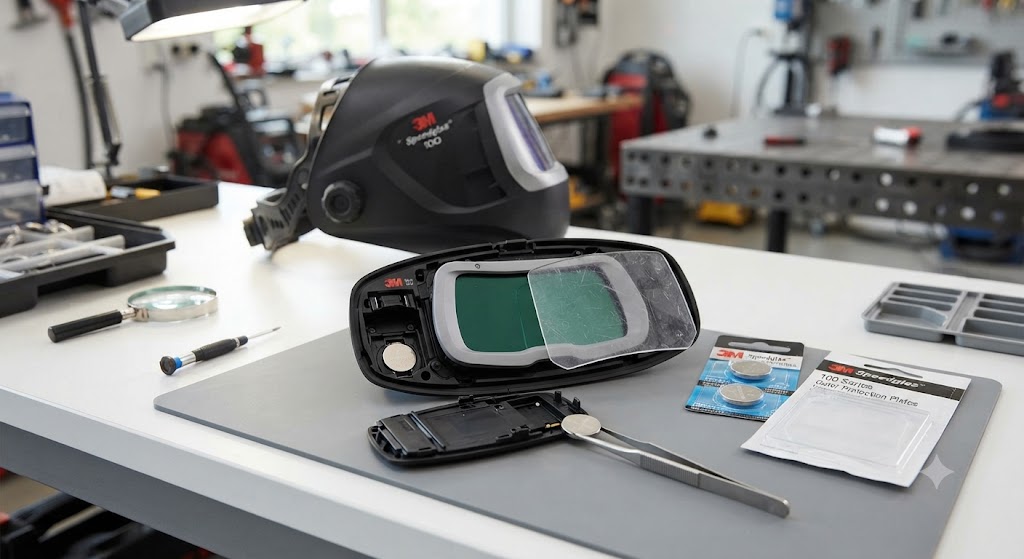
Start here, because a dying coin cell is the single most common reason an auto-darkening lens flickers. As the battery fades, the lens can behave erratically just before it quits, darkening inconsistently or strobing during a weld.[^https://www.weldclass.com.au/blog/118-welding-helmet-troubleshooting-guide] Fit a fresh cell of the correct size, usually a CR2450, and clean the contacts while you are in there. If a new battery steadies the lens, you are done.
Cause 2: A Dirty or Scratched Cover Lens
The arc sensors on the front of the cartridge need a clear, unobstructed view of the arc. A cover lens caked with spatter, smoke film, or scratches blocks that view, and the lens flickers because the sensors keep losing sight of the arc.[^https://www.euromarc.co.nz/resources/troubleshooting-auto-darkening-helmets-common-problems-and-remedies] Clean the outside cover lens, and if it is pitted or hazed, replace it. A fresh cover lens is the cheapest fix in welding and solves a surprising share of flicker complaints.
Cause 3: Blocked or Shadowed Sensors
Even with a clean lens, your own body can cause flicker. If your hand, the torch, or the workpiece shadows the sensors during certain positions, the lens intermittently loses the arc. Reposition so the sensors keep a clear line to the arc, and be especially mindful during tight or out-of-position work where a glove can drift across the sensor window.
Cause 4: Sensitivity Set Too Low
If the lens flickers on low-amperage work, especially TIG at low current, the sensitivity is probably too low to hold the arc reliably. Increase the sensitivity until the lens stays dark through the weld. Turn it back down if the lens starts triggering off ambient shop lights, which is the opposite problem.[^https://www.euromarc.co.nz/resources/troubleshooting-auto-darkening-helmets-common-problems-and-remedies]
Cause 5: Delay Set Too Short
Here is the setting most welders overlook. Increasing the delay time keeps the lens locked in dark mode a moment longer, which bridges brief sensing dropouts so a momentary disruption does not flip the lens to light mid-weld.[^https://www.weldclass.com.au/blog/118-welding-helmet-troubleshooting-guide] Lengthening the delay is a genuine hack for intermittent flicker, particularly when you are doing continuous beads rather than rapid tacks.
The Outdoor Wrinkle
One more cause worth naming: bright sunlight. Welding outdoors can confuse some lenses, causing flicker that never appears indoors, because ambient light interferes with the sensors. If your helmet only flickers in the sun, raise the delay, shade the sensors with your position, or consider a helmet with electromagnetic arc detection that ignores sunlight.
Who should skip endless tweaking: anyone whose bargain helmet still flickers after a fresh battery, clean lens, and correct settings. Cheap cartridges with slow or few sensors flicker as a design limitation, and no setting fully cures it. A reliable mid-tier hood is the fix.
The Bottom Line
When your welding helmet is flickering while welding, run the causes in order: fresh battery, clean or new cover lens, unobstructed sensors, higher sensitivity for low-amp work, and a longer delay to bridge dropouts. That sequence stops the strobe in the vast majority of cases and protects your eyes in the process. If a helmet still flickers after all five, the cartridge itself is the weak link, and on a budget hood that is your signal to upgrade rather than keep chasing settings. Your eyes are worth more than the price of a better lens.
Frequently Asked Questions
Why is my welding helmet flickering while I weld? Most often a weak battery, a dirty or scratched cover lens blocking the sensors, blocked sensors, sensitivity set too low, or a delay set too short. Work through them in that order.
Can a low battery cause flickering? Yes. A dying coin cell often makes the lens behave erratically and strobe just before it quits. Fit a fresh CR2450 and clean the contacts.
How does the delay setting stop flicker? Increasing the delay keeps the lens locked dark a moment longer, bridging brief sensing dropouts so a momentary disruption does not flip the lens to light mid-weld.
Why does my helmet flicker only at low amps? Low-amperage arcs, especially TIG, produce less light for the sensors. Raise the sensitivity until the lens holds dark through the weld.
Why does my helmet flicker outdoors but not inside? Bright sunlight can interfere with the sensors. Increase the delay, shade the sensors with your body position, or use a helmet with electromagnetic arc detection that ignores sunlight.
Is a flickering lens dangerous? Yes. Every flicker is a flash of unfiltered arc reaching your eyes, which can cause arc eye. Stop welding and fix the cause before continuing.
What if it still flickers after everything? If a fresh battery, clean lens, clear sensors, and correct settings do not help, the cartridge is the limitation. On a budget helmet, upgrade to a reliable mid-tier hood.
References
- Welding Helmet Troubleshooting Guide (Weldclass): https://www.weldclass.com.au/blog/118-welding-helmet-troubleshooting-guide
- Troubleshooting Auto Darkening Helmets: Common Problems and Remedies (Euromarc): https://www.euromarc.co.nz/resources/troubleshooting-auto-darkening-helmets-common-problems-and-remedies