Welding Helmet for Glasses Wearers Guide
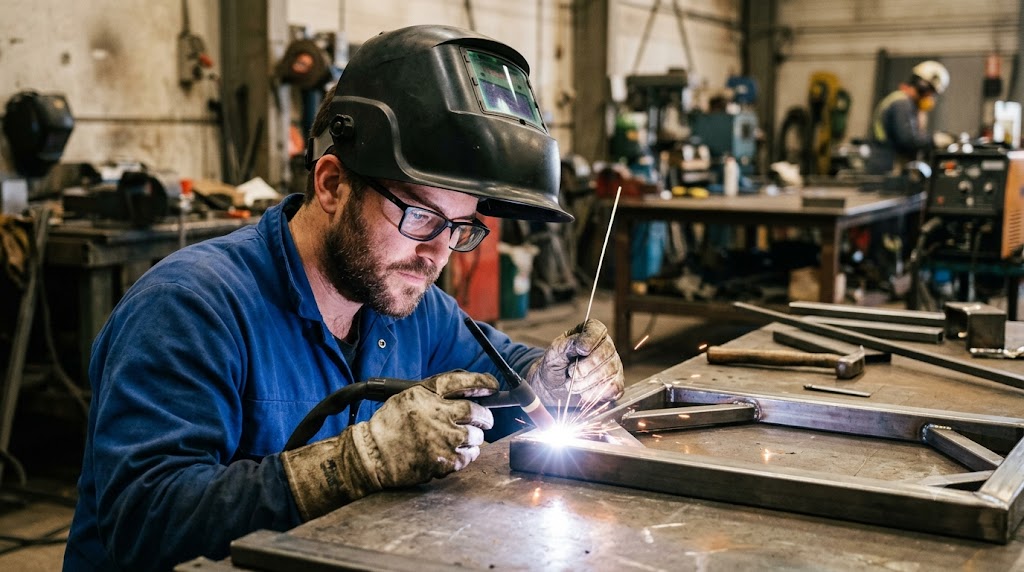
I wore glasses for most of my welding career before switching to contacts for shop days. Before I made that switch I went through four different welding helmets trying to find one that let me see the weld pool clearly through my prescription lenses without the headgear pressing my glasses into my temples for eight hours. If you wear glasses and you are trying to figure out the best approach to welding helmet fit and vision, the problem is real, the solutions exist, and this guide covers all of them.
Why Welding Helmets and Glasses Are Complicated
A standard welding helmet headgear system presses inward at the sides of the head and forehead to hold the helmet shell in position. When you are wearing glasses, the headgear straps pass over or through the glasses temple pieces, creating pressure points at the temples and often pushing the glasses frames into the side of your head after a few hours of wear.
The second problem is the interior shell depth of the helmet. Glasses add physical depth between your face and the lens surface. Compact helmet shells with a shallow interior do not leave enough room for glasses with thick frames or deep temple pieces without the frames pressing against the lens shade cover.
The third problem is that when the helmet headgear presses your glasses frames against your face, the glasses move slightly when the helmet is lifted and lowered. Over a full shift this becomes genuinely fatiguing.
None of these problems are dealbreakers, but they require deliberate selection to manage correctly.
What Should a Glasses Wearer Buy?
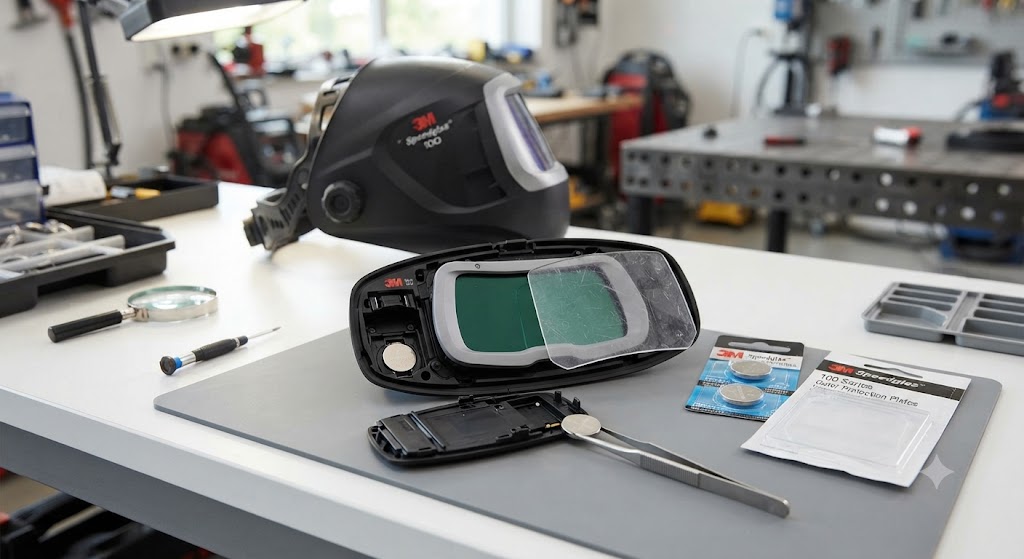
The cleanest long-term solution for most glasses wearers who do regular welding is a cheater lens insert combined with contact lenses or just the cheater lens alone for basic magnification needs. A cheater lens (magnifying lens insert) sits inside the helmet behind the lens shade cover and provides the magnification you need to see the weld pool clearly without wearing glasses under the helmet at all. This is the solution that eliminates the problem entirely.
If you are not ready to switch to contacts and you need your full prescription under the helmet, the priority is finding a helmet with sufficient interior shell depth and headgear that accommodates glasses temples without excessive pressure. The Miller Classic, Lincoln Viking, and ESAB Sentinel series all have deeper shell interiors that accommodate most standard prescription frame styles better than compact-shell helmets.
Solutions Compared
| Solution | Description | Pros | Cons |
|---|---|---|---|
| Cheater lens insert | Magnifying lens fits in interior lens slot | Eliminates glasses-under-helmet entirely, clean solution | Only available in fixed diopter magnifications, not prescription |
| Contact lenses for welding | Switch to contacts on welding days | Eliminates all helmet fit conflicts | Contacts and welding fume environment require caution, keep fume away from eyes |
| Deeper-shell helmet selection | Choose helmets with larger interior | Fits most standard frames | Heavier helmets, more expensive |
| Flexible headgear helmets | Headgear that adjusts to accommodate glasses | Reduces temple pressure | Not all helmets offer adequate adjustment |
| Prescription lens insert service | Some providers grind prescription lenses to helmet insert spec | Full prescription vision inside helmet | Expensive, limited availability, takes time to source |
Cheater Lens Inserts Explained
A cheater lens, also called a magnifying lens insert, is a simple magnifying lens designed to fit in the inside lens slot of a welding helmet. They are available in standard diopter strengths from +1.00 to +3.00, similar to over-the-counter reading glasses. If you wear reading glasses for close work, a cheater lens in the appropriate diopter typically provides the magnification you need to see the weld pool clearly at arm’s length welding distance without wearing any glasses under the helmet.
Cheater lenses are the most popular solution for welders over forty who have developed close-range vision difficulty. They are inexpensive, available at most welding supply stores, and install in seconds. The limitation is that they only provide magnification at a fixed diopter and cannot correct for astigmatism or distance prescription needs.
Helmets That Fit Well Over Glasses
Deeper shell helmets provide the best interior clearance for glasses. The Lincoln Viking series (Viking 3350, Viking 2450) has a well-regarded interior depth for glasses accommodation. The Miller Classic series and Miller Digital Elite are known for deeper shells. The ESAB Sentinel A50 has a larger interior viewing area and shell depth that accommodates most frames. The 3M Speedglas series has deep interior options in the 9100 and G5 series.
Compact-shell helmets designed for tight spaces and light duty typically have the shallowest interiors and the least tolerance for glasses frames. If you are a glasses wearer buying your first helmet, compact-shell budget helmets are the worst starting point.
Tips for Wearing Glasses Under a Helmet
Choose glasses frames with thin, flexible temples. Thick metal temple pieces are the most problematic because they create rigid pressure points under the headgear straps. Flexible titanium or thin acetate frames conform better to the headgear pressure.
Adjust your helmet headgear with your glasses on, not without them. The correct headgear position for glasses wearers is typically slightly higher on the forehead than it would be without glasses, to reduce downward pressure on the temples.
Check the interior clearance by closing the helmet with your glasses on before buying. Walk into a welding supply store with your glasses and try the helmet before purchasing.
For extended welding sessions, take short breaks to relieve temple pressure. The combination of headgear pressure and glasses frames pressing on the same point for hours is the main comfort problem, and a five-minute break every hour resolves most of the fatigue.
The Bottom Line
For occasional home use, a deeper-shell helmet with adjustable headgear and a cheater lens insert for close-range work is the most practical starting point. For regular production welding, switching to contact lenses on welding days combined with the helmet of your choice eliminates all compatibility problems. If contacts are not an option, choose a Lincoln Viking, Miller Classic, or ESAB Sentinel with a deep shell and adjust the headgear with your glasses on before committing to any helmet purchase.
Frequently Asked Questions
Can I wear glasses under a welding helmet? Yes, but the fit depends on the helmet shell depth and headgear design. Deeper-shell helmets like the Lincoln Viking and ESAB Sentinel accommodate most standard glasses frames better than compact-shell helmets.
What is a cheater lens for welding? A cheater lens is a magnifying lens insert that fits inside the welding helmet behind the lens shade cover. It provides fixed-diopter magnification for seeing the weld pool clearly without wearing glasses under the helmet.
What diopter cheater lens do I need? The same diopter as your reading glasses, if you wear them for close work. Common welding distances match the 1.5 to 2.5 diopter range for most older welders.
Can I wear contact lenses while welding? Yes, but keep fume levels low and ensure adequate ventilation. Contact lenses themselves are not more hazardous to wear near welding arcs than glasses as long as you are not exposing your eyes to fumes directly. Wear your welding helmet properly at all times.
Which welding helmets are best for glasses wearers? Lincoln Viking series, Miller Classic and Digital Elite series, and ESAB Sentinel A50 are consistently recommended for their interior shell depth and headgear adjustability.
Why does my welding helmet hurt my head when I wear glasses? The headgear straps are pressing on your glasses temples. Readjust the headgear with your glasses on rather than without them, and consider switching to thinner, more flexible glasses frames for welding use.
Can I get prescription lenses ground for a welding helmet insert? Some specialty optical providers offer this service. It is expensive and requires ordering ahead, but provides full-prescription vision inside the helmet without any glasses-frame pressure.
References
https://www.osha.gov/laws-regs/regulations/standardnumber/1910/1910.133 https://www.millerwelds.com https://www.lincolnelectric.com https://www.esab.com
SEO Title: Welding Helmet for Glasses Wearers Guide