Welding Helmet Buying Guide for Grinding and Cut Off Work
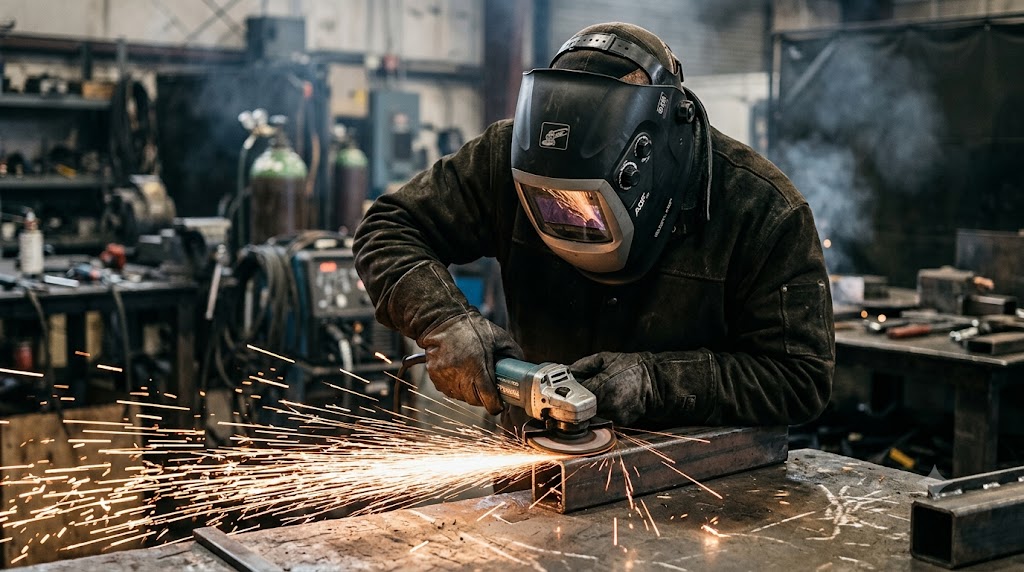
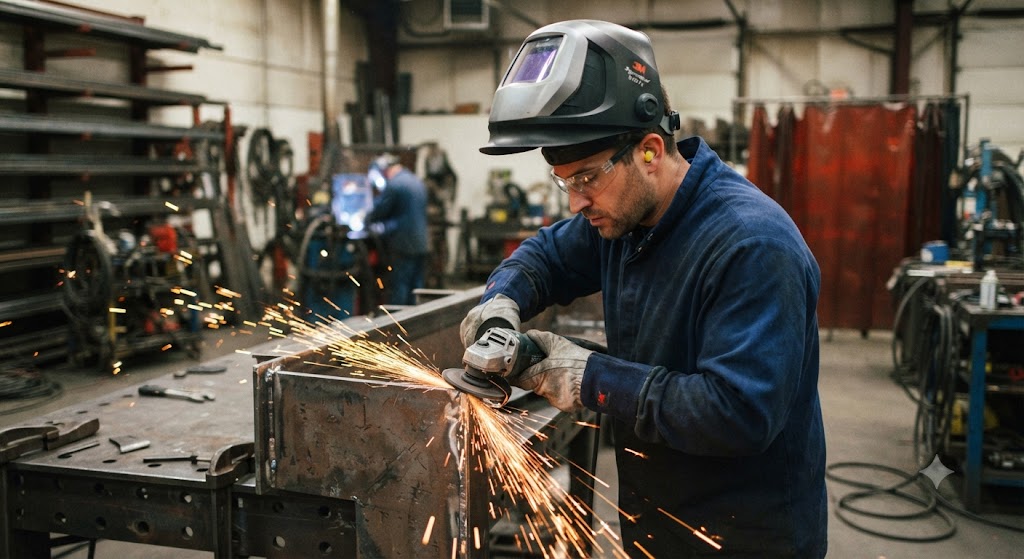
Grinding is part of welding. It is not a separate activity that happens somewhere else with different equipment. If you weld, you grind, and if you are using an auto-darkening helmet, the question of what happens to your eye protection when you set down the torch and pick up the angle grinder matters. This guide covers grind mode, flip up helmets as a grinding alternative, what OSHA requires, and the practical approach most working welders use.
What Grind Mode Is
Grind mode is a feature on auto-darkening welding helmets that switches the lens to a fixed light state, typically clear or near-clear, and suspends the auto-darkening function so the lens does not react to grinding sparks. When grind mode is active, the helmet functions as a basic face shield for grinding operations.
The reason grind mode exists is practical: without it, an auto-darkening helmet used for grinding constantly darkens in response to grinding sparks, making it impossible to see the work clearly. The intermittent flash-and-darken cycle from a grinder is fundamentally different from the steady arc event the lens is designed to detect, and the result without grind mode is a maddening flicker.
With grind mode on, the lens stays at its light state and you see the grinding work clearly through what is essentially a safety lens. The auto-darkening function is disabled, which means you must manually switch back to welding mode before striking an arc.
Do All Auto-Darkening Helmets Have a Grind Mode?
No. Grind mode is common on mid-tier and premium auto-darkening helmets but is not universal across all auto-darkening products. Budget helmets at the entry price point may not include it. When evaluating a helmet purchase, confirm grind mode is included if grinding is part of your regular workflow.
Helmets with grind mode include: Lincoln Electric Viking series, Miller Digital Elite and Digital Infinity, ESAB Sentinel A50 and A60, Hobart Pillar and some Impact Series models, Jackson Safety TrueSight II and NexGen, and 3M Speedglas 9100 and G5 series.
Is Grind Mode Safe for Extended Grinding?
Grind mode puts the lens in its light state, not a completely clear state. The lens in light state still provides some UV protection and meets ANSI Z87.1 impact standards. It functions as a face shield compliant with basic safety standards.
However, the lens in light state is not rated at the same impact protection level as a dedicated grinding face shield with polycarbonate visor. The auto-darkening cartridge and cover lens stack is designed primarily for welding arc protection, not repeated high-velocity grinding fragment impact.
For occasional grinding of short duration, grind mode is practical and widely used in professional shops. For extended heavy grinding, repeated aggressive cutting, or work that produces large debris (using a cutting wheel on structural steel, for example), a dedicated grinding face shield worn over safety glasses is the more appropriate choice and the OSHA-preferred approach.
Flip Up Helmets as a Grinding Alternative
Flip up welding helmets like the ESAB Sentinel A70 Pro and some Jackson Safety models allow the auto-darkening lens shell to flip up, exposing a separate grinding/inspection visor underneath. This design provides both a welding lens for arc work and a dedicated grinding visor for grinding, without requiring you to remove the helmet entirely between operations.
For production welders who alternate frequently between welding and grinding, a flip up helmet eliminates the inconvenience of switching between a welding helmet and a grinding face shield. The trade-off is that flip up helmets are heavier and bulkier than standard shells.
OSHA Requirements
OSHA 1910.133 requires appropriate eye and face protection for both welding and grinding operations. For grinding specifically, OSHA requires protection against flying particles and debris. A welding helmet with grind mode active meets this standard for most grinding operations. For heavy grinding where fragment velocity and particle size create higher risk, OSHA would look to the employer’s hazard assessment to determine whether a higher-rated shield is needed.
In most commercial welding shops, the practical interpretation is that grinding immediately adjacent to welding operations is covered by the welding helmet in grind mode, while dedicated heavy grinding operations at a separate workstation warrant a dedicated grinding shield.
The Practical Shop Approach
Most experienced production welders keep three items accessible at the welding station: the welding helmet, a grinding shield, and safety glasses. For quick tacks and bead clean-up grinding, they flip to grind mode on the helmet. For longer grinding sequences, they swap to the dedicated grinding shield. The safety glasses provide last-line-of-defense eye protection at all times.
This is not overcaution. It is the approach taken by welders who have seen grinding debris bypass whatever eye protection was in use and understand why redundancy matters.
Frequently Asked Questions
What is grind mode on an auto-darkening helmet? Grind mode switches the lens to a fixed light state and disables auto-darkening, allowing clear vision during grinding without constant lens darkening in response to grinding sparks.
Do all auto-darkening helmets have a grind mode? No. It is common on mid-tier and premium helmets but not universal on entry-level budget models. Confirm grind mode is included before purchasing if grinding is part of your regular workflow.
Is grind mode safe for extended grinding? For occasional short-duration grinding, yes. For heavy extended grinding, a dedicated grinding shield with polycarbonate visor is the more appropriate choice. The welding helmet in grind mode meets basic ANSI Z87.1 impact standards but is not a substitute for a dedicated grinding face shield in high-debris applications.
What is a flip up welding helmet used for? Flip up helmets allow the welding lens to fold up, revealing a grinding visor underneath. They suit production welders who alternate frequently between welding and grinding at the same station.
Is a grind mode setting required by OSHA? OSHA requires appropriate eye and face protection for grinding but does not specifically mandate grind mode as a feature. Compliance is assessed based on whether the protection used is appropriate for the hazard, not whether the helmet has a specific mode designation.
References
https://www.osha.gov/laws-regs/regulations/standardnumber/1910/1910.133 https://www.lincolnelectric.com https://www.millerwelds.com https://www.esab.com
SEO Title: Welding Helmet Buying Guide for Grinding and Cut Off Work