Welding Helmet Buying Guide for Home Hobbyists
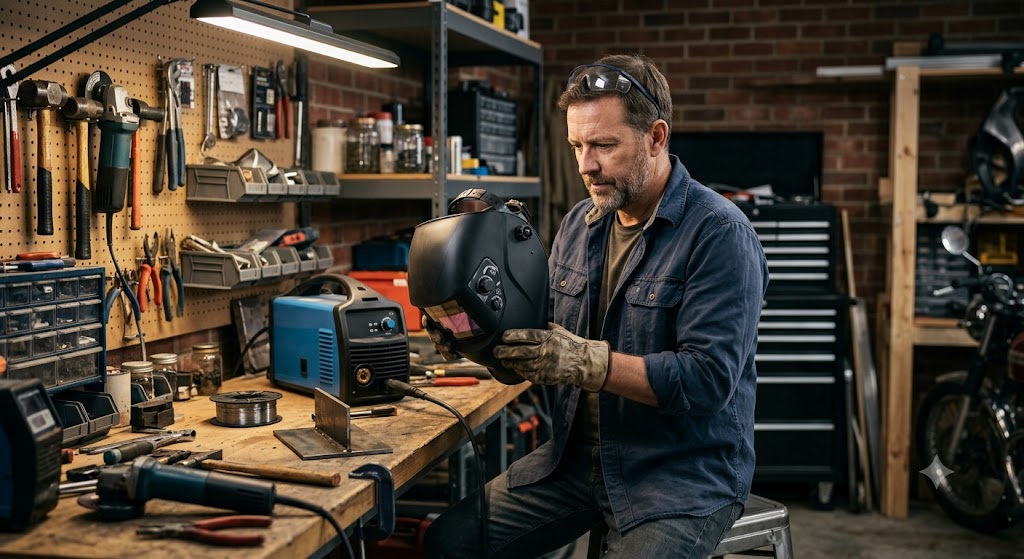
I have taught more than a few people to weld in home shop settings over the years, and the equipment conversation always starts the same way: they want to know how much helmet they actually need. Not how much they can justify. How much they actually need to be safe, see what they are doing, and not regret the purchase when they realize welding is more involved than they expected. This guide answers that question honestly.
What a Home Hobbyist Actually Needs in a Helmet
A home hobbyist who welds occasionally, doing repairs, small projects, and weekend fabrication, has genuinely different requirements from a production welder. The differences work in your favor on budget without requiring you to compromise on anything that actually matters for safety.
Safety requirements are the same. ANSI Z87.1 certification, appropriate shade for your process, and a reaction time sufficient for the arc you are striking are non-negotiable regardless of how often you weld. These requirements do not scale with usage frequency.
Durability requirements are lower. A helmet that gets used six hours per week rather than forty will last decades if treated reasonably. The headgear, cover lens, and battery all wear at roughly usage-proportional rates. Occasional use means occasional wear.
Optical quality requirements depend on your process. If you are doing MIG welding on mild steel for structural repairs and general fabrication, a mid-tier lens that is not 1/1/1/1 rated will serve you adequately. If you are learning TIG or doing aluminum work, better optics matter even at low frequency because every session benefits from seeing the puddle clearly.
Parts support requirements are lower. A home hobbyist who uses a helmet for ten years might replace the cover lens a handful of times and the battery once. Parts support matters, but it does not need to be distributor-level industrial availability.
How Much Should a Home Hobbyist Spend on a Helmet?
The honest range for a home hobbyist who wants something legitimate is between the mid-entry and mid-tier price points. The specific ranges vary with market conditions, but the general principle is:
- Below the functional floor: helmets without ANSI Z87.1 on the lens, helmets with 1/3,600 second or slower reaction times, helmets with two sensors and no sensitivity adjustment. These are compromised tools.
- The practical home shop range: helmets in the YESWELDER, Hobart, or entry-level Lincoln and ESAB Savage tier. ANSI certified, four sensors, variable shade, hybrid solar-battery, adequate reaction time.
- Premium territory: Lincoln Viking 3350, Miller Digital Elite, ESAB Sentinel A50 and above. More than a hobbyist needs to be safe, but not a wrong purchase for someone who expects to weld for many years.
Do Hobbyists Need a Premium Helmet?
No, strictly speaking. The safety function of a Hobart Inventor and a Lincoln Viking 3350 is equivalent: both meet ANSI Z87.1, both detect arcs, both protect against UV and IR from the welding arc. The premium helmet provides better optical clarity, better sensor coverage, a more refined headgear, and a longer service life. These are genuine quality differences. They are not safety differences in the core protection function.
A hobbyist who starts with a Hobart Inventor or YESWELDER Pro will weld safely. A hobbyist who spends more for the Viking 3350 will see more clearly and find the helmet more comfortable, which makes the welding experience better and may make them a better welder faster. That is a reasonable justification if the budget is there.
What to Avoid at the Low End
Avoid any helmet that does not show the ANSI Z87.1 marking on the lens itself, not just on the box. Avoid helmets with reaction times below 1/10,000 second if stated, or that do not publish a reaction time at all. Avoid helmets that are sold without a clear manufacturer or brand, particularly extremely cheap imports from sellers with no rating history.
The safety floor is real. Below it, you are gambling on whether the lens certifications are genuine.
Recommended Helmets for Home Hobbyists
Hobart Inventor Series. The clearest brand-name recommendation for a first helmet. ANSI Z87.1 certified, variable shade 9 to 13, adequate sensors, good parts support through Tractor Supply and the Hobart network, honest mid-entry price. A reliable starting point.
YESWELDER True Color Series. For hobbyists who do any TIG or want better optical quality at budget pricing, the YESWELDER true color models provide a meaningful optical upgrade over standard lenses at accessible prices.
Hobart 770890. A well-reviewed specific model with consistent user satisfaction in the home shop category. Frequently on sale through Tractor Supply and Amazon.
ESAB Savage A40. ESAB’s budget-tier entry, below the Sentinel line but carrying ESAB’s brand reliability. A step up from pure entry-tier offerings.
Frequently Asked Questions
What is a good welding helmet for occasional home use? The Hobart Inventor, YESWELDER true color models, and Hobart 770890 are the strongest recommendations for home hobbyists. ANSI certified, four sensors, variable shade, and honest prices.
Do hobbyists need a premium helmet? No for safety. Yes for comfort and optical quality if the budget allows and you plan to weld for years. A hobbyist who starts with a Hobart will weld safely. A hobbyist who buys a Viking 3350 will weld more comfortably and see more clearly.
What is the best value option for occasional welding? The Hobart Inventor and YESWELDER Pro are the strongest value propositions. Both are ANSI certified, properly featured, and priced for the hobbyist budget.
Is a passive helmet acceptable for home hobbyists? Yes for single-process, single-amperage home work. A passive shade 10 helmet is safe and simple. Auto-darkening adds convenience and is worth the modest price premium for anyone who switches between processes or amperages.
How long should a home hobbyist’s helmet last? With reasonable care, a mid-tier helmet with occasional home use should last ten or more years before significant component failure. Cover lenses need periodic replacement. The battery may need replacement once or twice in that period.
References
https://www.hobartwelders.com https://www.yeswelder.com https://www.esab.com https://www.ansi.org
SEO Title: Welding Helmet Buying Guide for Home Hobbyists