Welding Helmet Buying Guide for Professional Fabricators
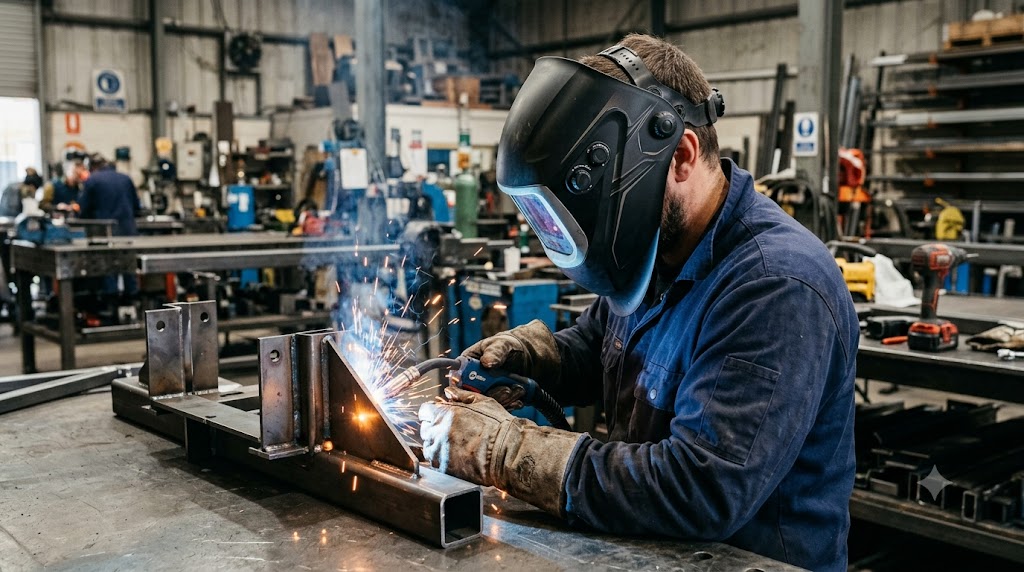
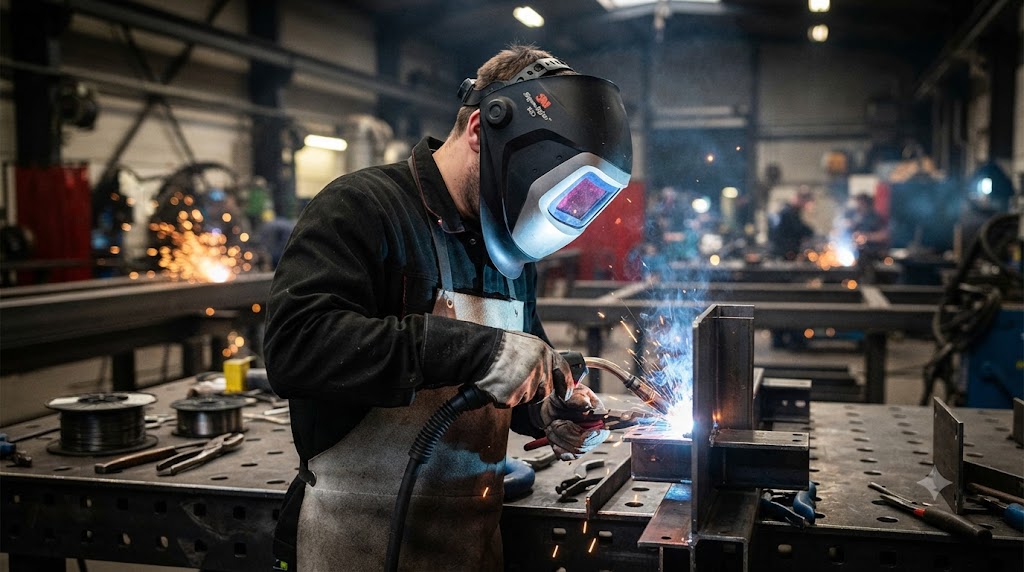
When someone welds for a living, the helmet is not a purchase they think about the way a hobbyist does. It is a tool they wear for eight to ten hours a day, multiple days a week, for years at a time. The decision calculus is different. You are not asking what the most impressive helmet at the price point is. You are asking what holds up, what protects your eyes in every position, what is comfortable enough to forget you are wearing it over a long shift, and what has a service parts network you can actually access when something needs replacing.
What Professional Daily Use Actually Demands
A helmet in daily professional use faces conditions that occasional use never replicates. The headgear takes thousands of adjustments and repositionings. The front cover lens accumulates spatter, grinding debris, and cleaning cycles. The battery cycles through charge depletion and recharge patterns across hundreds of sessions. The shell gets dropped, bumped against structural members, and occasionally put somewhere it should not be. Parts wear out.
The helmets that last under these conditions share several characteristics:
Robust shell construction. Thermoplastic shells with reinforced lens housing withstand impacts that crack lesser shells. The Viking 3350, Speedglas 9100, and ESAB Sentinel all have shells that survive the physical reality of daily production environments.
Headgear built to be replaced. Good headgear loosens over time. The signs are loss of grip, sloppy ratchet engagement, and sweating through the band pads. Professional-grade helmets sell replacement headgear assemblies as standard stock items. Budget helmets often do not.
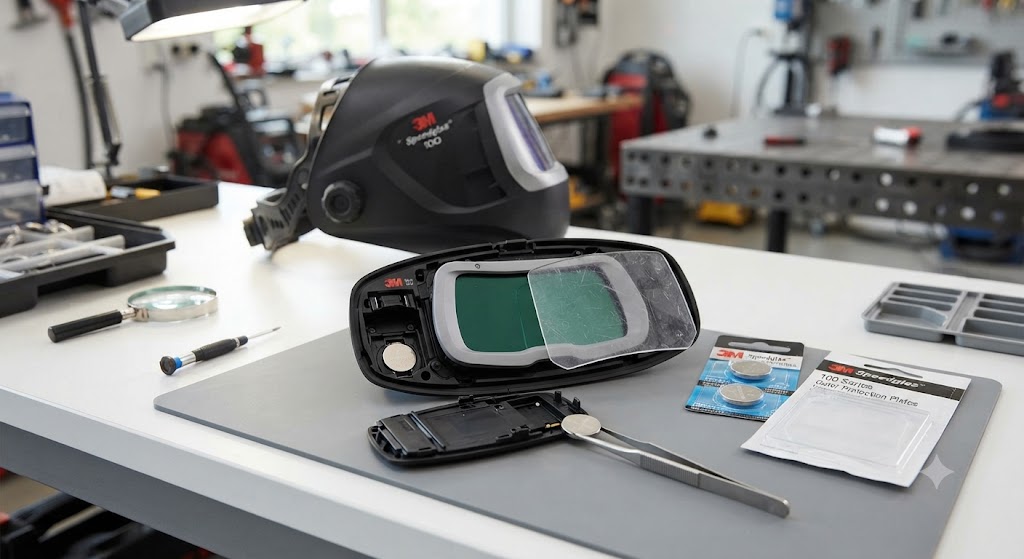
Cover lens availability. The front cover lens needs replacing every few weeks to few months depending on exposure. Having the correct size cover lens in stock, from a supplier you can order from tomorrow, is not optional in daily production. Helmets with proprietary non-standard cover lens sizes or unreliable parts supply become service problems.
Battery reliability. Solar-assisted hybrid systems are the practical standard because they dramatically extend the intervals between battery replacements. A helmet that needs a new CR2450 every three months is more annoying than a helmet that needs one every two years under the same solar-assisted conditions.
What Features Matter Most for Daily Professional Use
X-Mode or equivalent current-sensing detection. In a production environment, you are welding in corners, on pipe, on grates, in boxes. Any position where the arc is partially blocked from sensor view creates hesitation that breaks focus and rhythm. Miller’s X-Mode eliminates this problem by detecting current rather than light. It is the most operationally significant technology distinction between Miller’s professional helmets and the rest of the auto-darkening market for out-of-position work.
1/1/1/1 optical clarity. A professional welder’s eyes are their primary production tool. Eye fatigue from poor optics accumulates over a career. The investment in a 1/1/1/1 rated lens pays back in reduced eye strain and better weld quality visibility every single shift.
True color lens. Puddle reading depends on color contrast. True color lenses preserve color information that standard green-tint lenses flatten. For TIG welders and anyone doing quality production work where puddle control is critical, this is not optional.
Proven parts network. Before committing to a helmet brand, verify that replacement headgear, cover lenses, and lens cartridges are available from your local welding distributor or through a reliable online channel with short lead times.
Which Helmets Professional Fabricators Recommend Most
3M Speedglas 9100 series and G5 series. Longstanding reputation in professional fabrication and pipe shops. Well-supported parts network through industrial safety distributors. PAPR integration available for stainless and high-fume applications.
Optrel Panoramaxx CLT 2.0 and Crystal 2.0. The first choice of many professional TIG welders. True Swiss optical quality with 1/1/1/1 ratings. Lighter than most competitors. Parts available through specialty welding distributors.
Miller Digital Elite and Digital Infinity. X-Mode is the differentiator for out-of-position production welding. Wide distribution for parts and service. Strong brand confidence in professional shops.
Lincoln Electric Viking 3350. Large viewing area, 4C lens, and a parts ecosystem that is widely distributed. The standard choice in many fabrication training programs and union shops.
ESAB Sentinel A60. Touchscreen control and strong optical performance. Well suited for multi-process shops where shade and sensitivity adjustments happen frequently across a shift.
Is It Worth Paying for a Premium Helmet If You Weld Every Day?
The math on this question closes quickly. A premium helmet typically costs two to three times an entry-tier helmet. The premium helmet lasts three to five times longer with maintenance, produces better weld quality visibility, reduces eye fatigue, and has a parts availability that keeps it functional for years rather than becoming a replacement-only item when one component fails. For a professional welder, the premium helmet is the economical choice over a career time horizon.
Frequently Asked Questions
What helmet do professional fabricators recommend most? The 3M Speedglas 9100 series, Optrel Panoramaxx CLT, Miller Digital Elite, and Lincoln Viking 3350 are the most frequently cited in professional fabrication contexts. The preference depends on process emphasis: TIG shops lean toward Optrel and Speedglas, production MIG and multi-process shops lean toward Miller and Lincoln.
Is it worth paying for a premium helmet if welding every day? Yes. The longer service life, better optical quality, reduced eye fatigue, and parts availability justify the premium cost for daily professional use.
What features matter most for daily professional use? Reliable arc detection in all positions (X-Mode or four sensors), 1/1/1/1 optical clarity, true color lens, robust shell, replaceable headgear, and accessible cover lens supply.
How often should a professional helmet’s parts be replaced? Cover lens: every few weeks to months depending on exposure. Sweatband: every few months or when saturated. Headgear: when grip and ratchet function degrade, typically one to two years of daily use. Battery: every two to five years in solar-assisted helmets.
What is the difference between hobbyist and daily use industrial helmets? Shell durability, parts support infrastructure, optical rating, sensor quality and count, and headgear replacement availability. Daily use helmets are designed and supported for sustained long-term use in ways that hobby-tier helmets are not.
References
https://www.aws.org https://www.millerwelds.com https://www.lincolnelectric.com https://www.optrel.com https://www.3m.com/speedglas
SEO Title: Welding Helmet Buying Guide for Professional Fabricators