Welding Helmet Not Darkening in Bright Sunlight or Outdoors
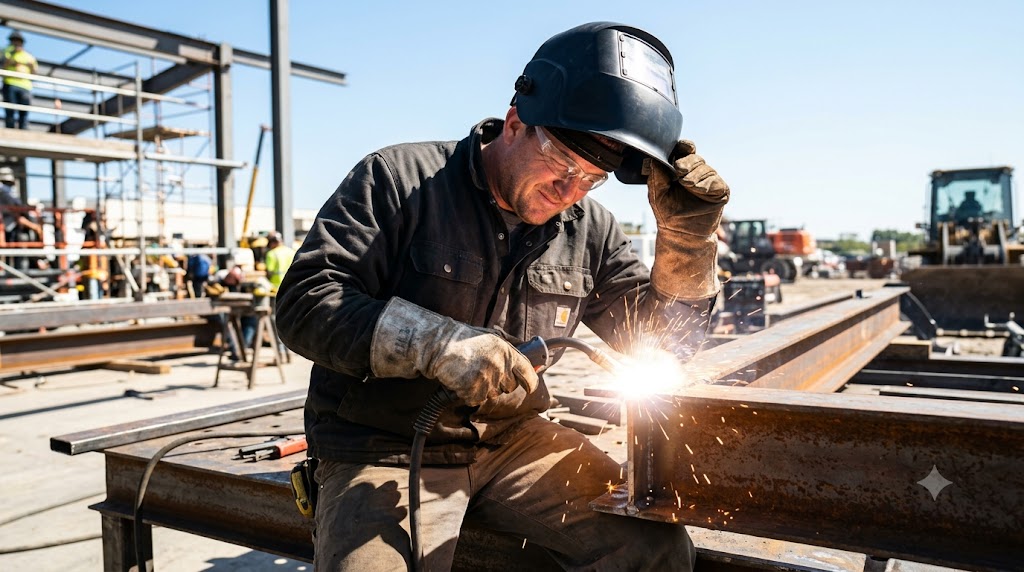
You strike an arc outdoors and nothing happens. The lens stays light. You flinch back, blink hard, and try again. The arc flashes and you are staring directly into it through a lens that should have been dark before you ever pulled the trigger.
This is one of the more alarming problems a welder can experience, and it happens almost exclusively when working outside or near bright windows. The cause is almost always the sensitivity setting, not a broken helmet.
Why auto-darkening helmets struggle in sunlight
Auto-darkening helmets work by detecting the light spike of a welding arc. The sensors on the helmet measure ambient light levels and use that as a baseline. When the arc fires and light jumps sharply above baseline, the lens darkens.
The problem outdoors: sunlight is already very bright. The sensors read high ambient light as normal, and a welding arc may not appear as a dramatic enough spike above that bright baseline to trigger the darkening response. The sensor never sees the arc as different enough from the surrounding brightness to fire.
This is particularly common with:
- Entry-level helmets with two sensors. Fewer sensors means less redundancy and less reliable triggering in difficult light conditions.
- Helmets with the sensitivity set too low. The sensitivity dial controls how much of a light spike is required to trigger darkening. Turned too low, the helmet demands a sharper spike than the arc provides against a bright outdoor background.
- Helmets with dirty or obscured sensors. Spatter deposits on the sensor windows reduce their ability to detect arc light accurately.
The fix: adjusting your sensitivity setting
For most outdoor darkening problems, this is the entire fix.
Locate the sensitivity dial on your helmet. It is usually on the inside of the shell near the ADF, marked with a minus on one end and a plus on the other. On helmets with external controls, it may be on the outside edge.
Turn it toward maximum (higher sensitivity). Higher sensitivity means the helmet needs less of a light spike to trigger darkening. In bright outdoor conditions, you want the helmet as sensitive as possible so it catches the arc quickly even against a bright background.
Test by striking a short tack in the outdoor conditions where you are working. The lens should darken before the arc produces visible light to your eye. If it still does not darken, clean the sensor windows.
Cleaning the sensor windows
The sensor windows are the small clear or tinted plastic panels on the front of the helmet, usually positioned to the left and right of the lens. They collect spatter, dust, and cover lens residue over time.
Wipe them gently with a clean damp cloth. Do not use abrasive materials. Dry completely before testing. Even a light film across the sensor window reduces sensitivity significantly, particularly in conditions where the contrast between the arc and the ambient light is already lower than normal.
Other outdoor-specific adjustments
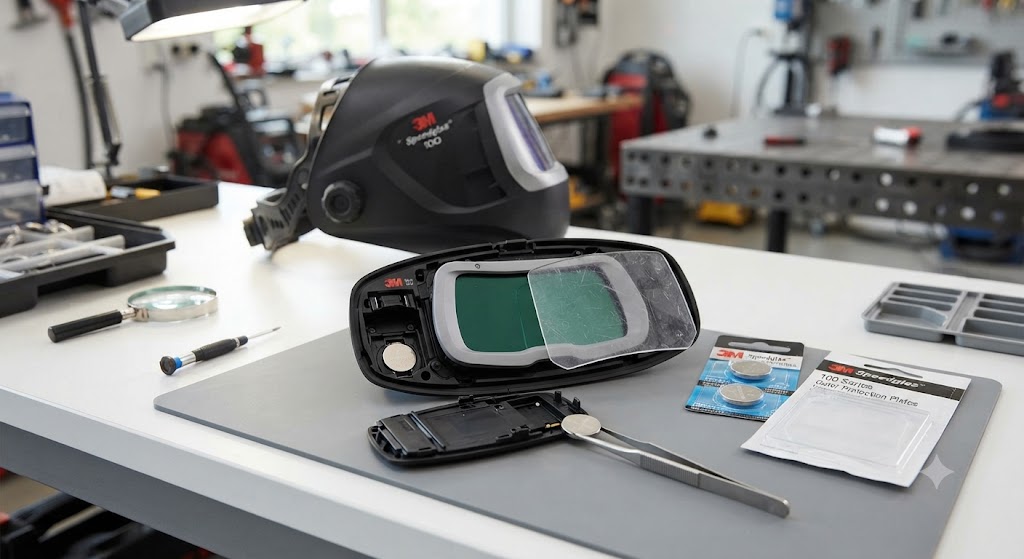
Replace the outer cover lens if it is heavily scratched or spattered. A scratched cover lens scatters the arc light that reaches the sensor, making the arc harder to detect.
Check the battery or solar charge. A low battery causes sensor response to degrade before the lens fails entirely. Helmets with solar assist and a depleted backup battery are particularly vulnerable outdoors on overcast days, where the solar cell may not be maintaining a full charge.
Shade the sensors from direct overhead sun. Sunlight hitting the sensor windows directly from above can confuse arc detection, particularly if the sun position creates a bright spot directly over one sensor. Adjusting your working angle so the sensors are not in direct sunlight while you weld can help.
Do cheap helmets struggle more in bright sunlight?
Yes, measurably. Budget helmets with two sensors have fewer redundancy points and are generally less sophisticated in how they process ambient light versus arc light. They are designed for controlled indoor conditions where ambient light is consistent and the arc represents a reliable light spike.
Helmets with four sensors, X-Mode technology (found on Miller helmets), or multiple sensitivity presets perform more reliably in varying outdoor conditions. Miller’s X-Mode was specifically designed to address sensor blocking and outdoor false triggering. If outdoor welding is a regular part of your work, a helmet without outdoor-capable arc detection is a meaningful limitation.
Frequently asked questions
Why does my welding helmet not darken properly outdoors? Bright sunlight raises the ambient light baseline that the sensors use to measure arc contrast. If the sensitivity is set too low, the arc does not appear as a dramatic enough spike above that baseline to trigger darkening. Turn sensitivity to maximum and clean the sensor windows.
How do you adjust sensitivity for outdoor welding? Set the sensitivity dial toward maximum. This makes the helmet respond to smaller light spikes relative to the ambient background, which is exactly what outdoor conditions require.
Do cheap helmets struggle more in bright sunlight? Yes. Two-sensor budget helmets are less reliable outdoors because they have fewer detection points and less sophisticated arc-versus-ambient discrimination. Four-sensor helmets and models with dedicated outdoor or X-Mode technology perform significantly better in variable light.
Can I use a fixed shade passive lens to avoid this problem? Yes. A passive fixed shade lens does not require arc detection to darken because it is always dark. If outdoor welding is a recurring need and your auto-darkening helmet continues to fail outdoors, a fixed shade passive lens eliminates the problem entirely for that environment.
Why does my helmet darken randomly outdoors without an arc? This is the opposite problem: sensitivity set too high in sunlight. High sensitivity combined with direct sun hitting the sensors can cause false triggering. The solution is the same as above but reversed: reduce sensitivity slightly until false triggering stops while still darkening correctly on an arc strike.
Does my helmet warranty cover outdoor sensor failures? It depends on the brand and the nature of the failure. Most warranties cover manufacturing defects, not sensitivity setting issues or user environment conditions. If adjusting sensitivity and cleaning the sensors does not resolve the problem and the helmet is relatively new, contact the manufacturer before assuming it is your technique.
References
- American National Standards Institute (ANSI) Z87.1, eye and face protection standard for welding
- Occupational Safety and Health Administration (OSHA), welding eye protection requirements
- Miller Electric, X-Mode technology documentation
- Lincoln Electric, Viking series troubleshooting documentation