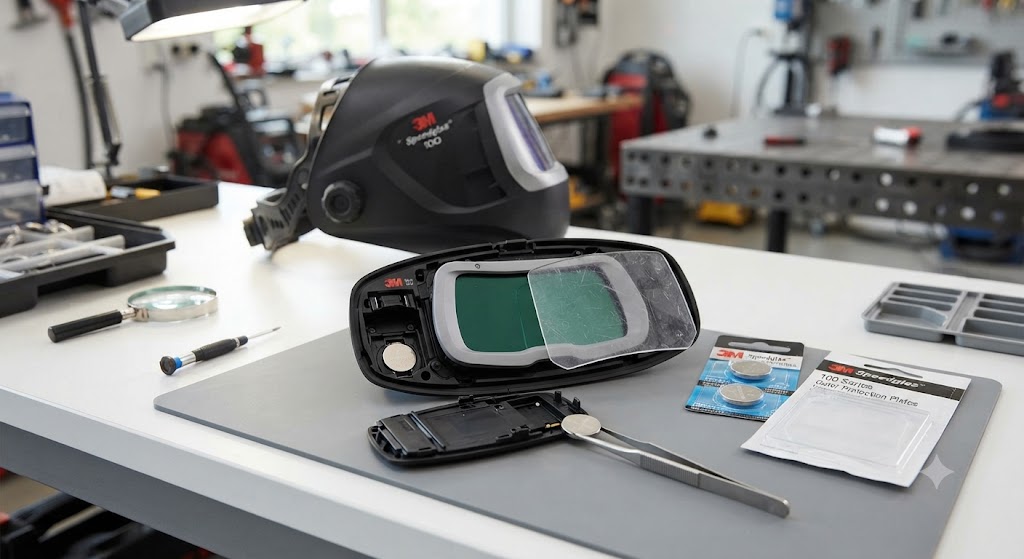
Welding Helmet True Color Lens Technology Explained

For the first several years I welded professionally, every auto-darkening helmet I used gave the weld puddle a green tint. That was just how it looked. Then I tried a colleague’s helmet at a training event and looked at the puddle with what felt like genuinely different eyes. The colors were closer to what the metal actually looked like. The heat gradient and surface texture of the pool were more readable. I asked what the helmet was. It was an Optrel. That was my first exposure to what the industry now calls true color lens technology, and it changed how I evaluated helmets from that point on.
What True Color Technology Is
A standard auto-darkening welding lens uses liquid crystal cells sandwiched between polarizing filters to block light when the arc is detected. The optical properties of the LCD and filter stack produce a characteristic tint in the darkened state, most commonly perceived as a greenish hue by the welder looking through the lens.
True color technology refers to engineering changes to the lens stack that reduce or eliminate this color distortion. The result is a darkened lens that passes light with a more neutral color spectrum, meaning the weld puddle, the base metal, and the surrounding work area appear closer to their natural colors rather than a monochromatic green field.
Different manufacturers use different proprietary names for their version of this technology:
- Optrel calls it true color lens technology and achieves 1/1/1/1 optical clarity rating
- Lincoln Electric calls theirs 4C lens technology
- Miller Electric calls theirs ClearLight lens technology
- YESWELDER markets a true color lens on their Pro and Pro 2.0 models
- Antra uses the true color marketing term on their AD200 series
The technology exists across price tiers, but premium manufacturers typically implement it more consistently and with higher measured optical performance.
Why It Matters for Welding
The practical benefit of true color lens technology is improved weld quality awareness for the welder. The weld puddle is the primary information source during welding. Its shape, fluidity, color, and motion tell an experienced welder whether heat input, travel speed, and wire feed are correct. Color distortion from a standard green-tint lens obscures some of this information by flattening the color contrast between molten metal, the heat-affected zone, and slag.
True color lenses make finer distinctions visible. TIG welders in particular benefit because TIG work demands more precise puddle reading than most other processes. The difference between a true color lens and a standard lens is most noticeable for:
- Low-amperage TIG on stainless and aluminum
- Color monitoring of heat input on thin material
- Distinguishing slag and oxide layers from the puddle in stick welding
- Any work where color feedback helps guide technique decisions
For heavy structural MIG welding where you are running high-deposition passes at constant speed, the benefit of true color is less operationally significant, though welders still tend to prefer it for eye comfort during long shifts.
True Color vs. Standard Lens: What the Difference Looks Like
Through a standard lens at shade 10: the puddle appears as a bright point of green light, the edges are visible but the surrounding metal is mostly a dark green field, and heat color gradients in the base metal are largely invisible.
Through a true color lens at shade 10: the puddle appears as a bright pool with amber and orange tones more visible at its edges, the heat-affected zone shows as a visible color gradient against the cooler base metal, and the overall image has more contrast and depth.
The improvement is genuine and not subtle. Welders who switch to a true color lens and then go back to a standard lens generally notice the color distortion of the standard lens immediately, where before they had accepted it as normal.
Does Budget True Color Match Premium True Color?
Not uniformly. YESWELDER and Antra both market true color technology on their budget helmets, and the improvement over no-true-color budget lenses is real and measurable. However, the optical performance of a YESWELDER true color lens does not fully match the 1/1/1/1 optical clarity of an Optrel Crystal 2.0 or the 4C lens technology in a Lincoln Viking 3350.
The differences come down to overall optical rating beyond just color rendering: diffusion, transmission variance, and prismatic deviation all contribute to the total viewing quality. True color addresses color distortion specifically. A 1/1/1/1 rated lens addresses the complete set of optical factors. A budget helmet with a true color lens is a significant improvement over a budget helmet without it, but it does not deliver the full viewing experience of a premium lens.
The Bottom Line
True color lens technology is a meaningful real-world improvement for welders who rely on puddle color feedback. It is not marketing language for nothing. For TIG welders especially, it is one of the most operationally significant features to prioritize when selecting a helmet. Premium implementations (Optrel, Lincoln 4C, Miller ClearLight) deliver the full benefit. Budget true color implementations deliver partial but still worthwhile improvement over standard green-tint lenses.
Frequently Asked Questions
What does true color mean on a welding lens? True color technology reduces the green color distortion that standard auto-darkening lenses produce, making the weld puddle and surrounding work area appear with more natural colors.
Do budget helmets have true color technology? Yes. YESWELDER and Antra market true color lenses on their budget models. The improvement over standard lenses is real, though it does not fully match the optical quality of premium true color implementations.
Does true color reduce eye strain? Many welders report reduced eye fatigue during long sessions with true color lenses. The more natural color rendering requires less visual interpretation effort than working through a heavily tinted monochromatic green field.
What is the 4C lens on the Lincoln Viking 3350? 4C is Lincoln Electric’s name for their true color lens technology. It reduces the standard green tint and delivers a 1/1/1/1 optical clarity rating across the lens viewing area.
Is Miller ClearLight the same as true color? ClearLight is Miller Electric’s proprietary name for their improved color rendering lens technology. It achieves similar objectives to true color and 4C: reducing color distortion and improving optical clarity.
Is true color worth the extra cost? For TIG welders and anyone who welds daily, yes. For hobbyists doing occasional MIG and stick work, a standard lens is sufficient but the true color improvement remains noticeable in any application.
References
https://www.optrel.com https://www.lincolnelectric.com https://www.millerwelds.com https://www.yeswelder.com
SEO Title: Welding Helmet True Color Lens Technology Explained