Welding Helmet Turns On By Itself: Causes and Fixes
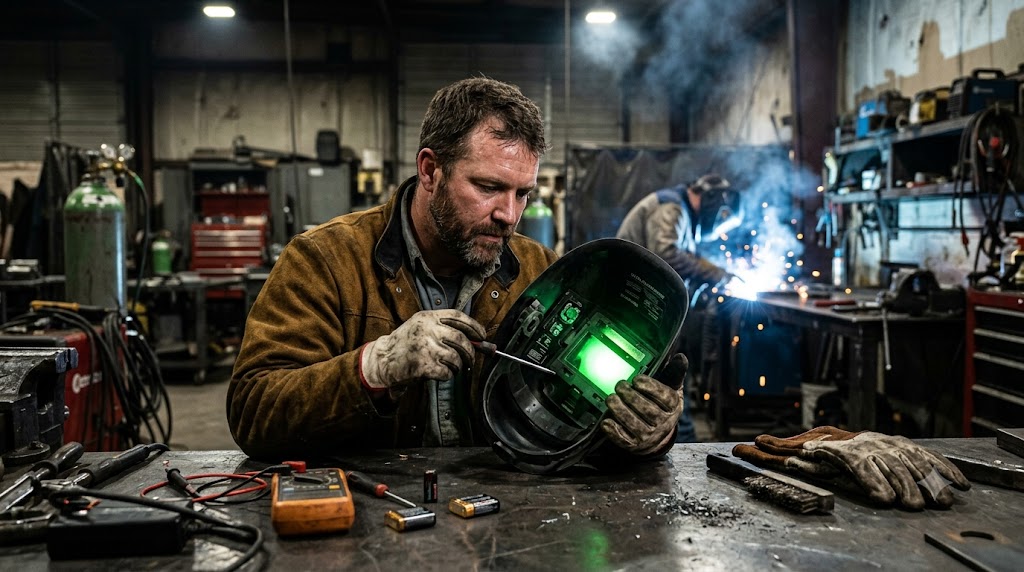
You are grinding. The helmet on the bench beside you clicks dark. You set it down for five minutes and come back to it already in shade mode. You are standing in the doorway and the lens darkens at nothing.
A welding helmet that activates on its own is not broken. In most cases it is responding to light it was designed to respond to, and the fix is a simple adjustment.
What causes a helmet to darken without an arc
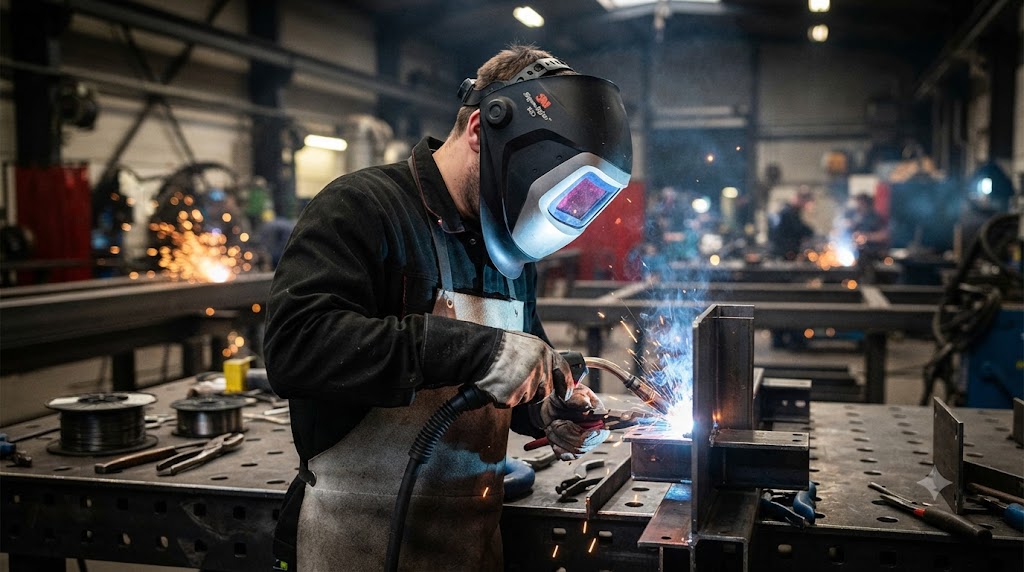
Auto-darkening helmets use sensors to detect the bright spike of a welding arc. The problem is that other light sources can produce spikes bright enough to fool those sensors.
The most common causes of false triggering:
Sensitivity set too high. This is the most frequent cause. When sensitivity is turned to maximum, the helmet responds to any strong light source: sunlight through a window, a bright overhead shop light, someone else’s phone flash, or a grinding spark cluster. Reducing sensitivity is the first fix to try.
Ambient light interference. Sunlight entering through a doorway, skylight, or large window and hitting the sensor windows directly can trigger darkening repeatedly, especially when clouds pass and the light changes suddenly.
Other welding arcs in the shop. If you are working near other welders and their arcs are within the line of sight of your helmet’s sensors, your helmet will respond to their arc just as it does to your own. This is normal sensor behavior.
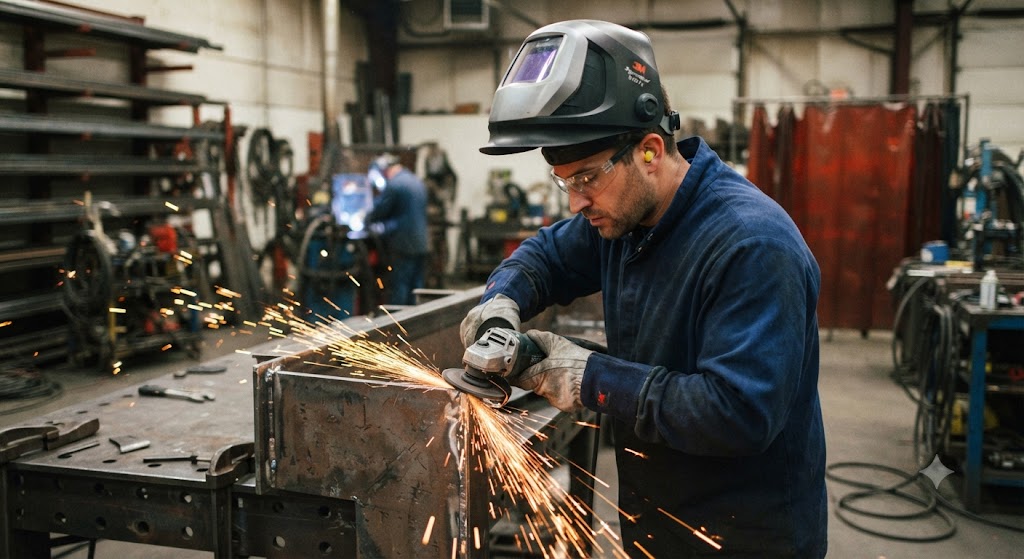
Grinding sparks. A grinding disc produces rapid flashes of light that can trigger an auto-darkening lens, particularly on helmets with sensitivity set high. Some helmets have a dedicated grind mode that locks the lens to a low shade and disables arc detection while grinding.
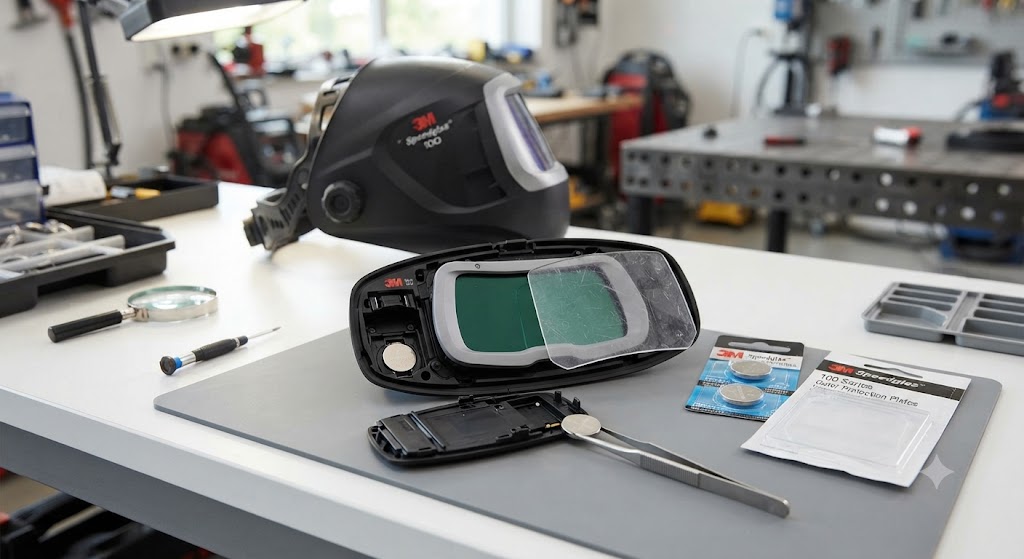
Low battery. A battery near the end of its charge can cause erratic sensor behavior, including false triggering. Replace the battery and test.
Dirty or damaged sensor windows. Sensor windows that are cracked, scratched, or contaminated with spatter debris can create optical effects that the sensors misread as arc light.
How to fix it
Step 1: Reduce sensitivity. Turn the sensitivity dial toward the minus or lower end. This requires a stronger, more distinct arc light spike to trigger darkening, which filters out most ambient false triggers. Find the lowest sensitivity setting where the helmet still reliably darkens on your arc, and use that as your baseline.
Step 2: Use grind mode when grinding. If your helmet has a grind mode, activate it during grinding operations. Grind mode locks the lens to a specific shade and disables arc detection, which eliminates spark-triggered darkening completely.
Step 3: Check the battery. Replace the battery even if the low battery indicator has not lit. Intermittent electrical behavior from a weak battery can cause sensor anomalies. On solar-assisted helmets, ensure the solar cell is clean and charging normally.
Step 4: Clean the sensor windows. Wipe the sensor windows with a clean damp cloth. Contamination on the sensor window can refract ambient light in ways that trigger false detection.
Step 5: Check sensor window condition. If a sensor window is cracked or physically damaged, it needs to be replaced. A cracked sensor window scatters light internally and can create persistent false triggering that sensitivity adjustment alone will not fix.
Is a helmet that turns on randomly still safe to use?
For most false triggering situations, yes, the helmet remains safe for welding. The UV and IR filtering built into the ADF is passive and always active regardless of whether the darkening circuit is working correctly. Your eyes are protected even if the lens stays light during an arc strike.
However, a helmet that does not darken reliably when you strike an arc, or one that stays dark and prevents you from seeing your work, is a functional problem that affects weld quality and comfort. Fix the underlying cause before relying on the helmet for production work.
Frequently asked questions
Why does my welding helmet darken when no one is welding? The sensors are responding to another light source: ambient sunlight, nearby equipment sparks, another welder’s arc, or a strong overhead light. The most common fix is reducing the sensitivity setting.
Can bright ambient light trigger a welding helmet? Yes. Sunlight hitting the sensor windows directly, particularly through doorways or skylights with changing cloud conditions, can trigger auto-darkening helmets, especially those with sensitivity set high.
Is a helmet that turns on randomly still safe to weld with? In most cases yes: the UV and IR protection is passive and always on. However, a helmet that does not respond correctly to your own arc while triggering on ambient light suggests a sensitivity issue that should be corrected before trusting the helmet for production use.
Why does my helmet darken when I turn on the grinder? Grinding sparks produce rapid bright flashes that auto-darkening sensors can misread as arc light. Use grind mode on helmets that support it. On helmets without grind mode, reduce sensitivity to the point where grinding sparks do not trigger the lens, then test that the helmet still responds properly to an actual weld arc.
Can a low battery cause false triggering? Yes. A battery near end of life can produce erratic electrical behavior in the sensor circuit. Replace the battery and retest before assuming the helmet has a more serious problem.
How do I adjust sensitivity on my welding helmet? The sensitivity dial is usually on the inside face of the ADF housing, marked with a minus and plus end. On some helmets it is on the outside edge. Turn it toward the minus end to reduce sensitivity (fewer false triggers) and toward the plus end to increase sensitivity (triggers on fainter arc light). Adjust, test with an actual arc strike, and find the lowest setting that reliably darkens your helmet when you weld.
References
- American National Standards Institute (ANSI) Z87.1, eye and face protection standard
- Occupational Safety and Health Administration (OSHA), welding eye protection guidelines
- Miller Electric, welding helmet troubleshooting resources
- Lincoln Electric, auto-darkening filter operation documentation