Welding Helmet for Underwater and Wet Welding: Why the Regular Hood Stays Topside
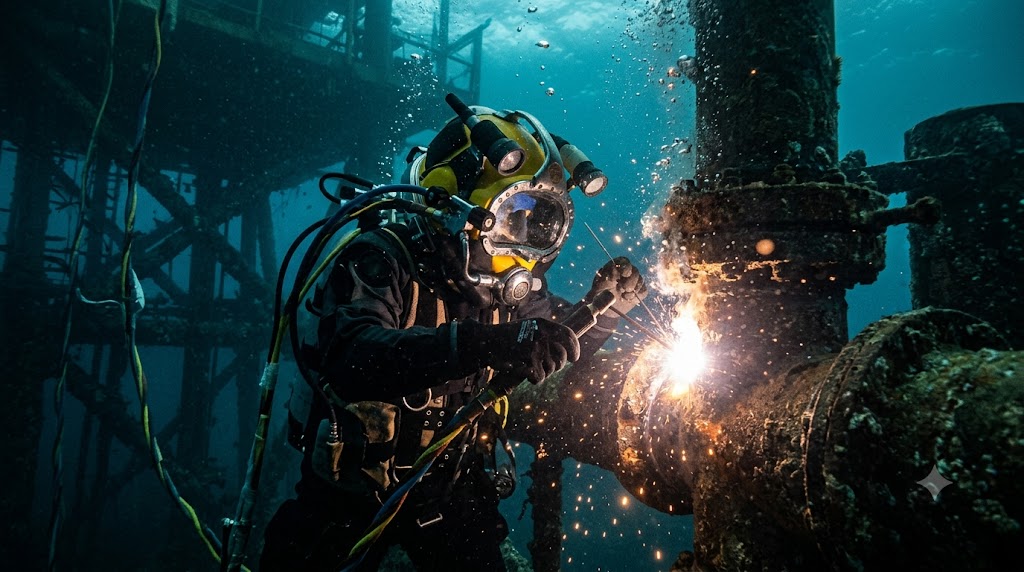
If you are searching for the best welding helmet for underwater welding, the most important thing to know is also the most counter-intuitive: the welding helmet you use above water does not go underwater. Not a waterproof version of it, not a sealed version of it. Commercial underwater welders do not wear a welding helmet at all. They wear a diving helmet with a specialized welding lens assembly that mounts over the faceport, and if you are working at depth, that distinction is the one that keeps you safe and able to see.
This guide explains what is actually used for underwater welding, why it differs from topside gear, and what is genuinely available for divers who need a proper welding view at depth.
Why a Regular Welding Helmet Cannot Go Underwater
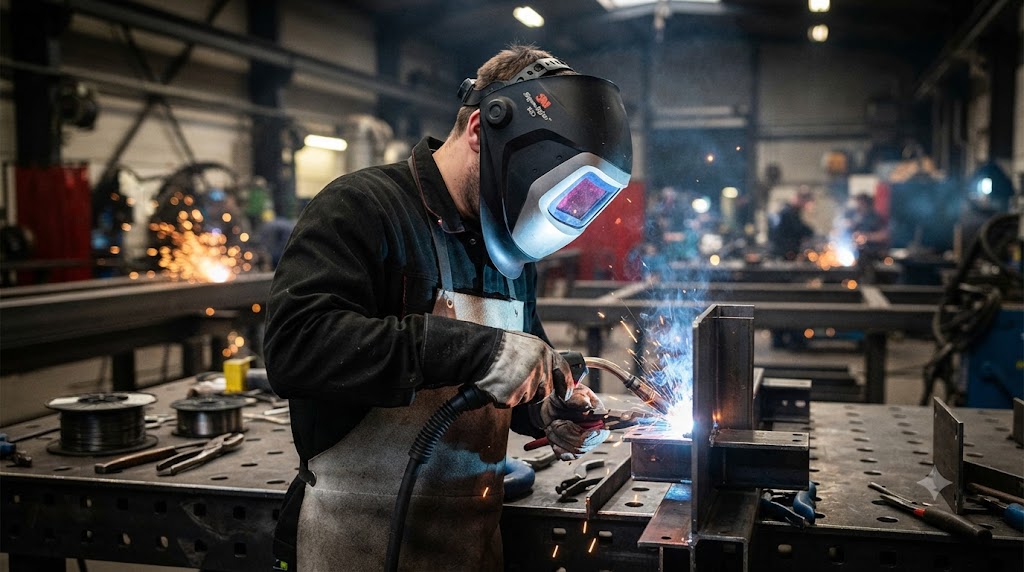
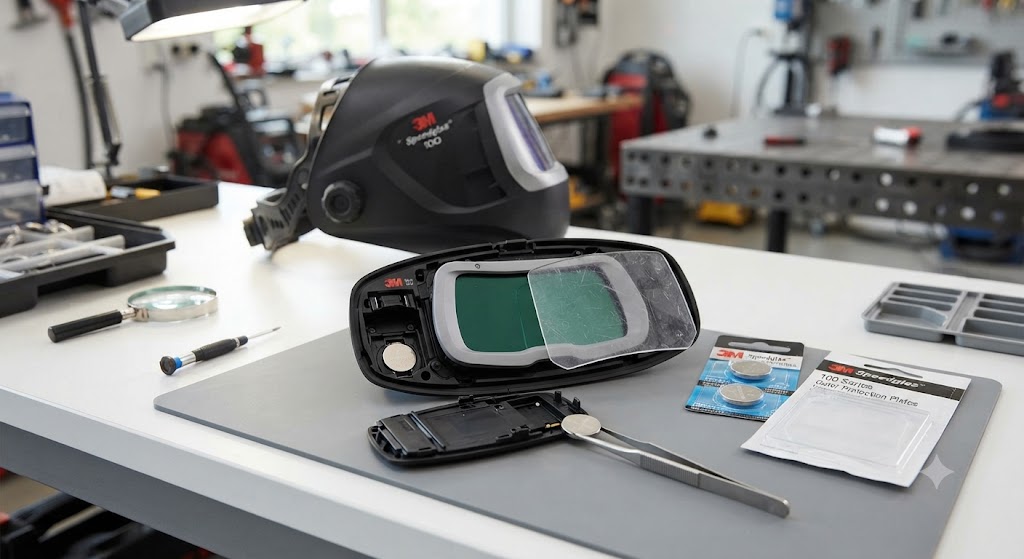
A standard auto-darkening welding helmet is an atmospheric piece of equipment. The electronics, battery, and sealed cartridge are not designed for ambient water pressure, and the helmet shell provides no breathing air. More fundamentally, a welding helmet does not seal to your head; it is an open-back shell. Using it underwater is not a modification challenge; it is the wrong tool category entirely.
For wet welding, where the welder works without a dry habitat, the welder wears a surface-supplied diving helmet (Kirby Morgan, Divex, or similar) that provides breathing gas, communication, and face protection as a sealed, pressure-rated system. The welding protection is added on top of that system, not substituted for it.[^https://isubc.com/product/uv40-underwater-welder-cutting-visor/]
What Underwater Welders Actually Use
Fixed welding visor mounted over the faceport. The standard setup for commercial underwater wet welding is a welding lens assembly that bolts or clips over the diving helmet’s front faceport. These assemblies use a fixed-shade welding lens housed in a non-conductive, corrosion-resistant frame. The iSubC UV40 welding visor is one example: a non-conductive polycarbonate housing designed for seawater and freshwater use at any depth, providing UV and IR protection equivalent to a topside welding lens.[^https://isubc.com/product/uv40-underwater-welder-cutting-visor/] The Exodus Welding Lens Assembly is another, designed to fit over common diving helmet faceports and provide the same protection.[^https://commercialdivingsupplies.com/product/exodus-welding-lens-assembly/]
Auto-darkening lenses for underwater use. These exist, though they are uncommon in commercial diving. An auto-darkening underwater welding lens designed for shade 3 to 9 and tested to 75 ft in seawater is commercially available.[^https://underwaterhydraulics.com/products/sunroof-society-auto-darkening-welding-lens] The shade range is intentionally lower than topside work (where shade 10 to 13 is standard) because water absorbs and scatters arc light, making the arc appear dimmer to the welder’s eyes. A lower shade gives adequate vision through the water column while still filtering UV and IR output.
Why Lower Shades Underwater
This is counterintuitive but physics-based. Above water, a 150-amp arc is intense and requires shade 10 to 11 for comfortable, safe vision. Underwater, the same arc produces the same radiation, but the water surrounding the arc absorbs light and scatters it, and visibility in the water column is further reduced by turbidity and particulates. The diver sees a dimmer apparent arc and needs a lower shade to see the puddle clearly. Shade 3 to 9 is the working range for wet welding lenses.[^https://underwaterhydraulics.com/products/sunroof-society-auto-darkening-welding-lens] UV and IR protection at these shade numbers is still full, because the arc’s non-visible radiation passes through water largely unattenuated.
What About Dry Habitat or Hyperbaric Welding?
In a dry habitat, an enclosed pressurized structure is lowered around the weld site so the welder works in a gas atmosphere rather than in water. The welding conditions are closer to topside, and standard welding helmets can sometimes be used inside the habitat. However, the modified atmosphere (typically a helium-oxygen mix at elevated pressure) and the confined, pressurized environment introduce their own arc behavior changes, and specialized equipment is still the norm. Standard topside equipment in a hyperbaric environment is a specialist topic beyond the scope of a general welding helmet guide.
The Honest Summary for the General Reader
If you are a commercial diver transitioning into underwater welding, you are training on diving helmets and welding lens assemblies from your dive equipment supplier, not shopping for a welding helmet. If you are a topside welder who needs to work in rain or splash environments, a standard auto-darkening welding helmet can handle incidental moisture with no modification, but it is not waterproof and should not be submerged.
Who should skip everything in this article: the vast majority of welders who will never work below the surface. Your topside helmet handles rain. It handles splash. It is not designed for submersion and is not available in a version that is.
The Bottom Line
A welding helmet for underwater welding is a diving helmet with a specialized fixed or auto-darkening welding lens assembly mounted over the faceport, not a modified version of a topside hood. Commercial wet welders use non-conductive, corrosion-resistant lens assemblies rated for seawater depth and lower shade ranges (3 to 9) to account for water’s light-absorbing properties. If you are working at depth, get the right equipment through your commercial dive training and dive equipment supplier. The topside hood stays topside.
Frequently Asked Questions
Can I use a regular welding helmet underwater? No. A standard welding helmet is an atmospheric device. It is not sealed, not pressure-rated, and does not provide breathing air. Commercial underwater welders use a diving helmet with a welding lens assembly over the faceport.
What do commercial underwater welders use to protect their eyes? A welding lens assembly mounted over the faceport of a commercial diving helmet. Options include the iSubC UV40 visor and the Exodus Welding Lens Assembly, both designed for non-conductive, corrosion-resistant use at depth.
What shade lens is used for underwater welding? Shade 3 to 9, lower than topside welding (shade 10 to 13), because water absorbs and scatters arc light and makes the arc appear dimmer. Full UV and IR protection is maintained at lower shade numbers.
Is there an auto-darkening lens for underwater welding? Yes. Auto-darkening underwater welding lenses are available, rated for shade 3 to 9 and tested to 75 feet in seawater. They are less common than fixed-shade assemblies in commercial wet welding.
Can I weld in the rain with a standard welding helmet? Yes. Welding in rain or in wet but non-submerged conditions is a normal use of a standard auto-darkening helmet. It is not designed for submersion but handles incidental moisture without modification.
What is hyperbaric welding? Welding inside a pressurized dry habitat lowered around the weld site, so the welder works in a gas atmosphere rather than in water. Closer to topside conditions, but still a specialized environment requiring specialist equipment and training.
Where do I buy an underwater welding lens assembly? Through commercial diving equipment suppliers. The iSubC UV40 and Exodus Welding Lens Assembly are available through dive equipment distributors. These are not stocked at regular welding supply stores.
References
- iSubC UV40 Underwater Welder Cutting Visor (non-conductive, rated for seawater and freshwater at any depth): https://isubc.com/product/uv40-underwater-welder-cutting-visor/
- Exodus Welding Lens Assembly for diving helmets: https://commercialdivingsupplies.com/product/exodus-welding-lens-assembly/
- Sunroof Society Auto-Darkening Underwater Welding Lens (shade 3 to 9, tested to 75 ft seawater): https://underwaterhydraulics.com/products/sunroof-society-auto-darkening-welding-lens