Welding Helmet Viewing Area Size Comparison: Does Bigger Actually Help?
Viewing area is one of the most-advertised specifications on a welding helmet, and it is also one of the most misunderstood. A larger viewing area sounds unambiguously better, but the value of those extra square inches depends entirely on what you weld and how. This welding helmet viewing area size comparison breaks down the numbers, names the helmets that lead in each tier, and tells you honestly when you need more and when the standard 2x4 is enough.
How Viewing Area Is Measured
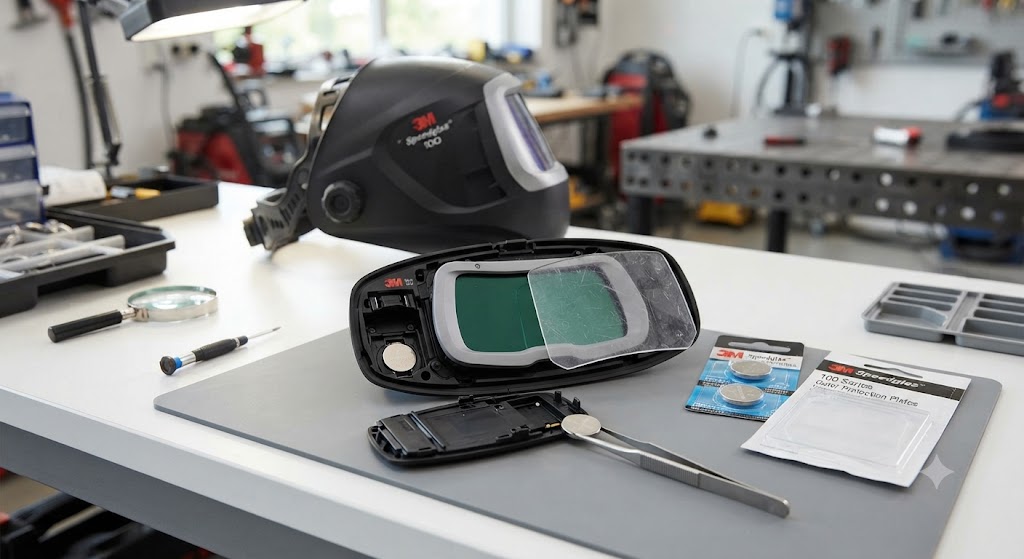
Viewing area is measured in square inches (or square millimeters) and refers to the active area of the auto-darkening filter lens, the portion through which you actually see the arc, the puddle, and the surrounding workpiece. A 2 x 4 inch lens is 8 square inches; wider and taller formats push that significantly higher.
Optical clarity rating (the 1/1/1/1 standard under ANSI Z87.1) measures the quality of the view, not its size. A lens can be large and optically poor, or small and razor-sharp. Both numbers matter separately.[^https://www.millerwelds.com/en-US/welding-solutions/product-details/welding-helmet-clarity-ratings-what-it-means-and-how-clearlight-compares]
The Viewing Area Tiers
Standard (7 to 9 sq in). The baseline auto-darkening lens. Entry-level helmets typically fall here. Adequate for flat and overhead work when you know your sight line well, but the smaller field requires more head movement to survey the joint ahead of the puddle.
Large view (9 to 11 sq in). The sweet spot for most production welders. Enough area to see the puddle and a useful amount of the joint without excessive neck movement. The Miller Digital Elite (9.2 sq in) and similar mid-tier helmets sit here.
Extra-large (11 to 14 sq in). Where premium helmets compete. The Lincoln Viking 3350 at 12.5 sq in is one of the better-known examples in this range, with its 3.74 x 3.34 inch active area providing a noticeably wider view.[^https://www.lincolnelectric.com/en/Products/k3034-4] The Miller Digital Infinity leads the Miller lineup at 13.4 sq in, the largest viewing area Miller offers.[^https://www.millerwelds.com/en-US/safety-products/helmets/digital-infinity-m30025/digital-infinity-black-clearlight-4x-296786]
Panoramic and extra-wide (15 sq in and above). Some helmets add side windows alongside the main ADF for a total view that reaches 15 sq in center plus 26 sq in combined including side panels on certain panoramic models.[^https://www.eastwood.com/garage/welding-helmet-buyers-guide-which-welding-helmet-is-best-for-you/] The 3M Speedglas G5-02 offers 76 x 150 mm (approximately 17.7 sq in) in its main lens alone, among the widest available from a major manufacturer.[^https://www.facebook.com/groups/1512906382087894/posts/8052977231414077/]
What a Larger Viewing Area Actually Gives You
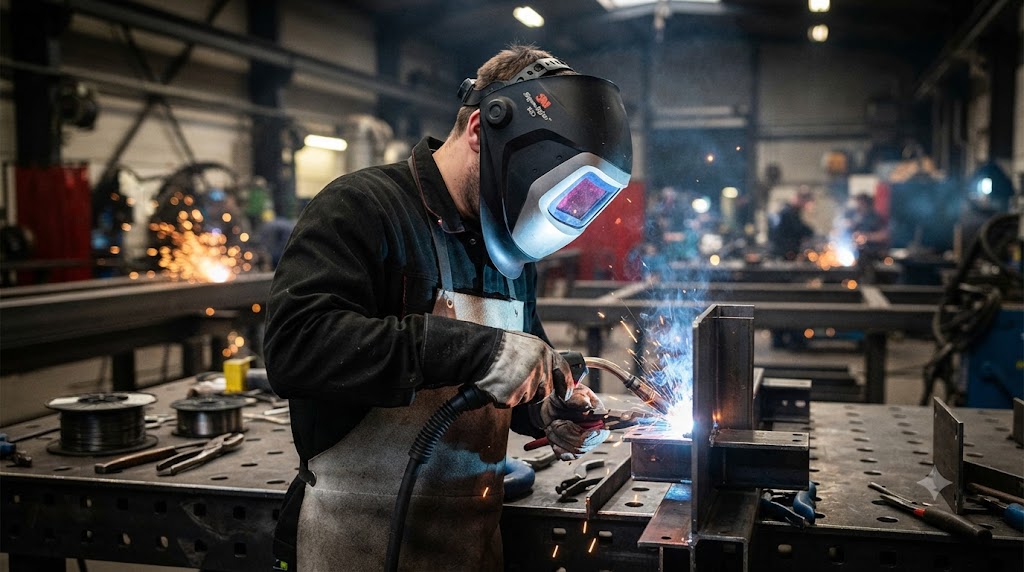
A wider view lets you see the joint ahead of the puddle without moving your head, which matters for tracking welds, watching for fit-up gaps, and reading the joint on long beads. It reduces tunnel vision and makes out-of-position welding easier because you can orient the torch and puddle without hunting for the arc.
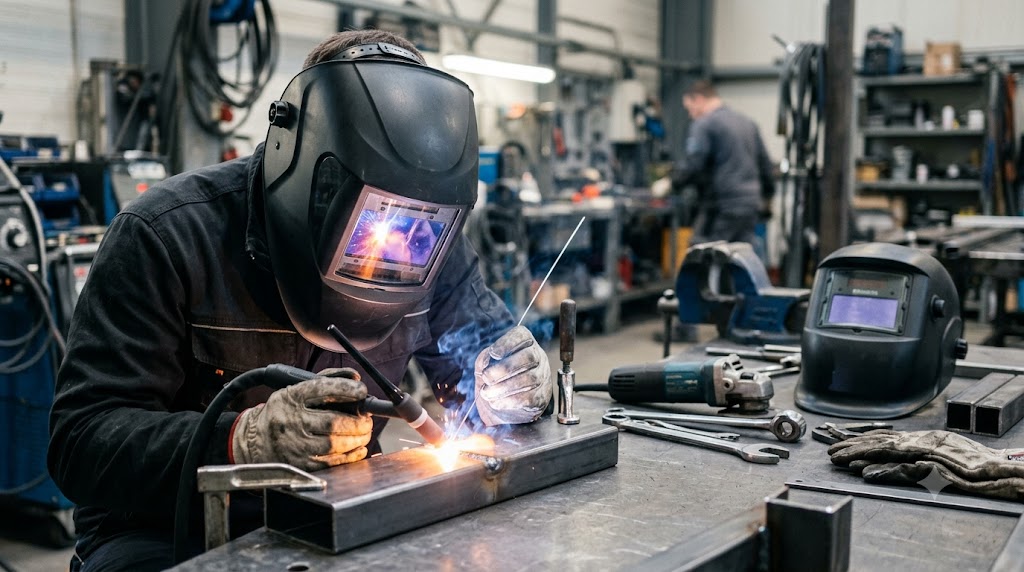
For TIG welding in particular, a large clear light state helps with torch placement before the arc starts, and a wider dark state lets you track both the tungsten and the puddle edge simultaneously.
Where extra area helps most: fabrication, out-of-position work, production welding with long beads, and any application where seeing the joint ahead of and around the puddle directly improves quality.
Where it matters less: heavy stick welding, vertical or overhead tacks where your sight line to the joint is fixed, and any position where the joint fills most of the lens regardless of its size.
The Honest Trade-Offs
A larger ADF costs more to manufacture, adds some weight to the helmet, and on some hoods reduces the optical clarity at the corners. Larger viewing areas also put more ADF surface area in front of incoming spatter, so the outside cover lens gets hit harder. None of these are reasons to avoid a larger view, but they are worth knowing.
One point the community makes clearly: nobody ever complained about too much viewing area once they had it. The standard 2x4 is plenty to get certifications and do competent work, but welders who upgrade to a 12 to 14 square inch lens almost universally report not wanting to go back.[^https://www.reddit.com/r/Welding/comments/xjmq4e/how_much_does_viewing_area_matter_welding_helmet/]
Who should prioritize size above all else: fabricators and structural welders working with complex joint geometries, welders doing out-of-position work daily, and anyone who has ever missed a track change because they could not see the joint past the puddle.
The Bottom Line
Viewing area tiers tell you what size lens range to shop in, not which specific helmet to buy. Standard 7 to 9 sq in is enough to learn and weld competently. Large view (10 to 12 sq in) is the right range for most production and fabrication welding. Extra-large (12 to 14 sq in) is where the Lincoln Viking 3350 and Miller Digital Infinity live, and that range changes the experience of watching complex joints. Panoramic adds side-view glass for the highest situational awareness. Buy the largest view that fits your budget and weight tolerance, because no one ever wished they could see less of the weld.
Frequently Asked Questions
What is the average viewing area of a welding helmet? Entry-level helmets typically have 7 to 9 square inches. Production-grade helmets range from 9 to 13 square inches. Panoramic helmets can exceed 15 square inches in total viewing area.
What is the largest viewing area on a standard welding helmet? The Miller Digital Infinity provides 13.4 sq in, among the largest in a standard (non-panoramic) auto-darkening helmet from a major brand. The 3M Speedglas G5-02 offers approximately 17.7 sq in in its main lens.
What is the Lincoln Viking 3350 viewing area? The Lincoln Viking 3350 (K3034-4) has a 12.5 sq in viewing area (3.74 x 3.34 inches).
Does viewing area affect safety? A larger viewing area gives you better situational awareness of the joint and workpiece, which reduces the chance of missing joint tracking or failing to see a hazard. ANSI Z87.1 does not set a minimum viewing area, but a larger clear view is generally safer than tunnel vision.
Is viewing area the same as optical clarity? No. Viewing area is the size of the active lens. Optical clarity (rated 1/1/1/1 under ANSI Z87.1) measures how undistorted and consistent the image is. Both matter, and they are independent specifications.
When does extra viewing area make a real difference? Fabrication, out-of-position work, long beads, and any application where seeing the joint ahead of the puddle directly affects weld quality. Less critical for tacking or short beads where you know your sight line.
Will a 2x4 inch standard lens get me through welding school? Yes. A standard 2x4 (8 sq in) lens is adequate for learning and certification work. Most welding school instructors use and recommend standard-view helmets because the fundamentals are the same regardless of lens size.
References
- Miller Digital Infinity 13.4 sq in viewing area (Miller product page): https://www.millerwelds.com/en-US/safety-products/helmets/digital-infinity-m30025/digital-infinity-black-clearlight-4x-296786
- Lincoln Viking 3350 K3034-4 12.5 sq in viewing area (Lincoln product page): https://www.lincolnelectric.com/en/Products/k3034-4
- Welding Helmet Buyers Guide, viewing area tiers (Eastwood): https://www.eastwood.com/garage/welding-helmet-buyers-guide-which-welding-helmet-is-best-for-you/
- 1/1/1/1 Welding Helmet Clarity Ratings (Miller, optical clarity vs size): https://www.millerwelds.com/en-US/welding-solutions/product-details/welding-helmet-clarity-ratings-what-it-means-and-how-clearlight-compares