Welding Helmet Weight Comparison: What the Numbers Mean for Your Neck
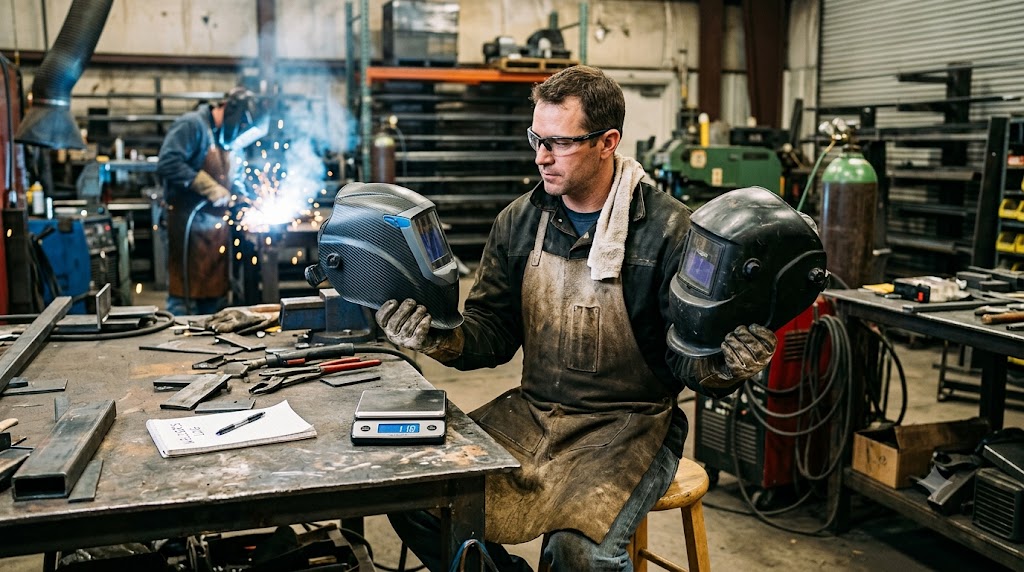
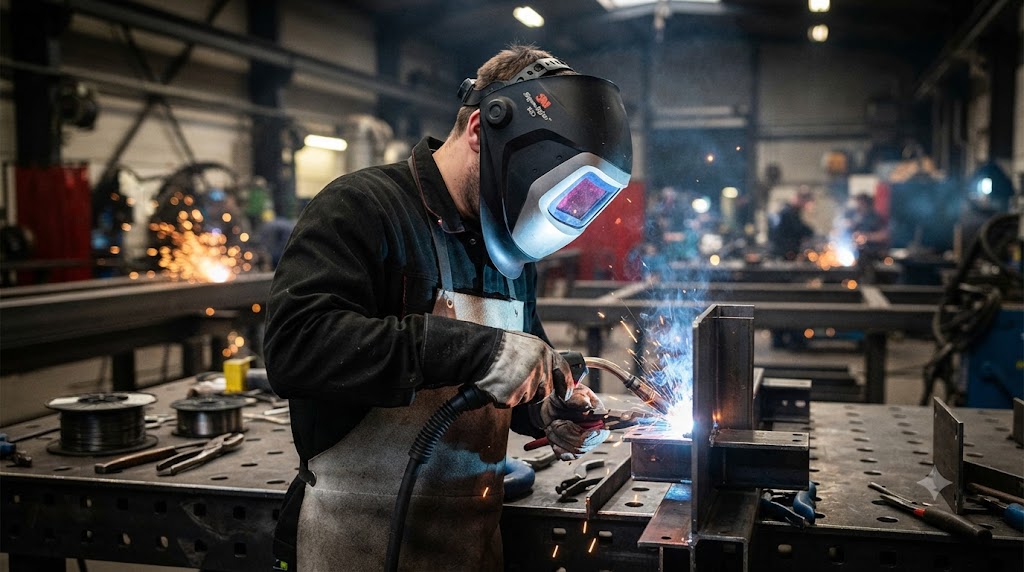
A welding helmet is the one piece of PPE you wear on your head all day, and the difference between a 17-ounce helmet and a 26-ounce helmet is not abstract. Over an eight-hour shift, that nine-ounce gap is felt in the neck and shoulders long before the last bead. But weight is not the only metric that matters, because a heavier helmet can be better balanced and more comfortable than a lighter one with poor headgear. This welding helmet weight comparison explains the numbers, where weight comes from, and how to use the data to pick the hood that keeps you comfortable through the whole shift.
Where Helmet Weight Comes From
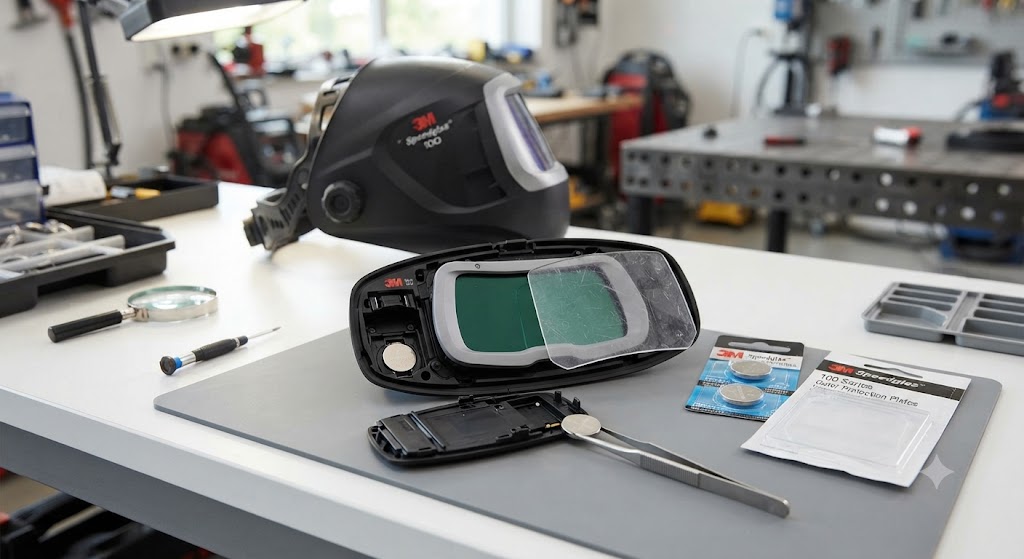
A welding helmet’s weight comes from three main places: the shell material (nylon, polypropylene, and carbon-fiber-loaded materials each differ in density), the auto-darkening filter cartridge (thicker glass, more sensors, and more complex electronics add weight), and the headgear suspension. Heavier ADF cartridges with larger viewing areas and four sensors tend to weigh more than smaller, simpler ones. Premium shells use engineered materials that are light for their strength; budget shells often use heavier commodity plastics.
Balance matters as much as total weight. A helmet that sits farther forward of the pivot point feels heavier on the neck than a helmet of the same mass that sits closer. Shell shape, headgear pivot position, and ADF cartridge placement all affect balance.
Weight Reference Points Across Popular Models
Here are verified weights from manufacturer specifications:
- Miller Digital Elite: 17.5 oz (495 g), the lightest model in the Miller modern lineup. Widely cited as one of the lightest auto-darkening production helmets in its class.[^https://www.weldersupply.com/P/55781/MillerDigitalEliteWeldingHelmetLuckysSpeedShopClearLight4x]
- Optrel Panoramaxx: 550 g (19.4 oz), a wide-view panoramic helmet that is notably light for its viewing area and feature set.[^https://bakersgas.com/products/optrelpanoramaxxautodarkeningweldinghelmet-1010000]
- Lincoln Viking 3350: approximately 25.8 oz. The larger shell, wide 12.5 sq in viewing area, and four-sensor 4C cartridge contribute to the higher weight compared to smaller helmets.[^https://weldingmart.com/blogs/how-to-weld/miller-welding-helmet-alternative]
- Miller Digital Infinity: 1.44 lbs (23 oz), a step heavier than the Digital Elite, carrying a larger 13.4 sq in viewing area and additional digital features.
PAPR systems add meaningful helmet weight through the airflow hardware, with most PAPR helmets falling in the 1.5 to 2.5 lb range for the headpiece alone, offset by moving the blower to your belt.
The Neck Strain Calculation
The welding position amplifies weight. A helmet worn upright at the bench feels one way; the same helmet tilted down twenty degrees for overhead work levers the weight further forward of your neck pivot point and effectively increases the perceived load. Welders who do sustained overhead or out-of-position work feel weight differences more acutely than shop welders primarily working in the flat position. If overhead is part of your daily work, the seventeen versus twenty-six ounce gap is the difference between a productive afternoon and a sore neck by three o’clock.
When More Weight Is Worth It
A heavier helmet that has a large viewing area, superior optics, and excellent headgear can feel more comfortable in practice than a lighter helmet with poor balance and a cheap harness. The Miller Digital Infinity at 23 oz with its Legacy headgear and 13.4 sq in viewing area is used all day by production welders precisely because the balance and comfort engineering make the 5.5 oz weight difference over the Digital Elite irrelevant in practice. Similarly, the Lincoln Viking 3350 at 25.8 oz is widely chosen by welders doing precision work who value the 12.5 sq in lens and 4C clarity over minimum weight.
Who should prioritize minimum weight above all else: underwater welders, overhead pipe welders in confined spaces, and production welders doing all-day-overhead work where even small weight advantages accumulate into meaningful fatigue reduction over a career.
The Bottom Line
Welding helmet weight matters, but it only tells part of the story. The Miller Digital Elite at 17.5 oz is the lightest serious auto-darkening hood in the mainstream; the Optrel Panoramaxx at 19.4 oz delivers panoramic viewing with minimal weight. The Lincoln Viking 3350 at 25.8 oz is the heavier end of the serious-helmet range, and it earns that weight with 12.5 square inches of class-leading optics. When choosing by weight, compare models that also meet your clarity and viewing-area requirements, then pick the lightest one that does. The best welding helmet for neck comfort is the lightest one that does not compromise the view you actually need.
Frequently Asked Questions
How heavy is a welding helmet? Modern auto-darkening helmets range from about 17 oz to 28 oz for standard models. PAPR helmets are heavier. Lighter generally means less neck fatigue on long jobs.
What is the lightest welding helmet? Among mainstream production-grade helmets, the Miller Digital Elite at 17.5 oz (495 g) is one of the lightest. The Optrel Panoramaxx at 19.4 oz is the lightest panoramic auto-darkening helmet in widespread professional use.
How much does the Miller Digital Infinity weigh? Approximately 23 oz (1.44 lbs), heavier than the Digital Elite but carrying a larger 13.4 sq in viewing area and additional digital features.
How much does the Lincoln Viking 3350 weigh? Approximately 25.8 oz. The larger 12.5 sq in cartridge and four-sensor 4C lens contribute to the higher weight.
Does helmet weight matter for overhead welding? Yes, significantly. Tilting the helmet back for overhead work levers the weight further forward and increases perceived neck load. Lighter helmets with good headgear are notably more comfortable for sustained overhead work.
Is a lighter helmet always better? Not necessarily. Balance and headgear design affect comfort as much as total weight. A well-balanced heavier helmet can be more comfortable than a poorly balanced lighter one.
Do PAPR helmets weigh more? The headpiece of a PAPR system is often heavier than a standard helmet due to airflow hardware, but the blower unit sits on your belt and does not add to head weight.
References
- Miller Digital Elite 17.5 oz (weldersupply product spec): https://www.weldersupply.com/P/55781/MillerDigitalEliteWeldingHelmetLuckysSpeedShopClearLight4x
- Optrel Panoramaxx 550 g / 19.4 oz (Baker’s Gas product listing): https://bakersgas.com/products/optrelpanoramaxxautodarkeningweldinghelmet-1010000
- Lincoln Viking 3350 vs Miller Digital Elite weight comparison (~25.8 oz vs 21 oz): https://weldingmart.com/blogs/how-to-weld/miller-welding-helmet-alternative