Welding Helmet Won't Stay Dark: Why It Clears and How to Lock It
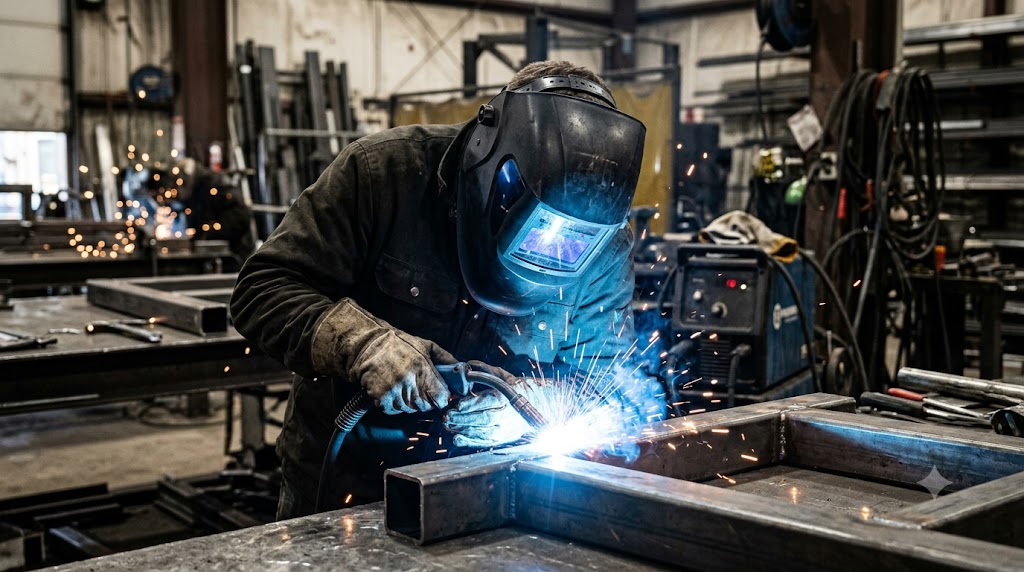
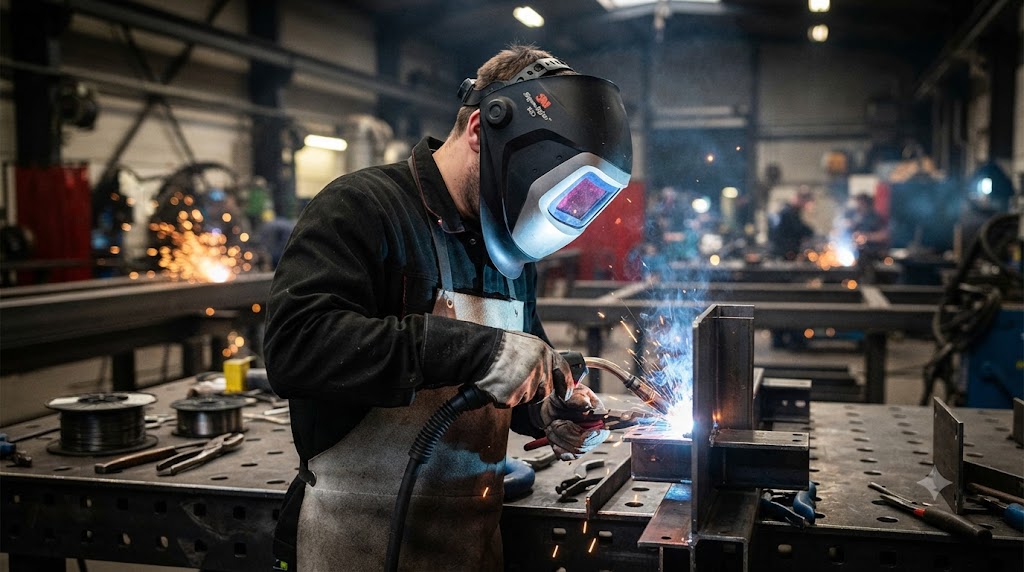
Your auto-darkening lens darkens when you strike an arc, but then clears before you finish the bead, or flicks back to clear between tacks. If your welding helmet won’t stay dark, it is almost never a dead lens. It is almost always the delay setting, and understanding how delay works turns a maddening problem into a thirty-second fix. Here is the full picture, from the simplest fix to the rare real faults.
The Delay Setting Is Almost Always the Cause
The delay control on your helmet determines how long the lens stays dark after the arc stops. The factory default is often short: fine for position work where you need to see your torch placement quickly, but a problem for anything that involves brief pauses, restarts, or welding close to the edge of the sensor’s detection range.[^https://www.weldclass.com.au/blog/118-welding-helmet-troubleshooting-guide]
Here is the often-missed tip: increasing the delay does more than just hold the dark state longer after you stop. It also bridges interruptions during welding. If the sensor briefly loses the arc because of geometry, a shadowed sensor, or a momentary current drop, a longer delay keeps the lens locked dark through the interruption instead of clearing and immediately darkening again.[^https://www.weldclass.com.au/blog/118-welding-helmet-troubleshooting-guide] Dial the delay up to the longest setting, test the weld, and dial it back to the shortest setting that still holds dark through your entire bead. That is the right approach.
Sensitivity Too Low
If the lens clears during welding at low current, particularly TIG at low amps or stick welding at the low end of your range, the sensitivity is not high enough to hold the arc reliably. Raise the sensitivity control so the lens detects and holds the arc throughout the current range you are using. Set it just high enough to detect your lowest arc, and not so high that ambient shop lights trigger a false dark.[^https://www.euromarc.co.nz/resources/troubleshooting-auto-darkening-helmets-common-problems-and-remedies]
Blocked or Shadowed Sensors
Auto-darkening lenses have two to four sensors on the front of the cartridge, and every one that gets blocked stops contributing to detection. If you are welding in a tight corner, overhead, or in a position where your glove or the torch body shadows a sensor, the lens detects a drop in arc signal and clears. Shift your position so the sensors have a clear view, or choose a helmet with four sensors plus electromagnetic detection for positions where optical sensors consistently get blocked.
Battery and Contact Issues
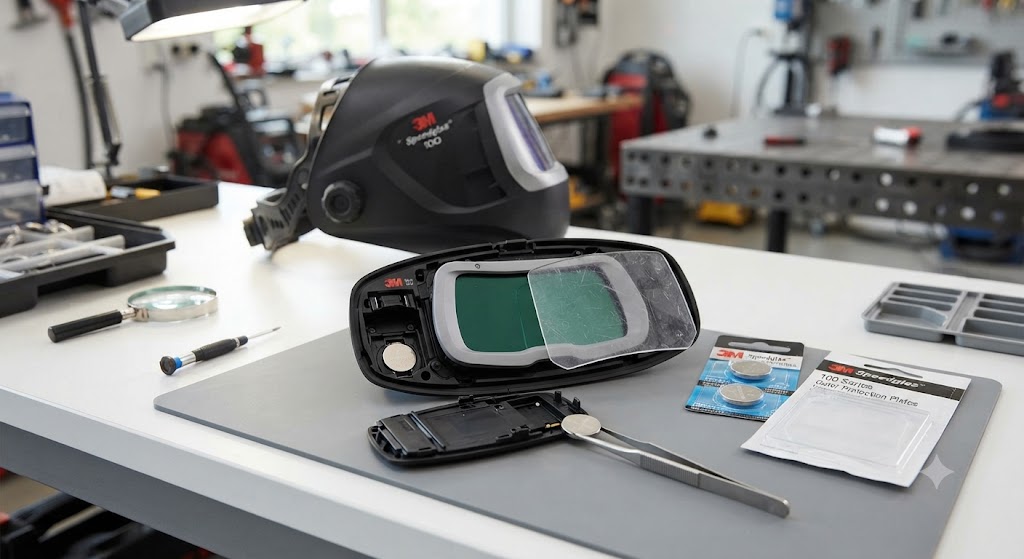
A weak or improperly seated coin cell causes the same intermittent clearing as a delay problem, because the lens loses power briefly rather than losing the arc. If delay and sensitivity adjustments do not help, fit a fresh coin cell and clean the contacts before assuming a cartridge fault.
A Dirty or Hazed Cover Lens
A scratched or spatter-covered outside cover lens reduces how much light the sensors collect. Less light means a weaker signal, which can cause the lens to clear at the first slight sensing disruption. Replace the cover lens and test before concluding the cartridge is failing.
When It Really Is the Cartridge
If you have maxed the delay, raised the sensitivity, ensured clear sensors, fitted a fresh battery, and replaced the cover lens, and the helmet still clears during active welding, the ADF has a sensitivity or circuit fault. That is a warranty item on a premium helmet, and on a budget hood it is a signal to upgrade.
Who should skip further fixes: anyone welding exclusively with rapid tack sequences who adjusted delay so short it never holds between tacks. That is the correct behavior for that setting, not a fault.
The Bottom Line
A welding helmet that won’t stay dark is almost never broken. It is mis-set. Increase the delay first, raise the sensitivity if you are welding at low amps, clear any blocked sensors, and freshen the battery. Work those four things in order and you convert a maddening strobe into a lens that holds dark exactly as long as you need. That small adjustment gap between the factory default delay and the one that actually fits your process is where most of these complaints live, and once you find it, they do not come back.
Frequently Asked Questions
Why does my welding helmet keep going clear while I weld? Most commonly the delay setting is too short. The delay determines how long the lens stays dark. Increasing it bridges brief sensing interruptions and keeps the lens locked through the weld.
What does the delay setting do on a welding helmet? The delay keeps the lens dark for a set time after the arc ends. A longer delay also bridges brief sensor interruptions during welding so the lens does not flick to clear and back mid-bead.
Why does my helmet clear between tack welds? The delay is set too short to span the gap between tacks. Increase the delay until the lens holds through the pause, then dial it back to the shortest setting that still works for your sequence.
Can sensitivity affect whether the lens stays dark? Yes. Low sensitivity at low-amperage arcs can cause the lens to not detect or hold the arc fully. Raise sensitivity until the lens stays dark at your working current.
What if my sensors are blocked? A blocked sensor reduces arc detection and can cause clearing mid-weld. Reposition so all sensors have a clear view, or use a helmet with electromagnetic arc detection for positions where blocking is unavoidable.
Could a bad battery cause my helmet to clear? Yes. A weak or loose cell causes intermittent power drops that look exactly like a sensing problem. Fit a fresh coin cell and clean the contacts before assuming a cartridge fault.
When is the helmet actually broken? Only after delay, sensitivity, sensors, battery, and cover lens are all addressed and it still clears during active welding. At that point the ADF has an internal fault for warranty or replacement.
References
- Welding Helmet Troubleshooting Guide (Weldclass, delay setting as flicker fix): https://www.weldclass.com.au/blog/118-welding-helmet-troubleshooting-guide
- Troubleshooting Auto Darkening Helmets: Common Problems and Remedies (Euromarc): https://www.euromarc.co.nz/resources/troubleshooting-auto-darkening-helmets-common-problems-and-remedies