Air Compressor for Plasma Cutter: How to Size CFM and PSI Right
Air Compressor for Plasma Cutter: How to Size CFM and PSI Right
More good plasma cutters cut poorly because of the compressor behind them than because of anything wrong with the machine. Plasma needs a steady supply of clean, dry, oil-free air, and if the compressor cannot keep up, you get angled edges, heavy dross and consumables that wear out fast, no matter how good the cutter is. Sizing the air compressor right is not complicated once you understand two numbers, CFM and PSI, and one requirement, clean dry air. Here is how to get it right.
The two numbers that matter: CFM and PSI
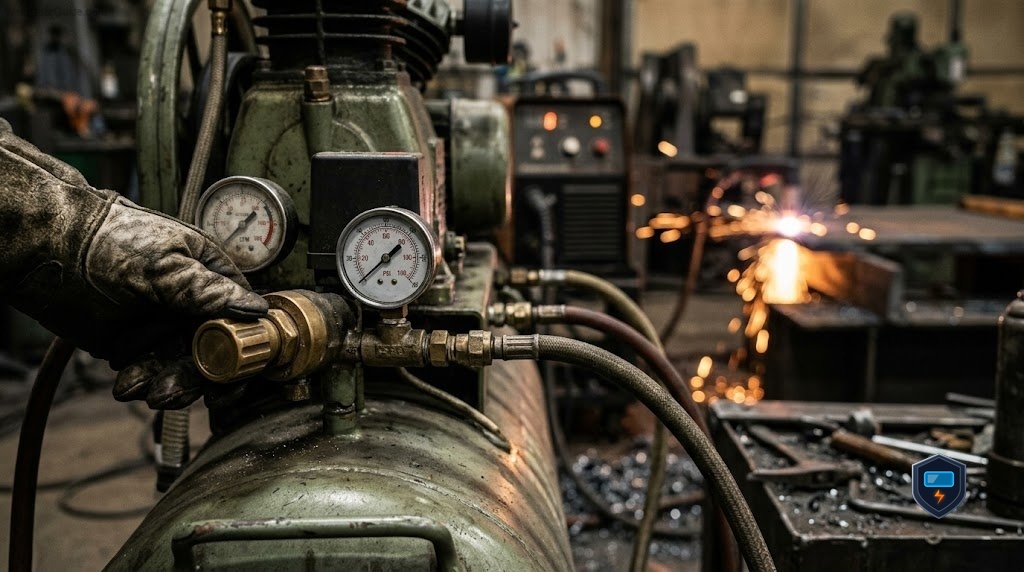
PSI (pounds per square inch) is air pressure. Most handheld plasma cutters want somewhere around 70 to 90 PSI at the torch, and the compressor has to deliver that pressure consistently while cutting.
CFM (cubic feet per minute) is air flow, the volume of air per minute, and it is the number people overlook. Plasma cutting consumes a continuous flow of air, and the compressor must supply the machine’s required CFM at the required PSI for the entire cut, not just for a second. A compressor that hits the pressure but cannot sustain the flow will sag mid-cut.
CFM is almost always the harder spec to meet. Check your plasma cutter’s required CFM at its rated pressure, and match or exceed it.
The sizing rule: buy bigger than the minimum
Manufacturers list a required CFM, but the smart move is to size the compressor above it. A common rule of thumb is at least 1.5 times the machine’s rated CFM. This headroom means:
- The compressor keeps up on long cuts without the motor running non-stop.
- Pressure stays steady instead of dropping as the tank drains.
- You have margin if you upgrade to a bigger plasma cutter later.
Undersizing is the most common and most frustrating mistake, so err generous.
Tank size and duty: it is about keeping up
A larger tank stores more air, which smooths out demand and lets the motor cycle less often. For short handheld cuts, a modest tank recovers between cuts. For long cuts or CNC table cutting that runs continuously, you need both adequate CFM output and a tank/motor that keeps up without falling behind, since there is no pause to recover. Continuous cutting is where undersized compressors fail most obviously.
Clean, dry, oil-free air is non-negotiable
Moisture and oil in the air are cut-quality killers. Water in the line causes sputtering, poor cuts and fast consumable wear; oil contaminates the torch. To deliver clean dry air:
- Add an air filter/dryer (a coalescing filter and moisture separator) between the compressor and the plasma cutter.
- Drain the tank regularly to clear collected water.
- In humid conditions, a proper dryer matters even more.
Many plasma cutters have a built-in filter, but it is a last line of defense, not a substitute for treating the air at the source.
Matching the compressor to your machine
| Your plasma cutter | Compressor guidance |
|---|---|
| Small 30 A handheld | Modest compressor meeting its CFM at ~70 to 90 PSI |
| 50 A dual-voltage | Mid-size compressor, 1.5x the rated CFM |
| 60 A+ shop machine | Larger 240V compressor for sustained flow |
| CNC table (continuous) | Generously sized 240V compressor, big tank, good dryer |
Self-contained plasma cutters with a built-in compressor sidestep sizing entirely, useful for portability, at the cost of a higher purchase.
The verdict
The air compressor is not an afterthought; it is half of what makes a plasma cutter cut cleanly. Size it right and a modest machine cuts beautifully; size it wrong and the best cutter disappoints.
Three things to get right. Match CFM first and PSI second, since most handheld machines want around 70 to 90 PSI but the flow (CFM) is the harder spec, and the compressor must sustain it for the whole cut. Buy above the minimum, roughly 1.5 times the machine’s rated CFM, so pressure stays steady on long cuts and you have headroom to upgrade. And treat the air, adding a filter/dryer, draining the tank, and keeping it oil-free, because moisture and oil ruin cut quality and consumables faster than almost anything else.
Get the compressor right and it quietly does its job, letting the plasma cutter do the rest.
Frequently asked questions
What size air compressor do I need for a plasma cutter? One that continuously supplies the machine’s required CFM at its rated PSI (often around 70 to 90 PSI), sized above the minimum, commonly at least 1.5 times the rated CFM. CFM (flow) is the harder spec to meet and the one most people underestimate.
Is CFM or PSI more important for a plasma cutter? Both matter, but CFM (air flow) is usually the harder requirement to meet. Most machines reach the needed PSI easily, but a compressor that cannot sustain the required CFM sags mid-cut. Match CFM first, then confirm the PSI.
Why does my plasma cutter cut poorly with my compressor? Most often the compressor cannot sustain the required air flow, so pressure drops mid-cut, causing angled edges and dross. Moisture or oil in the air also ruins cuts. Check that your compressor meets the CFM at rated PSI and add a filter/dryer.
Can I run a plasma cutter on a small pancake compressor? Only a small handheld machine making short cuts, and even then it may struggle to keep up. Most plasma cutters need more sustained flow than a pancake compressor delivers. Match the compressor’s CFM to the machine and size generously.
Why do I need a filter or dryer for plasma cutting air? Because moisture and oil in the air cause sputtering, poor cuts and rapid consumable wear, and can contaminate the torch. A coalescing filter and moisture separator between the compressor and cutter delivers the clean, dry, oil-free air plasma needs.
What PSI should a plasma cutter run at? Most handheld plasma cutters run around 70 to 90 PSI at the torch, but check your machine’s spec since it varies. The compressor must deliver that pressure consistently while sustaining the required air flow throughout the cut.
Do I need a bigger compressor for a CNC plasma table? Yes. A CNC table cuts continuously with no pause to recover air, so it needs a generously sized compressor with adequate CFM, a large tank and a good dryer to keep up for the entire program without pressure sagging.
What happens if my compressor is undersized? Pressure drops as you cut, producing angled edges, heavy dross and rapid electrode and nozzle wear. Undersizing is the most common plasma air mistake, which is why sizing above the minimum, about 1.5 times the rated CFM, is recommended.