A Practical Look at AWS Welding Symbols: Terms, Technique and Practical Examples
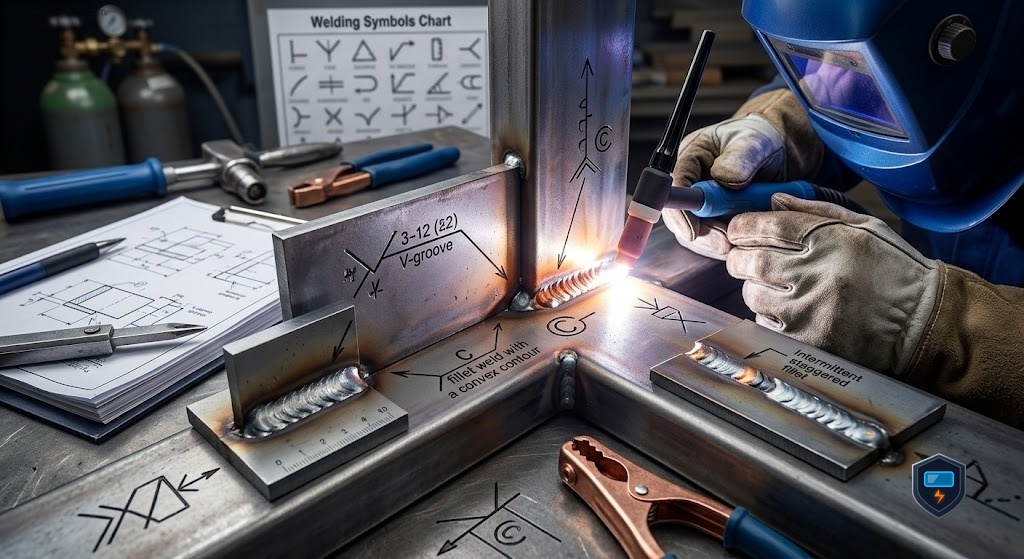
A Practical Look at AWS Welding Symbols: Terms, Technique and Practical Examples
When a welder in one shop reads a drawing made in another, thousands of miles away, and knows exactly what weld to make, that is not luck. It is the result of a shared standard, and in North America that standard comes from the American Welding Society. AWS welding symbols are the reason a small mark on a drawing means the same thing to everyone, and getting comfortable with the system is a core skill for anyone who works from prints.
AWS welding symbols are the standardized set of symbols, defined by the American Welding Society, used to communicate welding requirements on engineering drawings. The AWS system establishes exactly how a symbol is built and what each part means, so that the type, size, location, and finish of a weld can be specified precisely and read the same way by any trained welder. It is the grammar behind the marks you see on a print.
What the AWS system standardizes
The value of the AWS system is consistency. It fixes the structure of every welding symbol so there is no ambiguity.
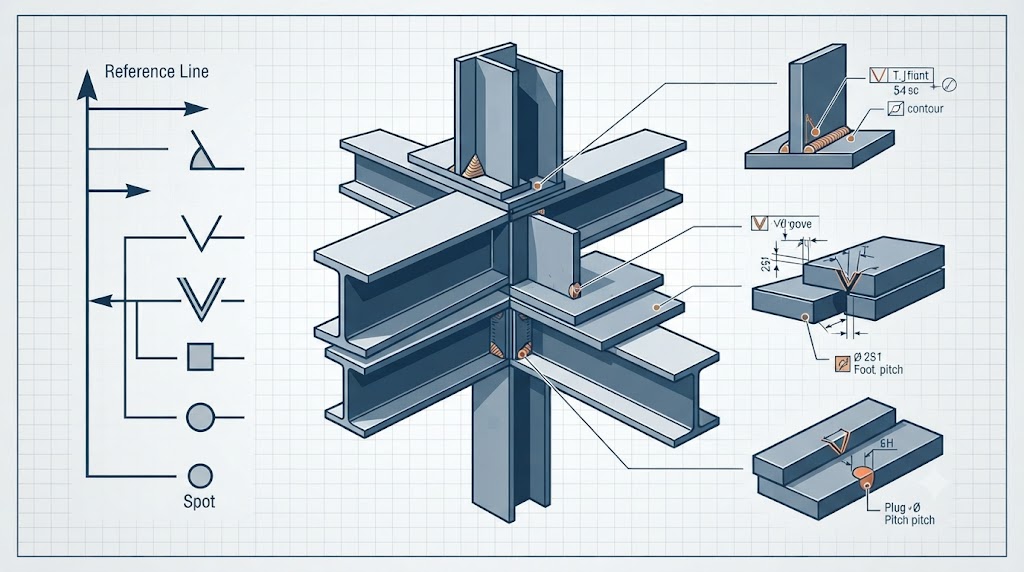
The system defines the reference line as the backbone, the arrow that points to the joint, and the standard shapes for each weld type, a triangle for a fillet weld, specific shapes for the various groove welds, and symbols for plug, slot, and other welds. It sets where dimensions go, how weld size and length are written, and, critically, the rule that a symbol below the reference line means the arrow side while one above means the other side. Because AWS defines all of this, a symbol is not open to interpretation.
The core building blocks
| Element | What it specifies |
|---|---|
| Reference line | The backbone that all other elements attach to |
| Arrow | The joint the symbol refers to; defines the arrow side |
| Weld symbol | The weld type (triangle for fillet, shapes for grooves) |
| Dimensions | Weld size (left of symbol) and length and pitch (right) |
| Supplementary symbols | Field weld, weld all around, contour and finish |
| Tail | Process or specification reference |
Worked examples
A few common symbols show how the pieces combine in practice.
A basic fillet weld. A triangle sitting below the reference line, with a number to its left, calls for a fillet weld on the arrow side, with that number giving the leg size of the fillet. This is the most common symbol you will meet, used for tee and lap joints.
A double sided fillet. Triangles both above and below the reference line call for a fillet weld on both sides of the joint, each sized by its number. You see this where a tee joint must be welded on each side of the upright for full strength.
An intermittent fillet. A fillet symbol with two numbers to its right, such as a length and a pitch, specifies an intermittent weld: weld a given length, skip a gap, and repeat. This saves weld metal and heat where a continuous bead is not needed.
A groove weld with a field weld flag. A groove weld symbol with a flag at the arrow junction tells you to make a groove weld and that it is a field weld, done during installation rather than in the shop.
Reading these is a matter of taking the symbol apart: find the weld type from the shape, the side from above or below the line, and the size and extent from the numbers.
Technique for reading AWS symbols
Work through a symbol in a consistent order and it becomes routine. First follow the arrow to see which joint it points to. Then read the weld symbol shape to identify the weld type. Next check whether it sits above, below, or on both sides of the reference line to fix the side. Then read the dimensions for size and, for intermittent welds, length and spacing. Finally, look for supplementary symbols like a field weld flag or a weld all around circle, and check the tail for any process note. That order, joint, type, side, size, extras, keeps you from missing anything.
Why it matters
Because the AWS system is a shared standard, it lets designers and welders communicate without ambiguity or constant back and forth. A drawing produced anywhere can be welded correctly anywhere, and inspectors can verify that what was welded matches what was specified. For structural and code governed work, that shared precision is essential, since the strength of the finished structure depends on every weld being the type, size, and location the engineer intended. Learning the AWS system is learning to read the language the whole trade shares.
Putting it all together
AWS welding symbols are the standardized language, defined by the American Welding Society, that gives the marks on a drawing their precise meaning. The system fixes the reference line, arrow, weld symbol, dimensions, and the arrow side rule so a symbol reads the same to everyone. Take each symbol apart in order, joint, type, side, size, and extras, and you can read any print and build the weld exactly as designed.
Frequently asked questions
What are AWS welding symbols? The standardized set of welding symbols defined by the American Welding Society, used on drawings to specify weld type, size, location, and finish so any welder reads them the same way.
Why is a standard for symbols important? It removes ambiguity. A drawing made anywhere can be welded correctly anywhere, and inspectors can confirm the weld matches the specification, which is essential for code work.
What does a triangle mean in AWS symbols? It is the fillet weld symbol. Its position below or above the reference line sets the side, and a number gives the fillet leg size.
How do I read the side of a weld? A symbol below the reference line means the arrow side; above means the other side; both means weld both sides. This is a core AWS convention.
What is an intermittent weld symbol? A weld symbol with a length and pitch to its right, meaning weld a set length, skip a gap, and repeat. It saves weld metal and heat where a continuous weld is not required.
In what order should I read a symbol? Follow the arrow to the joint, read the weld type, check the side from above or below the line, read the size and length, then look for extras like a field weld flag or weld all around circle.
References
- American Welding Society, standards and codes: https://www.aws.org/standards-and-publications/codes-and-standards/d1-1/
- OSHA, Welding, Cutting, and Brazing: https://www.osha.gov/welding-cutting-brazing