Can a Plasma Cutter Cut Stainless Steel? Yes, and Here Is How
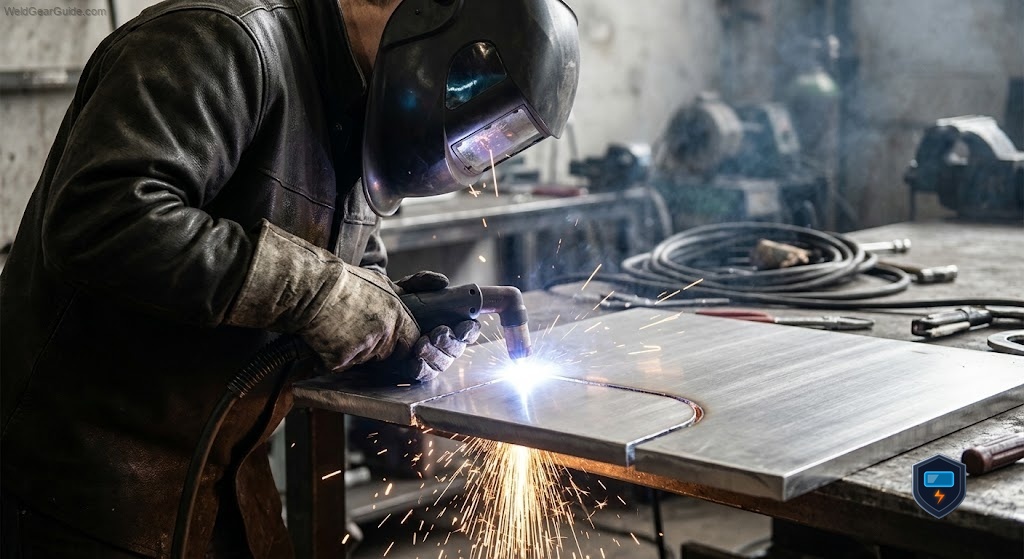
Can a plasma cutter cut stainless steel? Yes, and it is the standard tool for the job, because an oxy-fuel torch cannot cut stainless at all. Since a plasma cutter works on any electrically conductive metal, stainless is well within reach, and with the right setup you get clean, fast cuts. Stainless just behaves a little differently under the arc than mild steel, so a clean edge with minimal dross and discoloration comes down to a few setup choices. Here is the straight answer and how to do it well.
The short answer, and why
Yes, a plasma cutter cuts stainless steel. An oxy-fuel torch cannot, because it cuts by burning (oxidizing) carbon steel, and stainless resists that reaction thanks to the chromium that forms its protective, rust-resistant oxide layer. A plasma cutter does not rely on burning; it melts the metal with an electric arc and blows it away with fast plasma. Because stainless conducts electricity, plasma cuts it exactly as it cuts mild steel. That is why plasma is the go-to stainless-cutting tool.
What is different about stainless
Stainless holds heat more than mild steel (it conducts heat away more slowly), which affects cutting:
- Heat buildup near the cut can discolor the metal and, on thin sections, cause warping if you cut too slowly.
- Underside dross can cling, as with any plasma cut, especially at wrong speed or amperage.
- Edge discoloration (a heat tint) is normal and can be cleaned or passivated afterward if appearance matters.
The setup below manages these.
The setup for clean stainless cuts
Amperage and speed: use enough amperage to cut cleanly through, but because stainless holds heat, keep travel speed up to limit heat input, discoloration and warping. A steady, slightly faster pass gives a cleaner edge than a slow one. Use a lower-amp tip on thin sheet to keep the kerf narrow.
Air supply: clean, dry, oil-free air at the right pressure and flow. Correct pressure gives the plasma velocity to blow molten stainless clear, reducing dross. Moisture worsens both cut quality and discoloration, so use a filter/dryer.
Consumables and standoff: keep the electrode, nozzle and shield fresh, and use the drag shield or correct standoff for a square edge. Use fine-cut consumables, if available, for thin stainless.
Controlling dross and discoloration
- Dross: cut speed is the biggest factor, dial it so sparks blow cleanly out the bottom, then confirm adequate amperage, correct air pressure and fresh consumables.
- Discoloration: minimize heat with a faster steady pass; the remaining heat tint can be removed by mechanical cleaning or passivation if the finished look matters (food-grade or architectural work).
- Warping on thin sheet: keep speed up and avoid dwelling in one spot.
How thick can it cut?
Up to the machine’s cut capacity. A 50-amp machine handles around 1/2 inch of stainless, and larger 65-amp-plus systems cut thicker. As with any metal, match the machine’s rated cut capacity to your stainless thickness rather than the severance figure.
The verdict
Yes, a plasma cutter cuts stainless steel cleanly and quickly, doing what an oxy-fuel torch cannot, and the quality of the edge is set by setup, not by the metal being difficult.
Three things to get right. Keep travel speed up with adequate amperage, since stainless holds heat and a faster steady pass limits discoloration, warping and dross, while a lower-amp tip keeps thin-sheet cuts narrow. Feed clean, dry air at correct pressure, because proper pressure blows molten stainless clear to reduce dross and moisture worsens both cut quality and heat tint. And keep consumables fresh with the right standoff, using the drag shield for a square edge and replacing worn parts.
Set those, expect a heat tint you can clean up if appearance matters, and plasma turns stainless from a metal the torch cannot cut into clean, fast work.
Frequently asked questions
Can a plasma cutter cut stainless steel? Yes. Plasma cuts any electrically conductive metal by melting it with an arc and blowing it away, and stainless conducts electricity, so it cuts just like mild steel. It is the standard tool for stainless, which an oxy-fuel torch cannot cut.
Why can plasma cut stainless when a torch cannot? An oxy-fuel torch cuts by burning (oxidizing) carbon steel, a reaction stainless resists because its chromium forms a protective oxide layer. Plasma melts the metal with an electric arc instead of burning it, so it cuts conductive stainless that a torch cannot.
Does cutting stainless discolor the edge? Yes, some heat tint along the edge is normal because stainless holds heat. Keeping travel speed up limits it, and the remaining discoloration can be cleaned mechanically or passivated afterward if the finished appearance matters.
How do I get a clean edge on stainless? Use adequate amperage with a steady, slightly faster pass to limit heat, feed clean dry air at correct pressure to blow the cut clear, and keep consumables fresh with the correct standoff or drag shield. Together these minimize dross and warping.
How thick of stainless can a plasma cutter cut? Up to the machine’s cut capacity. A 50-amp machine handles around 1/2 inch, and larger 65-amp-plus systems cut thicker. Match the machine’s rated cut capacity to your stainless thickness rather than the severance number.
How do I reduce dross when cutting stainless? Cut speed is the biggest factor, dial it so sparks blow cleanly out the bottom. Then confirm adequate amperage, correct air pressure and fresh consumables. Some underside dross is normal and cleans up easily.
Does stainless need a different setup than mild steel? The fundamentals are the same, but stainless holds heat, so keep travel speed up to limit discoloration and warping, especially on thin sheet. Clean dry air and fresh consumables matter as always, and fine-cut consumables help on thin stainless.
How do I remove heat tint after cutting stainless? By mechanical cleaning (grinding or abrasive) or chemical passivation, which restores the protective oxide layer. This matters mainly for food-grade, architectural or corrosion-critical work; for general fabrication the tint is often left as is.