Can I Weld Aluminium With a MIG Welder?
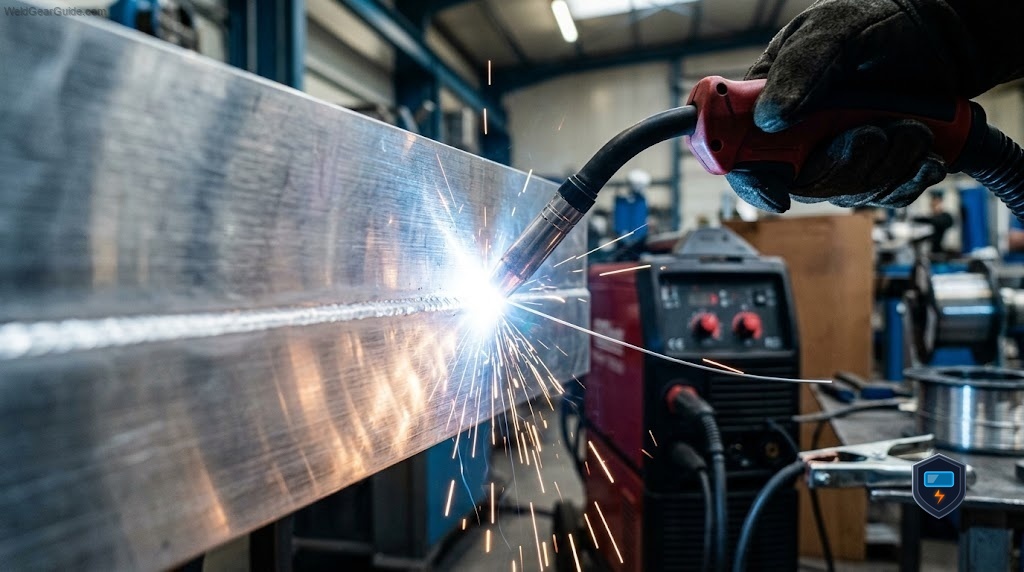
The short answer is yes. The longer answer is why so many people try it, fail, and conclude their machine is broken when it is working perfectly. Aluminium is not steel, and the MIG setup that runs steel beautifully will fight you the moment you load soft aluminium wire into it.
Understanding why turns the whole thing from frustrating to routine, and the fix is mostly about how the wire gets from the spool to the arc.
The direct answer
You can MIG weld aluminium, but you need the right equipment and setup: ideally a spool gun, always 100 percent argon shielding gas, the correct aluminium filler wire, and a machine with enough output for aluminium’s high heat conductivity. Trying to run aluminium wire through a standard steel MIG setup is the single most common reason people think aluminium MIG is impossible.
So the question is not really can you, it is what do you need to change, and the answer starts with the gun.
Why aluminium fights a standard MIG setup
Aluminium wire is roughly a third as stiff as steel wire of the same diameter. Steel wire is rigid enough to be pushed ten or fifteen feet through a gun cable without buckling. Aluminium is not. When the drive roll pushes it, the soft wire compresses and kinks between the roll and the liner, and the result is a bird nest of tangled wire around the drive.
Miller’s guidance on this explains the mechanism directly: pushing soft aluminium wire through a regular gun creates feeding problems, which is exactly why spool guns exist. A spool gun locates a small one-pound, four-inch spool on the gun itself, so the wire only travels a few inches before it hits the puddle, eliminating the long push that causes the tangle.
That is the whole reason aluminium MIG feels impossible on a standard setup and routine with a spool gun. It is not skill. It is mechanics.
The equipment you actually need
A spool gun, for reliable results. This is the biggest single factor. If your machine accepts one, use it. If you are buying a machine and aluminium is in your plans, buy one that takes a spool gun.
100 percent argon gas. Not the argon-CO2 mix used for steel. CO2 reacts with aluminium and ruins the weld. Straight argon only.
The right filler wire. ER4043 for 6000-series alloys, castings and general work where easy running and crack resistance matter. ER5356 for 5000-series, marine and structural work, and for anything anodized afterwards because it holds color better. ER5356 is also stiffer, which helps it feed.
Enough machine. Aluminium conducts heat away fast, so it needs more amperage than steel of the same thickness to get the puddle going. A machine that welds a given thickness of steel may struggle with the same thickness of aluminium.
A U-groove drive roll and a nylon or Teflon liner if you must feed through a standard gun. A steel V-groove roll shaves soft aluminium, and a steel liner abrades it.
Setup and technique that make it work
Once the equipment is right, technique carries the rest.
Polarity is electrode positive, the same as solid steel wire with gas.
Clean the metal every time. Aluminium grows an oxide layer that melts far hotter than the metal underneath. Degrease the joint, then brush it with a stainless brush used only on aluminium, right before welding.
Push, do not drag. Pushing the gun leads the argon ahead of the puddle and gives better cleaning. This is the opposite of the dragging technique used for flux-cored steel.
Travel faster than on steel. Aluminium’s heat conductivity means you move quicker, and once it does get hot it goes suddenly. Aluminium does not glow red before it collapses, so beginners burn through without the visual warning steel gives.
Preheat thicker sections gently. It helps the puddle establish, but overheating weakens heat-treated alloys.
Machines that make aluminium realistic
If you are buying a machine with aluminium in mind, two paths make sense.
The budget-flexible path is the BILT HARD Aluminum 250A 6-in-1, which is spool gun compatible out of the box, runs 110V or 220V, and covers five other processes besides. It makes aluminium a real option at a low price. The caution is support and warranty: the manufacturer states its direct warranty does not cover third-party platform purchases, so read the terms before buying.
The established-brand path is the Lincoln POWER MIG 215 MPi aluminum package, which includes the spool gun so compatibility is settled, runs on dual voltage, and reaches 220 amps on 230V, enough current for aluminium’s heat demands. It costs more but brings Lincoln’s support network and documentation.
For filler wire on either, WeldingCity ER4043 in one-pound spool-gun rolls meets AWS A5.10 and ships moisture-wrapped, which matters because aluminium wire welds worse after it has absorbed shop humidity. The drawback of small spools is more frequent changes on long jobs, so a production shop should buy larger rolls and skip the one-pound format.
The verdict
Yes, you can weld aluminium with a MIG welder, and once the setup is right it is not even difficult. The people who fail are almost always fighting the wrong equipment: aluminium wire through a steel gun, the wrong gas, a machine short on power. Fix those and aluminium MIG becomes fast, clean work.
Three things decide success. Get the wire to the arc over inches, not feet, which means a spool gun for anything beyond an occasional short bead. Use 100 percent argon and the right alloy wire, 4043 for castings and 6000-series, 5356 for strength, marine exposure and anodized parts. And respect that aluminium takes more heat than steel and gives no red-glow warning before it burns through, so travel faster and watch the puddle, not the color.
Get those right and the machine that seemed broken turns out to have been fine all along. It was just set up for a different metal.
Frequently asked questions
Can any MIG welder weld aluminium? Only with the right setup. The machine needs enough output for aluminium’s heat conductivity, and ideally the ability to accept a spool gun. Running aluminium wire through a standard steel gun setup rarely works well.
Do I really need a spool gun for aluminium? For reliable results, yes. A spool gun carries the wire on the gun so it travels only a few inches to the puddle, eliminating the feeding problems that come from pushing soft aluminium wire through a long cable.
What gas do I use for aluminium MIG? 100 percent argon. The argon-CO2 mixes used for steel do not work on aluminium because CO2 reacts with it and produces a poor weld.
What wire do I use to MIG weld aluminium? ER4043 for 6000-series alloys, castings and general work, or ER5356 for 5000-series, marine, structural and anodized parts. ER5356 is stronger and stiffer, which also helps it feed.
Why does my aluminium wire keep jamming? Soft aluminium wire buckling between the drive roll and liner. Fix it with a spool gun, or if feeding through a standard gun, a U-groove roll, a nylon or Teflon liner, lighter tension and a straight cable.
How do I prepare aluminium before welding? Degrease the joint, then brush it with a stainless wire brush used only on aluminium, immediately before welding, to remove the high-melting oxide layer that otherwise causes inclusions.
Why do I keep burning through aluminium? Aluminium conducts heat away fast and then heats suddenly, and unlike steel it does not glow red before it collapses. Travel faster and watch the puddle rather than waiting for a color change.
Can I MIG weld aluminium without a spool gun? Sometimes, on short runs, with a U-groove roll, a nylon liner, careful tension and a straight cable, but it is unreliable. For anything beyond occasional short beads, a spool gun is the proper solution.
References
- Miller Electric, MIG Aluminum: Selecting the Right Welder, Spool Gun and Filler Wire
- Miller Electric, How to Successfully MIG Weld Aluminum
- Lincoln Electric, SuperGlaze 5356 aluminum MIG wire
- Universal Technical Institute, Aluminum Welding Basics and Techniques