Can You MIG Weld Cast Iron? The Honest Answer
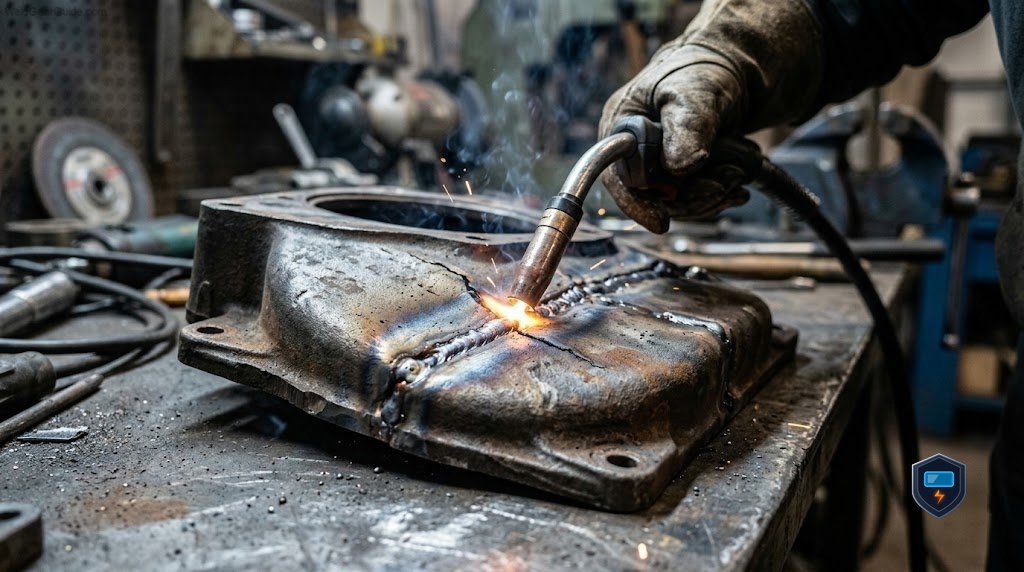
Cast iron shows up in engine blocks, machine bases, cookware, old fittings, and countless heavy castings, and sooner or later something made of it cracks and you wonder if your MIG welder can fix it. The honest answer is that you technically can MIG weld cast iron, but it is one of the trickiest metals to weld and MIG is usually not the best way to do it. Knowing why, and what works better, saves you from a cracked repair that fails and possibly ruins the part.
This guide gives the honest answer on MIG welding cast iron, explains why it is so hard, when MIG can work, and the better methods.
The honest answer
Start with the straight truth, because it sets realistic expectations.
Yes, you can MIG weld cast iron, but it is difficult and often not the best choice, and many repairs are better made another way. Cast iron is a high-carbon, brittle metal that behaves very differently from the mild steel MIG loves. It does not tolerate the heat and rapid cooling of welding well, and it tends to crack in or beside the weld. A MIG repair on cast iron can work for non-critical, low-stress parts with the right technique and wire, but for anything structural or important, other methods give far more reliable results. So the real question is not just can you, but should you, and often the answer is to choose a better method.
Why cast iron is so hard to weld
Understanding the problem explains every precaution and alternative that follows.
Cast iron’s trouble comes from its high carbon content and brittleness. When you weld it, the intense heat and then the fast cooling create hard, brittle zones and internal stress right where the weld meets the base metal. Cast iron cannot flex to relieve that stress the way steel can, so it cracks, often next to the weld rather than in it. The metal can also absorb gas and form porosity. All of this means a cast iron weld is prone to failing even when it looks fine, which is why the metal has a reputation as one of the hardest to weld reliably and why technique matters so much.
When and how MIG can work
If you do choose MIG for cast iron, doing it right gives the best chance of success.
MIG can work on non-critical, low-stress cast iron repairs if you manage the heat carefully. The keys are to preheat the part slowly and evenly to reduce the thermal shock, weld in short stitches rather than long beads to limit heat buildup, peen each weld lightly while it cools to relieve stress, and let the part cool very slowly afterward, often wrapped to slow it further. Use a wire suited to cast iron; specialized nickel-based wires are far more forgiving than standard steel wire. Even then, treat MIG on cast iron as a repair of last resort for minor parts, not a method for anything that must bear real load.
Better methods for cast iron
For most cast iron repairs, other approaches beat MIG.
Nickel rod stick welding is a common professional choice, using nickel electrodes designed for cast iron with the same preheat-and-slow-cool discipline; it gives more reliable, machinable repairs. Brazing joins cast iron at a lower temperature with a bronze filler that does not melt the base metal, greatly reducing cracking, and is excellent for many repairs. For valuable or critical castings, a professional weld shop with the right equipment and experience is the safest route. The point is that MIG is rarely the ideal tool for cast iron, so before reaching for it, consider whether nickel rod, brazing, or a pro will give a repair that actually lasts.
What to take away
You can technically MIG weld cast iron, but it is difficult, prone to cracking, and usually not the best method for a lasting repair.
Three things to remember. Cast iron is a high-carbon, brittle metal that cracks under the heat and rapid cooling of welding, so a MIG repair often fails even when it looks fine. MIG can work on non-critical, low-stress parts if you preheat, weld in short stitches, peen, cool slowly, and use a nickel-based wire, but treat it as a last resort. And for most cast iron repairs, nickel rod stick welding, brazing, or a professional shop give far more reliable results than MIG.
Frequently asked questions
Can you MIG weld cast iron? Technically yes, but it is difficult and often not the best choice. Cast iron is brittle and prone to cracking under welding heat, so many repairs are better made by other methods.
Why does cast iron crack when welded? Because its high carbon content and brittleness mean it cannot flex to relieve the stress created by welding’s intense heat and rapid cooling, so it cracks in or beside the weld.
What wire do you use to MIG weld cast iron? A specialized nickel-based wire made for cast iron, which is far more forgiving than standard steel wire. Even so, careful heat control is essential for any chance of success.
How do you MIG weld cast iron without cracking? Preheat the part slowly and evenly, weld in short stitches, peen each weld while it cools to relieve stress, and let the part cool very slowly afterward, often wrapped to slow cooling.
Is brazing better than MIG for cast iron? Often yes. Brazing joins at a lower temperature with a bronze filler that does not melt the base metal, greatly reducing cracking, which makes it excellent for many cast iron repairs.
Should I MIG weld a cracked engine block? Generally no. Critical, high-stress castings like engine blocks are best handled by a professional weld shop or with nickel rod, not a DIY MIG repair that is likely to fail.
What is the best way to weld cast iron? For most repairs, nickel rod stick welding or brazing with proper preheat and slow cooling, or a professional shop for valuable parts. MIG is rarely the ideal method for cast iron.
References
- American Welding Society, AWS
- Occupational Safety and Health Administration, Welding, Cutting, and Brazing
- National Institute for Occupational Safety and Health, Welding Safety
- Lincoln Electric, MIG Welders