Can You MIG Weld Stainless Steel? Yes, Here's How
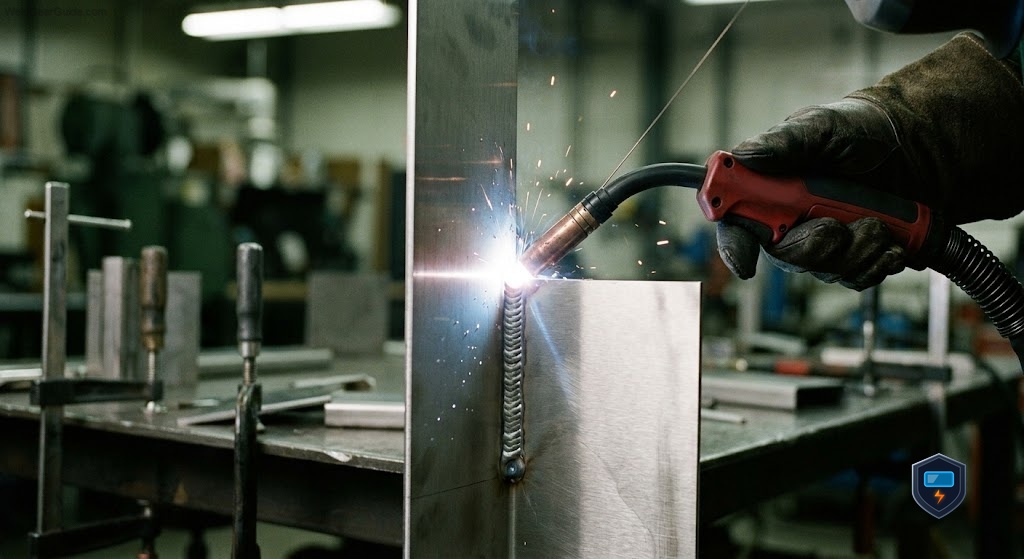
It is one of the most common questions from people who own a MIG welder and suddenly have a stainless project in front of them: can this machine actually weld stainless steel? The answer is a clear yes. MIG is a perfectly valid and widely used way to weld stainless, and your existing machine can almost certainly do it. The real question is not whether you can, but what you need to change to do it well, because stainless has requirements that plain steel does not.
This guide answers the question directly and then explains exactly what it takes to MIG weld stainless properly.
The short answer: yes
Let us settle the core question before the details.
Yes, you can MIG weld stainless steel, and it is a common, practical method used in everything from food-service fabrication to handrails to exhaust work. Any decent MIG machine that welds mild steel can weld stainless too, because stainless welds at broadly similar settings to mild steel of the same thickness. You do not need a special stainless-only welder. What you do need is to swap in stainless-specific wire and the right shielding gas, and to respect a couple of stainless’s behaviors. So the honest full answer is: yes, easily, as long as you make a few changes.
What you change: wire and gas
The two things that genuinely must change for stainless are the wire and the gas.
For the wire, use a matching stainless filler rather than plain steel wire. ER308L is the standard choice for the common 304 and 308 stainless grades, as in this ER308L stainless MIG wire, while ER316L suits the more corrosion-resistant 316 grade. Using plain steel wire on stainless ruins its corrosion resistance, so this swap is essential. For the gas, stainless wants far less CO2 than the C25 used on steel, because excess carbon dioxide reduces corrosion resistance. A tri-mix (helium, argon, and a small percentage of CO2) or a high-argon blend with only a couple percent CO2 gives the cleanest, most rust-resistant welds. Get these two right and you are most of the way there.
What to watch: heat and warping
Beyond consumables, stainless behaves a little differently under heat, and anticipating that keeps your welds clean.
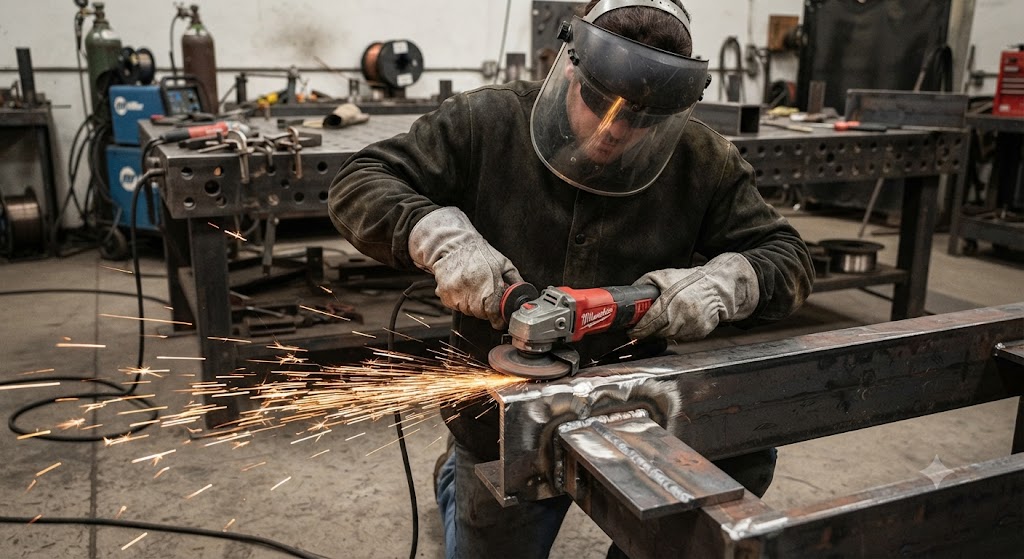
Stainless conducts heat poorly, so it holds heat in the weld zone and warps more readily than mild steel, especially on thin sheet. Use slightly less heat where you can, avoid lingering in one spot, and tack frequently to control distortion. Stainless also stays hot and glowing longer after the arc stops, so keep the shielding gas flowing over the cooling weld and give it time. Clean the metal well beforehand, since stainless shows contamination readily. These are minor adjustments, not obstacles, but they are the difference between a clean stainless weld and a warped or discolored one.
When TIG might be better
Honesty means noting that MIG is not always the best choice for stainless, even though it works.
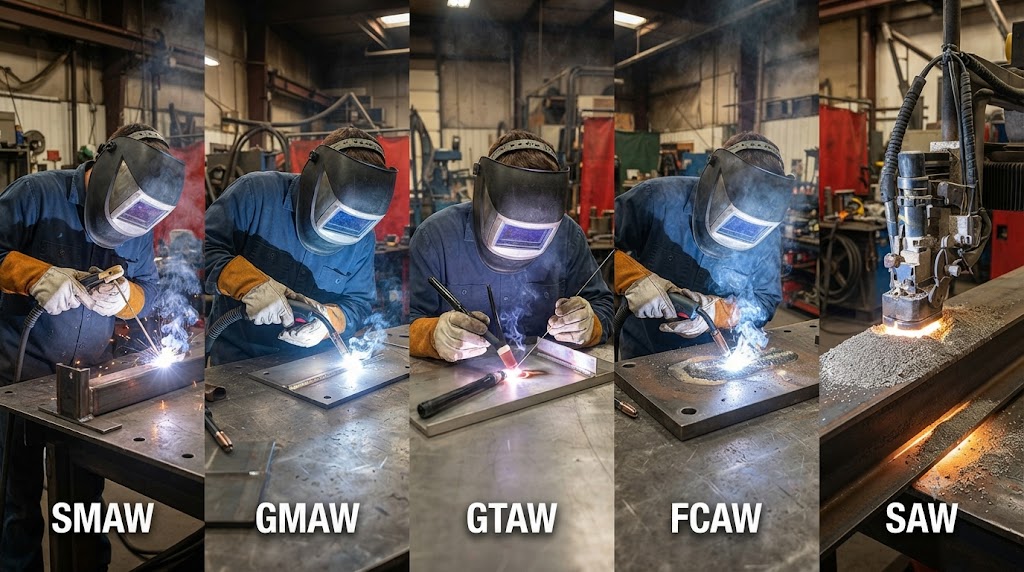
For thin, highly visible, or precision stainless work, such as thin sheet, sanitary welds, or show-quality joints, TIG welding gives cleaner, more precise, better-looking results with less distortion. MIG shines for thicker stainless, faster production, and general fabrication where speed matters more than a flawless bead. So if your stainless project is thin and cosmetic, consider whether TIG suits it better. But for most general stainless work, especially medium thickness and structural pieces, MIG is a fully capable and efficient choice. Pick the process to match the job.
What to take away
Yes, you can MIG weld stainless steel, and your existing MIG machine can almost certainly do it with the right consumables and a little care.
Three things to remember. The answer is yes: MIG is a valid, common way to weld stainless, and any decent mild-steel MIG machine handles it at similar settings. The essential changes are the wire and gas, so use a matching stainless wire like ER308L and a low-CO2 gas such as a tri-mix to preserve corrosion resistance. And manage stainless’s heat behavior by controlling warping, while considering TIG instead for thin, precision, or highly visible stainless work.
Frequently asked questions
Can you MIG weld stainless steel? Yes. MIG is a common, practical way to weld stainless. Any decent mild-steel MIG machine can do it at similar settings, provided you use stainless wire and the right shielding gas.
Do I need a special welder to MIG weld stainless? No. Your existing MIG machine works. What must change is the wire, to a matching stainless filler, and the gas, to a low-CO2 blend, not the welder itself.
What wire do I use to MIG weld stainless? A matching stainless wire. ER308L is standard for 304 and 308 grades, while ER316L suits the more corrosion-resistant 316 grade. Plain steel wire ruins stainless’s corrosion resistance.
What gas do I use for stainless MIG? A tri-mix of helium, argon, and a small amount of CO2, or a high-argon blend with only a couple percent CO2. Keeping CO2 low protects the weld’s corrosion resistance.
Is MIG or TIG better for stainless steel? MIG is great for thicker stainless and faster fabrication. TIG is better for thin, precision, or highly visible work, giving cleaner results with less distortion. Match the process to the job.
Why does my MIG stainless weld warp? Stainless conducts heat poorly and holds it in the weld zone, so it distorts easily. Use slightly less heat, avoid lingering, and tack frequently to control warping.
Can a 120-volt MIG welder weld stainless? Yes, within its thickness range. It welds thin stainless the same way it welds thin steel, as long as you use stainless wire and an appropriate low-CO2 shielding gas.
References
- American Welding Society, AWS
- Occupational Safety and Health Administration, Welding, Cutting, and Brazing
- National Institute for Occupational Safety and Health, Welding Safety
- Miller Electric, MIG Welders