Cut 50 Plasma Cutter: What the 50-Amp Class Really Cuts
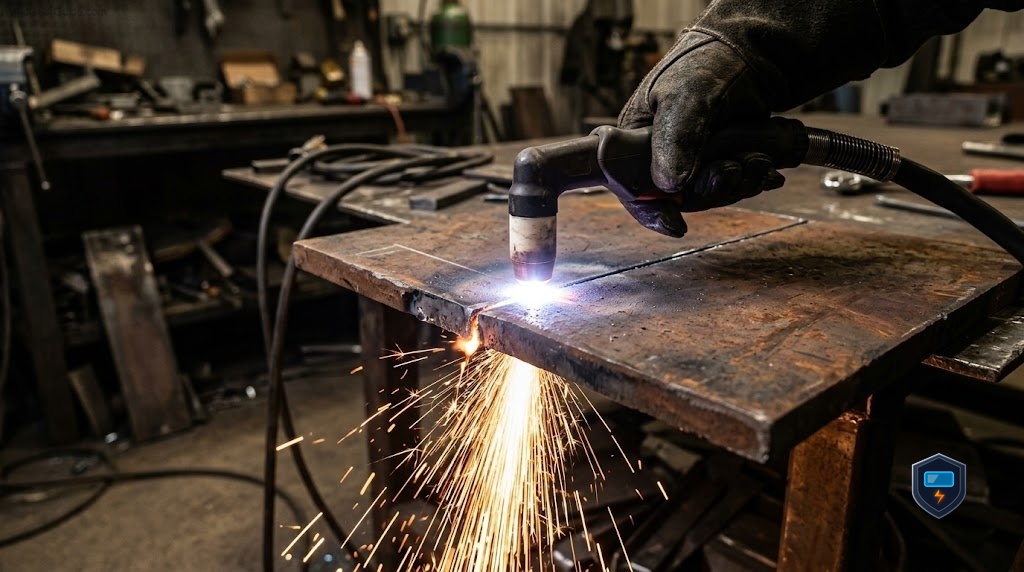
Cut 50, or CUT50, is not one machine; it is a whole class of affordable 50-amp plasma cutters sold under many brand names, and it is the most popular starting point for home shops and hobbyists. The trouble is these machines vary enormously, from basic contact-start units to genuinely good pilot-arc cutters, and the specs on the box are often optimistic. Here is what a 50-amp plasma cutter really cuts, what separates the good ones from the rest, and how to choose a Cut50 you will not regret.
What 50 amps really cuts
A 50-amp plasma cutter has a recommended (clean) cut capacity of around 1/2 inch on mild steel, with a severance capacity closer to 3/4 inch cut slowly and with more cleanup. In real terms that covers the vast majority of home and light-shop work: sheet metal, plate up to 1/2 inch, brackets, automotive panels, and art or fabrication projects. On thinner sheet it cuts fast and clean; near its 1/2-inch limit it slows and wants a steadier hand. Treat the 1/2-inch rating as the honest working number, not the severance figure some listings advertise.
The torch is what separates good from bad
The biggest quality difference in the Cut50 class is the torch and how it starts the arc:
- Contact-start (scratch/HF-contact) torches, like many PT31-style units, start the arc by touching the metal. They work, but wear the tip faster and struggle on painted or rusty metal.
- Pilot-arc torches start the arc without touching the metal, so they cut rusty, painted and expanded metal better and last longer.
If you can, choose a Cut50-class machine with a pilot arc. Machines like the ArcCaptain CUT50 and PrimeWeld CUT50DP are well-regarded examples with better torches and support than generic units.
Air supply for a Cut50
Like all air plasma, a Cut50 needs clean, dry, oil-free air, usually around 70 to 90 PSI at a few CFM. This is easy for most home compressors to meet, but two things trip people up: an undersized compressor that sags on longer cuts, and moisture in the line. Add a filter/dryer and size the compressor with headroom (around 1.5 times the required CFM) for trouble-free cutting.
Dual voltage and portability
Many Cut50 machines are dual-voltage (110V/220V), running on a household outlet at reduced output or a 220V circuit for full 50-amp power. They are typically light (around 12 to 20 pounds), which is part of their appeal for a home garage. Expect the full 1/2-inch cut capacity only on 220V.
How to choose a reliable Cut50
- Prefer a pilot arc over contact start for easier, longer-lasting cutting.
- Buy from a brand with support and consumables, since generic units can be hard to get parts for. Established names like PrimeWeld and ArcCaptain stock consumables and back their machines.
- Check the real cut rating (about 1/2 inch clean) rather than the severance number on the listing.
- Confirm dual voltage if you need household-outlet flexibility.
- Plan the air supply with a filter/dryer and adequate compressor.
The verdict
A Cut50 plasma cutter is the sweet spot for home and light-shop metal cutting: enough power for about 1/2 inch of steel, light and affordable. But because the class ranges from basic to genuinely good, how you choose matters more than the 50-amp label.
Three things to hold onto. Treat about 1/2 inch as the honest clean-cut number, since that covers most home and light-shop work, and ignore optimistic severance figures on listings. Prioritize the torch, choosing a pilot-arc machine over contact-start for easier cutting on rusty or painted metal and longer consumable life. And buy a supported brand with a planned air supply, since established names like PrimeWeld and ArcCaptain stock consumables and back their machines, and a filter/dryer with an adequately sized compressor prevents most cut-quality problems.
Choose on the torch and the brand, not just the amp number, and a Cut50 is one of the best-value tools a home shop can own.
Frequently asked questions
What can a 50-amp plasma cutter cut? A recommended clean cut of about 1/2 inch on mild steel, with a severance capacity closer to 3/4 inch cut slowly with more cleanup. That covers most home and light-shop work: sheet metal, plate, brackets, panels and fabrication projects.
Is a Cut50 plasma cutter good for beginners? Yes. The 50-amp class is the most popular home and hobby starting point: light, affordable and capable of about 1/2 inch of steel. Choose one with a pilot arc and from a brand that supports it for the easiest experience.
What is the difference between a PT31 and a pilot-arc torch? PT31-style torches are typically contact-start, meaning they touch the metal to start the arc, which wears the tip faster and struggles on rusty or painted metal. Pilot-arc torches start without touching, cutting rough metal better and lasting longer.
Does a Cut50 need 220V? Many Cut50 machines are dual-voltage, running on 110V at reduced output or 220V for full power. Expect the full 50-amp, roughly 1/2-inch cut capacity only on 220V; 110V is fine for thinner metal and portability.
What air compressor does a Cut50 need? Clean, dry, oil-free air at around 70 to 90 PSI and a few CFM, which most home compressors can meet. Size the compressor with headroom (about 1.5 times the required CFM) and add a filter/dryer to prevent moisture problems and mid-cut pressure sag.
Are cheap Cut50 plasma cutters reliable? They vary widely. Generic units can be hard to get parts for and often use basic contact-start torches. Established brands like PrimeWeld and ArcCaptain offer better torches, stocked consumables and support, making them more reliable long-term choices.
Why is my Cut50 not cutting through 1/2 inch? Common causes are running on 110V instead of 220V (reduced output), worn consumables, inadequate or moist air, or cutting too fast. Confirm full-power voltage, fresh consumables, clean dry air at the right pressure, and a steady speed near the limit.
Can a Cut50 cut aluminum and stainless? Yes. Plasma cuts any conductive metal, so a Cut50 handles aluminum and stainless up to its capacity, roughly 1/2 inch clean. Keep consumables fresh and air clean, as aluminum in particular is more prone to underside dross.